

In the midst of preparations and excitement ahead of the move from second to third grade, parents at Romema Nigunim Elementary School in Haifa were stunned to receive notice that, because some students had transferred to other schools, 38 children would be packed into a single classroom next year, with the approval of the Education Ministry, school supervisors and the local authority.
It is worth recalling that the "Sardine Protest" a decade ago led to improvements in class sizes. Now, as overcrowding rises again, teachers, experts and students’ families are warning of a looming crisis. Israel has returned to near the top of the OECD rankings, with as many as 39 students in a class.
Gallery
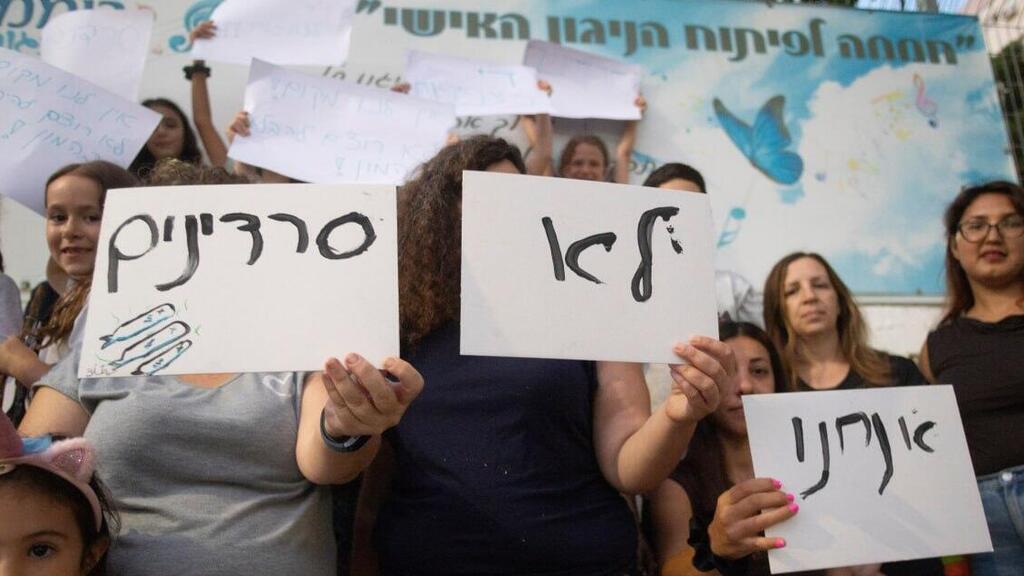
'Children with attention difficulties and learning disabilities will simply get lost'
(Photo: Gil Nehushtan)
According to the latest Education at a Glance report, Israel ranks second in elementary school classroom crowding, with an average of 27.4 students per class, compared with 20.5 across the OECD, a gap of about 33%. In Israeli middle schools, the average is 30.1 students per class, compared with 23 in OECD countries, a gap of about 31%. The OECD’s 2025 report confirms that Israel’s average primary class size stood at 27.4 students.
Anna Waldo, whose daughter Rachel is entering third grade at Romema Nigunim, told ynet and Yedioth Ahronoth: "Until now, my daughter studied in a class of about 20 students. About two weeks ago, we were informed that the classes would be merged after two children from each class left for other schools. I trust the school and see the administration’s efforts to find solutions, but as a mother and as a professional in the fields of attention disorders, learning disabilities and CBT, this policy angers and worries me. The departure of a small number of students is turning small classes, which allowed for personal attention and genuine familiarity, into one large class where even the most dedicated teacher will struggle to see everyone. Children with attention difficulties or learning disabilities, quiet children and children with emotional or social difficulties could simply get lost."
Hadas Biran, whose son Peleg will study in the same class, said she hopes the decision will be reversed. "We were notified that the class would be merged and would have 38 students who are expected to understand and make progress in language, math, geometry and English, but anyone involved in education knows that such a situation is destined to fail. A classroom this crowded allows for neither education nor learning, perhaps only low-quality babysitting," she said.
Noa Moskovitz Shor, whose son is entering third grade, said: "With almost 40 students packed into a classroom like sardines, I am very worried. In first and second grade, the children studied in classes of about 20 students each. Now I am deeply concerned that the planned merger will dramatically lower the quality of education and sharply increase the level of violence, tension, conflict and disorder in the classroom. I have no complaints against the school, but no teacher, no matter how good, will be able to cope with the level of violence, noise and chaos that will prevail in the classroom. It seems the Education Ministry is ignoring the situation and in doing so is driving the quality of education to a new low in our city as well."
An impossible task
Parents of students at Borochov Elementary School in Givatayim were also stunned recently to learn that classes would be merged in two grade levels.
One mother said: "In classes of more than 30 students, it is impossible to expect one teacher to respond to the needs of dozens of students while also dealing with the ongoing academic, emotional and social needs of each class."
"The academic challenge is extremely complex," said a second-grade teacher at an elementary school in the Upper Galilee. "The gaps following the war are significant, and I am required to try to address them simultaneously while teaching, managing the classroom and maintaining continuity in learning. Children are coping with difficulty feeling a sense of belonging, insecurity and complex social situations, fears and uncertainty. The greatest difficulty for me is knowing that I am not always able to give every child what he or she needs."
A middle school principal in Petah Tikva said: "Class size is a factor that directly affects the quality of teaching, student achievement and well-being. In classes of 39 students, a teacher’s ability to provide personal attention, identify difficulties in time and build an individualized response is dramatically reduced. The harm is especially severe for students dealing with attention difficulties, emotional problems or complex learning needs. Overcrowding also makes classroom management and effective communication more difficult. The number of disruptions increases, teaching time is reduced and the teacher must devote significant resources to maintaining order instead of advancing learning."
Orna Weinberg of Metula, who recently retired from the education system after years as a school principal, said: "Alongside the many positive things happening in classrooms today, it is important to understand that crowded, overloaded classes contain gaps, violence and unusual behavior, and teachers struggle to give each student personal attention. The overload increases noise, disruptions, stress and burnout and harms students at both ends of the spectrum, those who need additional support and those who have long since ‘mastered the material’ and need new areas of interest and new academic challenges."
'A small class is a dream'
Dr. Shiri Rosenberg, head of the bachelor’s degree program in elementary education at the Levinsky-Wingate Academic Center, said: "When too many students are in one classroom, the teacher struggles to provide personal attention, identify difficulties in real time and adapt teaching methods to the different needs of each student."
She said children with learning disabilities, attention and concentration difficulties or simply those who cannot keep pace can disappear in the crowd and fall behind both academically and socially.
Dr. Rotem Eliyahu, a lecturer at Kibbutzim College of Education, said the issue becomes even more complex given current learning conditions in Israel. She noted that TALIS 2024 findings show that 84% of teachers in Israel teach classes in which they must address a broad range of students with different needs and characteristics, above the OECD average.
Israeli teachers also report spending about 16% of class time maintaining order. "These figures illustrate the complexity of teaching in Israeli classrooms and the scale of the pedagogical challenges teachers currently face," she said. OECD data confirm that 84% of Israeli teachers report teaching highly diverse classes and that 16% of classroom time is spent maintaining order.
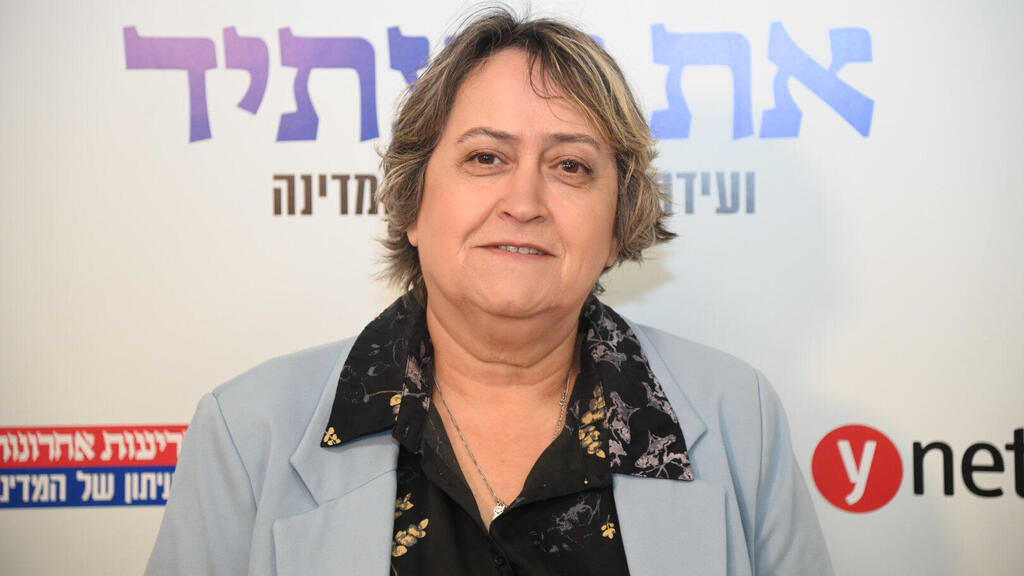
Yaffa Ben David: 'I don’t understand why parents aren’t fighting'
(Photo: Yair Sagi)
Tal Kopel, CEO of the Madlan real estate website, said: "The data we have collected on the site show that education is one of the central considerations for families choosing where to live. At the same time, distinctive educational institutions, such as Waldorf schools and nature schools, also rank among the most crowded, indicating that many parents prefer to send their children to alternative education even if it means a more crowded classroom."
Yaffa Ben David, secretary-general of the Israel Teachers Union, added: "The expectation that a kindergarten teacher or schoolteacher will reach every child and every student cannot be met in overloaded and crowded classes. It is very difficult to teach in large, heterogeneous classrooms. Parents know that overcrowding harms students and understand the difficulty, so I do not understand why parents are not fighting."
The Education Ministry said in response: "As Education Minister Yoav Kisch has made clear, he intends in the next term to advance the ‘New Deal in Education,’ a multiyear initiative aimed at fundamentally changing the education system, one of whose most significant components is a dramatic reduction in the number of students per classroom.
"This is a broad systemic change that is essential but requires an investment of about 15 billion shekels and could not be implemented during the war years. The initiative will also require significant adjustments and broad agreements, including with the Finance Ministry, local government, teachers’ organizations and parents.
"At the same time, the artificial intelligence revolution being led by the minister and the expansion of personalized learning are already advancing a shift from a uniform model toward a system that can provide a more individualized and precise response to each student."