

The U.S. and Iran have not yet signed the agreement, and it is expected to be finalized on Friday in Switzerland, according to the mediator’s announcement. And at the sane time, the details have not yet been published, aside from leaks from both sides. On one point, however, the United States and Iran do agree: both will put an end to the “state of war” between them and begin at least 60 days of talks on Iran’s nuclear program and U.S. compensation. So what happens now, and what does the agreement actually include? ynet explains.
What is happening now?
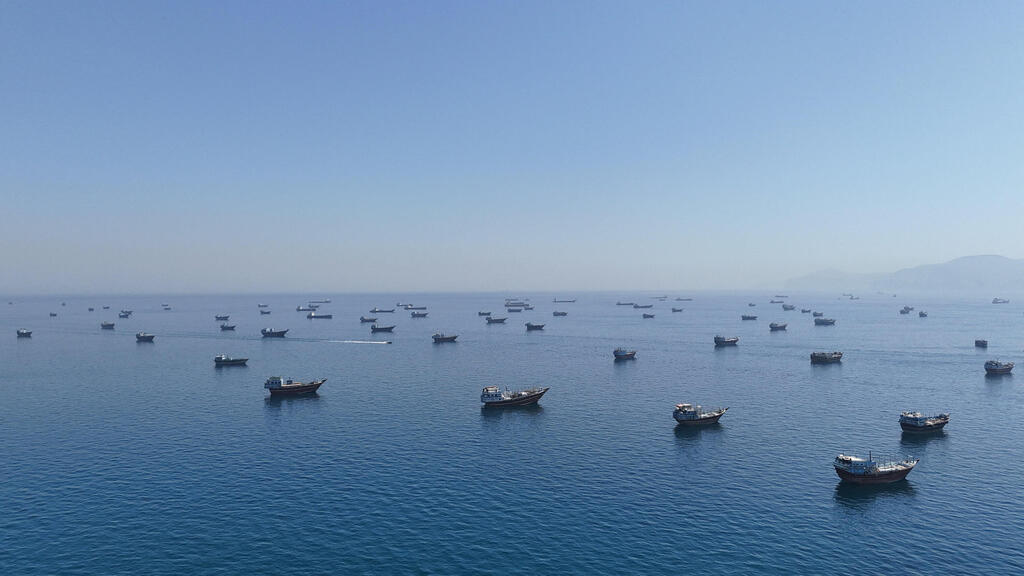
Although both the United States and Iran announced the agreement overnight between Sunday and Monday, it has not yet been signed — and all measures included in it are expected to take effect only after the signing, which will take place on Friday in Switzerland. Initially, President Donald Trump promised that the U.S. naval blockade of the Strait of Hormuz would be lifted immediately, but after Iran said its commitments would only begin after Friday’s signing in Switzerland, he also shifted course and said the blockade would be lifted on Friday.
What does Iran get?
For now, the official text of the agreement has not been published. Iran’s deputy foreign minister clarified overnight that the text of the memorandum of understanding will be released after the official signing. Nevertheless, Iran is actively trying to present the provisions most favorable to it, and state-affiliated Iranian news agencies are continuously publishing different versions of the agreement. In Tehran, for example, it is claimed that the United States has committed, among other things, to halt sanctions on oil sales, present a reconstruction plan worth at least $300 billion, and release $24 billion in frozen funds. As noted, the full text has not been published — and there is no certainty that the memorandum of understanding indeed includes such clauses or under such conditions.
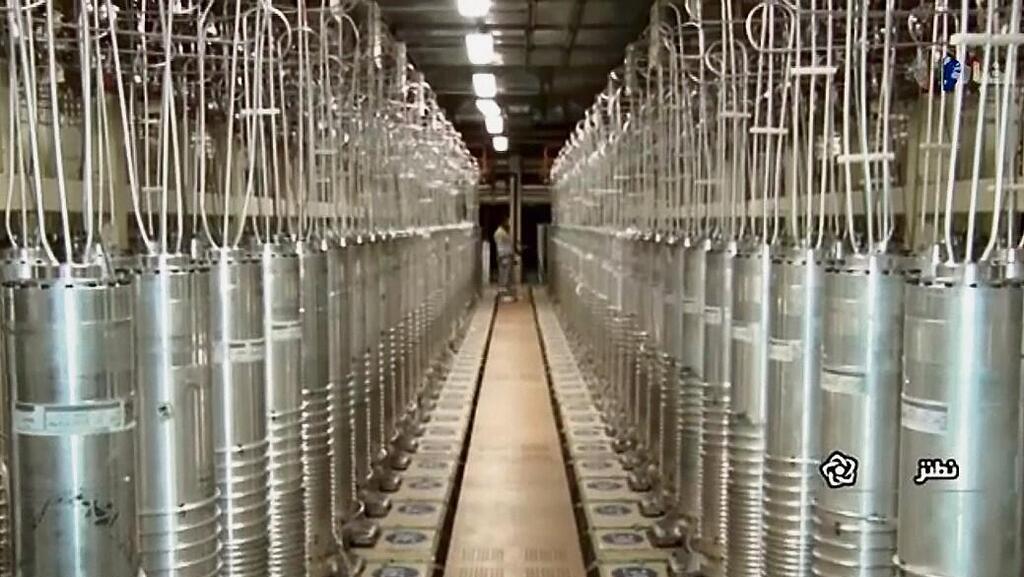
Iran claims it will be allowed to dilute uranium on its own territory. Centrifuges at Natanz
(Photo: AP)
Iran’s deputy foreign minister also claimed overnight that talks with the United States will only begin once Washington releases Iran’s frozen assets, but U.S. officials rejected the claim. According to reports, the United States also has agreed to remove from the agenda any discussion of Iran’s missile program and its support for proxy organizations such as Hezbollah, the Houthis and Hamas.
What does the United States get?
In posts published overnight during his birthday celebrations at the White House, Trump particularly boasted about the reopening of the Strait of Hormuz, which Iran closed at the start of the war and which had previously been open to ships and tankers without restriction. Trump said that “the Strait of Hormuz will be opened freely and without toll fees.” Iran did not confirm that it had agreed to this, and one Iranian news agency claimed that maritime traffic in the Gulf “will be regulated by Iran in coordination with Oman” — contradicting Trump’s statement that Hormuz would reopen “without toll fees.”
Beyond the opening of the strait, the United States and Iran are expected to begin 60 days of negotiations on a final agreement that is not limited to a memorandum ending the war. Those talks are expected to focus on nuclear issues and on the U.S. demand to destroy the highly enriched uranium currently held in Tehran.
In recent days, both Iranian and U.S. sources have claimed that Trump agreed to the destruction or dilution of the uranium inside Iran under UN supervision. In return, Iran is demanding, among other things, the removal of all sanctions and the cancellation of all resolutions imposed against it by the UN Security Council and the Board of Governors of the International Atomic Energy Agency (IAEA).
Will Iran be allowed to enrich uranium?
In addition to the destruction of highly enriched uranium, Trump has repeatedly pledged that Iran’s nuclear program would be fully dismantled and that it would not be allowed to enrich uranium on its own soil. However, in an interview with The New York Times overnight, he said Iran would be “forever limited” to low-level enrichment that “can never be used by the military.” “They will never be able to go beyond a certain amount,” he said. When asked whether this restriction matches the one in the Obama-era agreement, which capped enrichment at 3.67%, he said the deal would ensure that “they can only enrich for non-military purposes.”

The nuclear facility in Isfahan
(Photo: 2026 Planet Labs PBC and Vantor/Handout via Reuters)
Trump insisted that the United States would ultimately work together with Iran to excavate, dilute and remove all 12 tons of enriched material in its possession. He also suggested that Washington would have “strong policing powers” to ensure Iran does not carry out nuclear activity in violation of its commitments, and that the agreement he is shaping would provide “almost immediate” access to its facilities. Iran has not publicly discussed any such agreement.
Shortly before the announcement of the agreement overnight, a U.S. official said the deal would ultimately lead to the dismantling of Iran’s nuclear program, with highly enriched uranium destroyed and removed from the country. By contrast, a senior Iranian official claimed the agreement would allow Iran to dilute its enriched uranium inside the country, but there is currently no confirmation of this.
What happens in Lebanon?
According to Pakistan and Iranian sources, the agreement also includes an immediate ceasefire in Lebanon. Tehran further claimed overnight that one of Iran’s conditions for not responding with missiles to Israel’s strike in Beirut Sunday was a withdrawal from southern Lebanon — a condition Israel rejects. According to Israeli officials, Prime Minister Benjamin Netanyahu made clear to Trump in their conversation that Israel does not consider itself bound by the Lebanese clause in the agreement with Iran. The prime minister said that the IDF would remain in its current positions and would not withdraw from Lebanon.

Vice PResident JD Vance and Steve Witkoff celebrate Donald Trump's birthday at the White House
(Photo: Kent Nishimura/ AFP)
Has Iran renounced an attack on Israel?
Tehran has reportedly set a condition that Israel must withdraw from southern Lebanon in order to cancel a planned missile strike in response to the bombing in Beirut’s Dahieh district — an action Israel carried out as part of a “formula” established in response to Hezbollah fire into its territory. Iran announced with the agreement that it had canceled the attack, but has not yet said whether it intends to launch missiles if Israel does not withdraw.
What did Israel say about the agreement?
Since the Pakistani announcement, followed by statements from Trump and Iran, Israel has not issued any official response to the agreement. Prime Minister Benjamin Netanyahu published a statement on Thursday saying that in a conversation with Trump he expressed appreciation for the president’s commitment that the final agreement would include the removal of enriched nuclear material (not guaranteed); dismantling of enrichment infrastructure (not guaranteed); limits on missile production (removed from the agenda according to Iran); and an end to Iran’s support for its regional terror proxies (also removed from the agenda according to Iran).