

A second woman has come forward alleging that International Criminal Court (ICC) prosecutor Karim Khan sexually harassed her, the Guardian revealed Thursday. The woman, identified under the pseudonym “Patricia,” claims Khan repeatedly touched her and pressured her to have sex with him in 2009 while she was working as his unpaid intern. Khan has denied the accusations, as he did with an earlier complaint, but the new claims are expected to deepen his legal and political troubles.
Khan, 55, has served as ICC prosecutor since 2021. In Israel, he drew headlines for issuing arrest warrants against Prime Minister Benjamin Netanyahu and Defense Minister Yoav Gallant over alleged war crimes in Gaza. He also issued a warrant against Russian President Vladimir Putin for alleged war crimes in Ukraine.
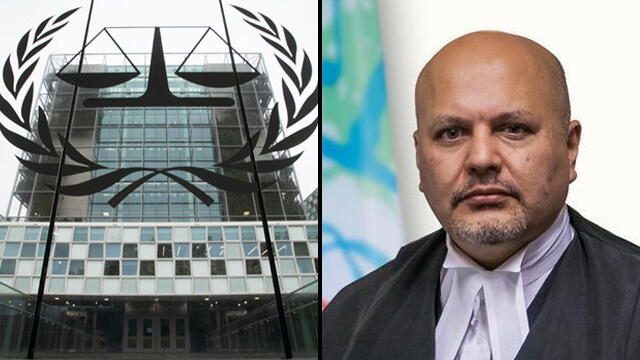
Last summer, it emerged that a staffer in her 30s accused Khan of sexually harassing her and pressuring her into sex over an extended period in 2023–2024. That complaint prompted a United Nations-appointed external panel to investigate, leading Khan to suspend himself from office pending the inquiry. He has denied any sexual misconduct.
In Thursday’s exclusive interview, Patricia said she experienced a “constant onslaught” of advances from Khan during her internship in 2009, when she was in her 20s and he was already a prominent lawyer at the ICC and other war crimes tribunals. She said she viewed the internship as a unique chance to gain experience but found herself subjected to what she described as "a price it shouldn’t have come at."
Patricia recounted one incident inside ICC offices when Khan groped her breasts without consent.“It wasn’t like ‘oops, I brushed the back of my hand against you, I’m sorry. He was too close,” she told the Guardian. She said the encounter left her “confused and humiliated.”
She added that Khan repeatedly asked her to work from his home in The Hague, where she found herself alone with him. “Every time I worked at his house, it would be another round of [Khan] sitting next to me on the couch and touching me and kissing me and trying to convince me to sleep with him," she said. Patricia said she resisted, fearing losing his professional support, including a crucial recommendation letter. “I was trying to figure out how to stay in his good graces and get the work experience while not sleeping with him and succumbing,” she said.
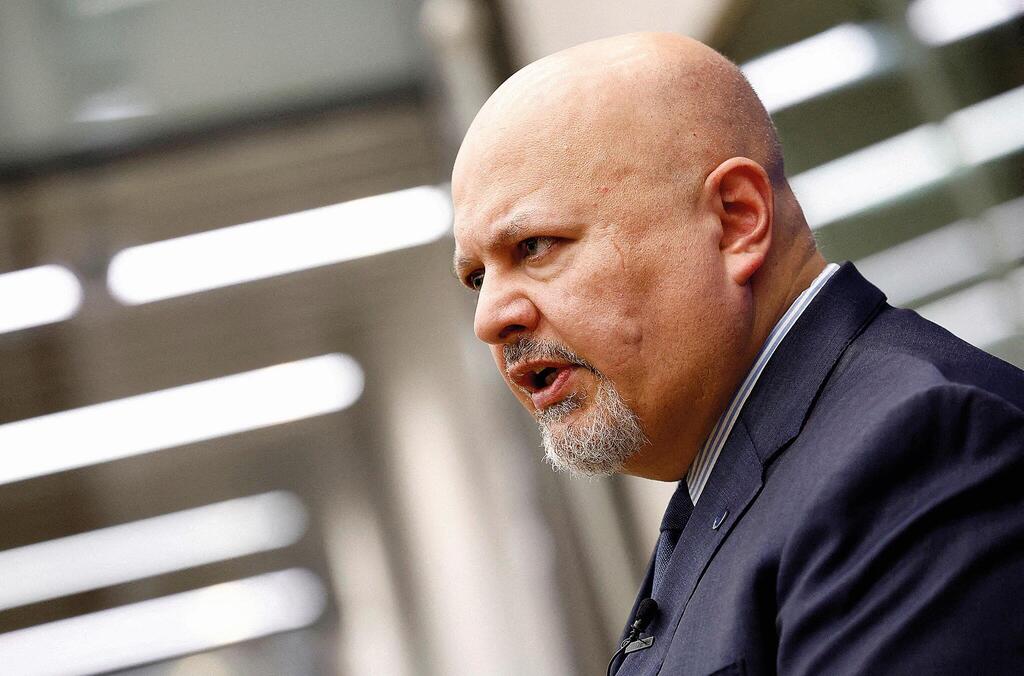
Karim Khan, Chief Prosecutor of the International Criminal Court in The Hague
(Photo: Piroschka Van De Wouw/ Reuters)
When the internship ended, Patricia said Khan gave her an excellent reference letter. “It felt like a deal with the devil,” she said. She admitted she stayed in touch with him for years afterward for career reasons, but eventually cut contact. In 2019, she received what she described as a “weird message” from Khan thanking her for her “good company” and friendship. She replied: “Karim, it does not make me happy to hear from you, that is why I do not respond. I wish you wouldn’t contact me, please don’t do it any more.” She said he never did afterward.
Patricia testified formally this summer before the UN inquiry and submitted supporting material. Investigators also interviewed people close to her. Once the inquiry concludes, legal experts will review the findings and submit recommendations to the ICC’s governing body. If Khan is found to have seriously breached the court’s code of conduct, member states could hold a secret vote on whether to remove him.
Khan’s lawyers told the Guardian the allegations are “wholly untrue” and that he “categorically denies” having “harassed or mistreated any individual, or having misused his position or authority, or engaged in any conduct that could be interpreted as coercive, exploitative, or professionally inappropriate."
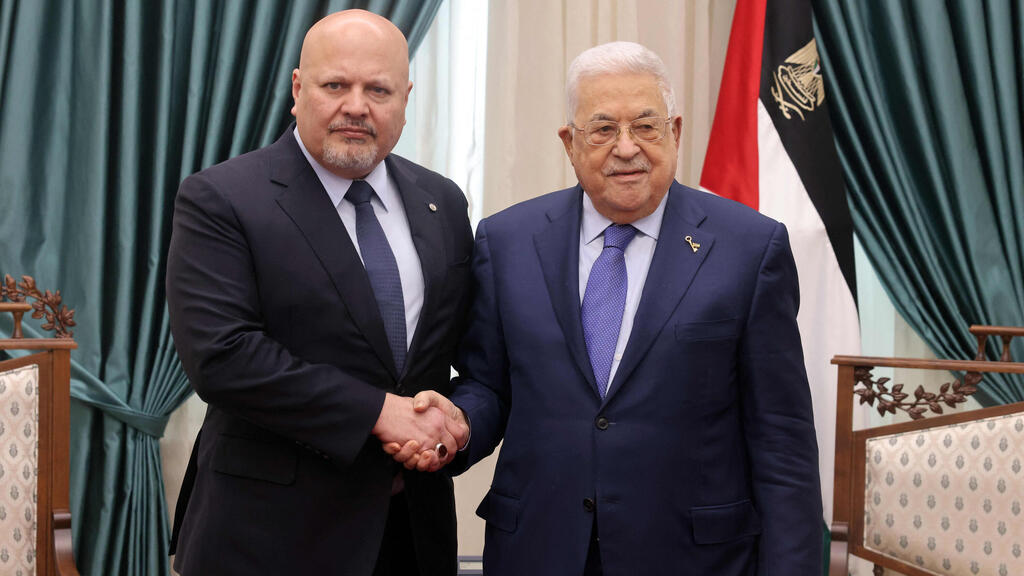
Karim Khan and PA President Mahmoud Abbas
(צילום: Ghanaim/ PPO / AFP)
The Guardian noted that when the first complaint surfaced last year, Khan and associates privately suggested pro-Israel actors were behind the allegations to punish or deter him over his actions against Israeli leaders. While investigations by the Guardian and other outlets, including Le Monde, found evidence of Israeli-linked attempts to intimidate ICC staff and leak information about the first complainant, they found no indication either woman’s claims were part of an organized plot.
Five ICC insiders familiar with Khan’s initial response told the Guardian his team concluded it was “very unlikely” the complaints were the product of an intelligence operation. One source said that pro-Israel actors may have exploited the story, but they didn’t create it.
The Guardian also reported that the first complainant—a Muslim woman known internally as supportive of Khan’s investigation into Israeli officials—was distressed by suggestions her claims were part of a pro-Israel conspiracy.