


U.S. President Donald Trump said Wednesday that Iran’s enriched uranium would be transferred to the United States under an emerging agreement between Washington and Tehran, as Israeli officials said they had been briefed on the talks and were told the United States was optimistic that a deal could be reached.
Asked by a PBS reporter whether Iran’s uranium might perhaps be sent to the United States, Trump replied: “No, not perhaps. It goes to the United States.”
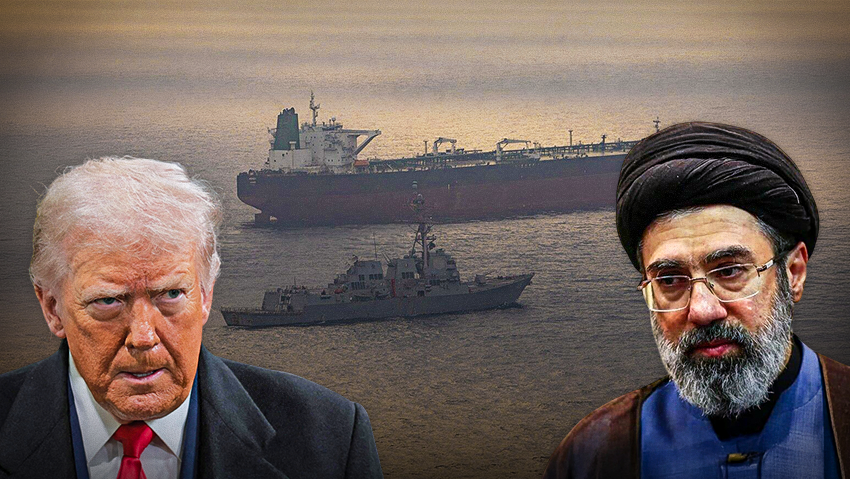
The comment came as Israeli officials said the agreement under discussion was not a final deal but a one-page framework or principles document that would serve as the basis for further negotiations.
According to information shared with Israel, Iran has agreed to a central U.S. demand: removing its stockpile of uranium enriched to 60%, about 450 kilograms, or 992 pounds, from the country. It had not previously been clear where the uranium would be sent.
Israeli officials said Wednesday evening that they were not surprised by the emerging agreement. Officials in Prime Minister Benjamin Netanyahu’s office said Netanyahu was in contact with Trump and that his team was in contact with the White House. Israel, they said, has been updated on the details.
The main question, according to the officials, is whether the agreement will be acceptable to Iran’s Supreme Leader Mojtaba Khamenei and to the Islamic Revolutionary Guard Corps.
A diplomatic official said Israel had been assured that Trump was standing by his red lines, foremost among them the removal of nuclear material.
“The prime minister has instructed the IDF to be prepared for every scenario, including a return to fighting if necessary,” the official said.
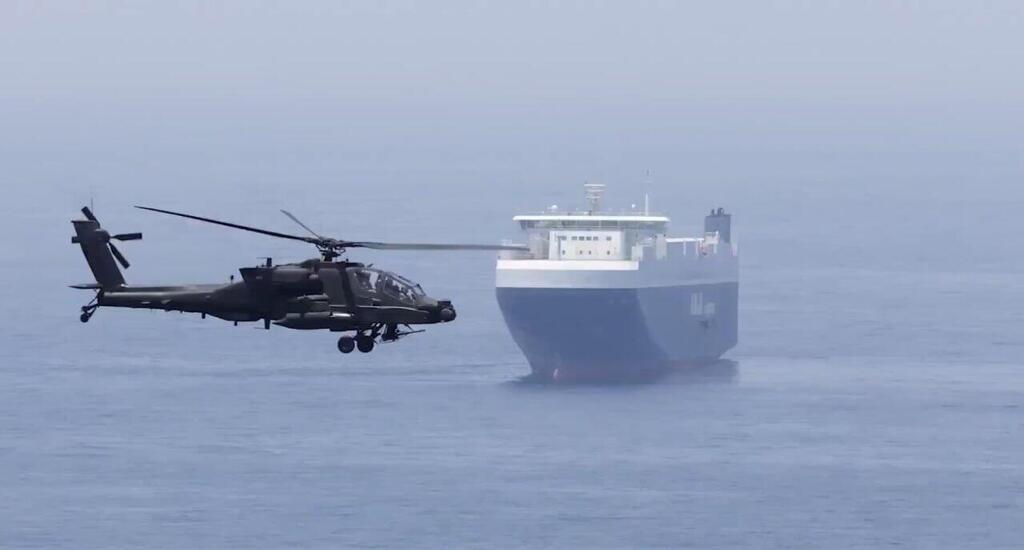
The Strait of Hormuz
(Photo: from X)
A different account was reported by Reuters, which cited an unnamed Israeli source as saying Israel had not been aware that Trump was close to an agreement with Iran or to ending Project Freedom, the U.S. effort to move vessels stranded in the Strait of Hormuz, which he had announced. According to that source, Israel had been preparing for an escalation in the fighting.
Beyond the transfer of enriched uranium, details provided to Israel indicate that Tehran has agreed to halt uranium enrichment for 15 years, even though Trump said last month that the deal he wanted with Iran would be “forever.” Tehran also agreed to restore intrusive inspections by the International Atomic Energy Agency.
Israeli officials briefed on the details said the agreement refers to ballistic missiles, though the final wording remains unknown. It is believed to include limits on missile ranges, as demanded by the United States. It is still unclear whether the agreement addresses Iranian financing for its proxies, including the Houthis in Yemen and Hezbollah in Lebanon, an issue Washington had raised.
Iran also insisted on including a clause linking all fronts and ending fighting on all of them, similar to the position it presented in negotiations held in Islamabad. The Iranians have not changed that position, and as far as is known, the United States has agreed to it, despite the fact that such a clause would be less convenient for Israel. The final wording on the other fronts remains unclear, but the expectation is that the reference will be general.
In return, Iran would receive the removal of some sanctions and the release of billions of dollars in frozen funds. The relief would be gradual and would not include the unfreezing of all Iranian assets. Iran and the United States also reached an agreement on fully reopening traffic through the Strait of Hormuz.
The talks were mediated by Pakistan’s army chief, Gen. Asim Munir. Iran is expected to give an official final answer within 48 hours, but those involved in the process believe the agreement is acceptable to both sides.
Trump sounded more cautious Wednesday evening than he had overnight. “I felt that way before with them, so we'll see what happens,” he told PBS. “I think we'll have a very good chance of making a deal again. If we don't, we'll go back to our old ways.”
Trump said he would not send Steve Witkoff and Jared Kushner to Pakistan at this stage.