

Despite repeated claims by President Donald Trump and Defense Secretary Pete Hegseth that Iran’s navy was destroyed in massive U.S. and Israeli strikes on the Islamic Republic, Tehran appears to retain the ability to carry out attacks at sea using small, fast vessels — which were less targeted during the war, unlike Iranian warships that were sunk.
According to reports, Iran’s Islamic Revolutionary Guard Corps seized the vessels EPAMINODES and MSC FRANCESCA on Wednesday in the Strait of Hormuz. Trump said: "I have ordered the United States Navy to shoot and kill any boat, small boats though they may be, that is putting mines in the waters of the Strait of Hormuz."
The US takeover of the tanker in the Indian Ocean
(Video: CENTCOM)


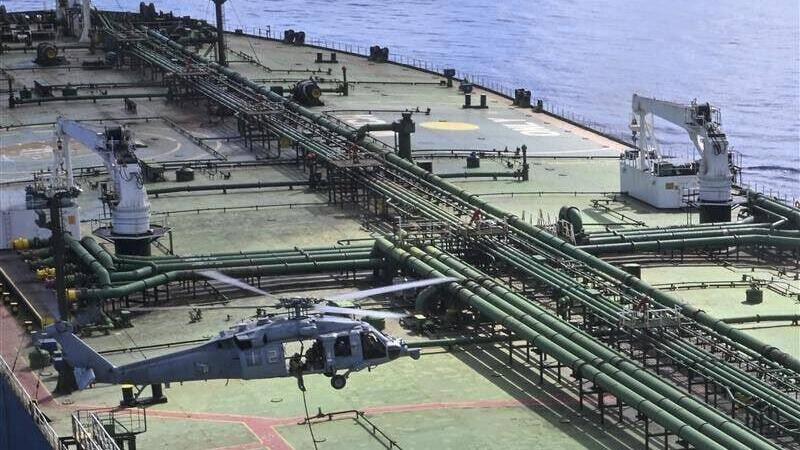
After Iran released footage of what it claimed was the seizure of the ships, the United States also published its own documentation. The Pentagon released video showing U.S. forces overnight boarding the tanker M/T Majestic X, which it said was carrying Iranian oil. According to the Pentagon, the sanctioned vessel was sailing without a national flag.
“We will continue global maritime enforcement to disrupt illicit networks and interdict vessels providing support to Iran, wherever they operate,” the Pentagon said. “International waters cannot serve as a shield for sanctioned actors. We will continue to deny illicit actors and their vessels freedom of maneuver in the maritime domain.”
A CNN report, citing U.S. intelligence sources, said the IRGC still retains about 50% of its prewar assets despite six weeks of intense fighting. Those assets include thousands of small boats like those apparently used in Wednesday’s seizures — vessels often described as part of Iran’s “mosquito fleet,” a term for swarms of small attack craft.
Tehran boasted of the seizures in the Strait of Hormuz and released polished footage of the incident. However, analysts cited by CNN said the video appeared staged and not filmed in real time.
Footage of the seizure of the ships, as published by Iran
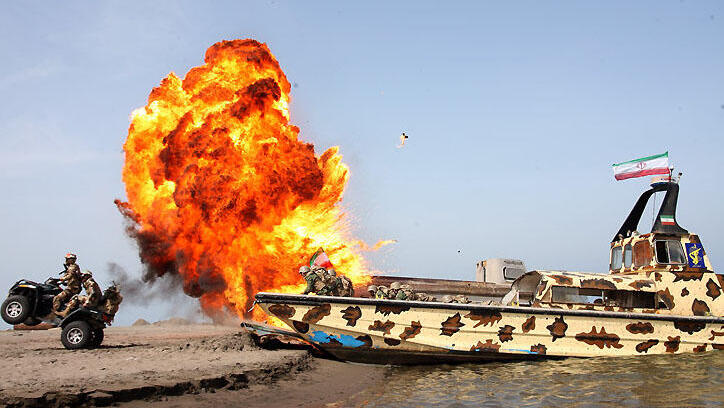
Footage of the IRGC’s “mosquito fleet,” from a 2015 exercise in the Strait of Hormuz
(Photo: Wikipedia)
According to the report, IRGC speedboats carry personnel and anti-ship missiles and can launch shoulder-fired missiles at ground and air targets.
Individually, such boats “are not a match for U.S. Navy destroyers and are highly unlikely to sink a cargo ship or tanker,” the report said. “However, when operating in swarms of dozens, or combined with drones or shore-to-sea missiles, they can cause significant damage — to both enemy warships and large commercial vessels.”
The IRGC has used swarm tactics since the 1980s. In a widely publicized 2015 exercise, its forces used about 100 small boats to attack a mock-up of the USS Nimitz aircraft carrier in the Persian Gulf.
The small boats can also be used to lay naval mines. Tehran does not need many of them to effectively shut down the Strait of Hormuz — even without large ships — as commercial operators may be unwilling to risk transit under current conditions.
Iran’s judiciary chief, Gholamhossein Mohseni Ejei, said Thursday: “The IRGC navy, equipped with boats and drones, is waiting for the invading American ships — to completely destroy them.”
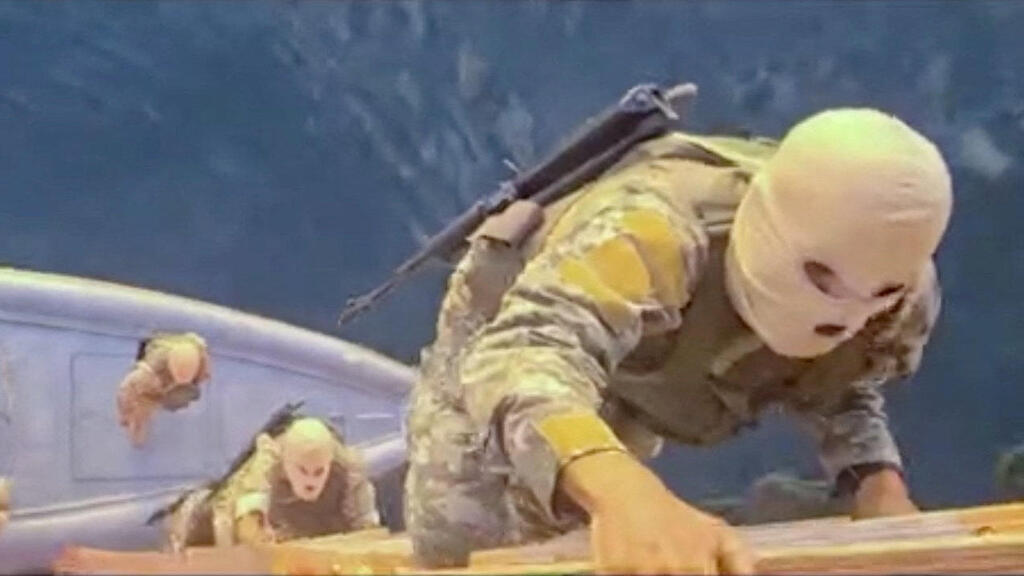
Footage from the alleged seizure of the ships in the Strait of Hormuz. 'It looks staged to me'
(Photo: IRIB/Handout via REUTERS via REUTERS)
Regarding the footage of the alleged seizure, analysts told CNN it “may not depict the actual moment of capture and may have been at least partly reconstructed for dramatic purposes.” The nearly two-and-a-half-minute video was posted on the Telegram account of Iran’s state broadcaster IRIB (Islamic Republic of Iran Broadcasting).
Analysts said the video includes aerial footage and shots that would typically require prior planning. For example, footage of masked men climbing a ladder onto the deck is immediately followed by a close-up from the deck itself — suggesting the camera was prepositioned or the event was reenacted.
“It looks staged to me,” said Carl Schuster, a former U.S. Navy officer and former director of operations at the U.S. Pacific Command’s Joint Intelligence Center.
Schuster did not necessarily dispute that Iran seized the ship but said it “looks like a training exercise or a publicity stunt,” noting the absence of crew on deck and the lack of visible attempts to take cover. He also pointed to calm sea conditions, which he described as unusual for the Persian Gulf at this time of year, suggesting the vessel may have been in a sheltered anchorage or port.
(Photo: AP Photo/Alex Brandon)
Collin Koh, a research fellow at the S. Rajaratnam School of International Studies in Singapore, also said the footage did not appear to have been created in real time, citing the absence of crew. CNN’s analysis further noted differences in lighting between scenes, suggesting the video was filmed in multiple takes.
Iranian media praised the footage, claiming the ship had “violated the law in the Strait of Hormuz.” Satellite images also showed a sharp course change by another tanker, EUPHORIA, after it was attacked by Iran.
EPAMINONDAS, sailing under a Liberian flag, was reportedly attacked by a small IRGC boat carrying three individuals who fired rifles and rocket-propelled grenades. The crew was not injured, but damage was reported to the ship’s bridge.
Meanwhile, the U.S. blockade of the Strait of Hormuz continues, a key point of contention in talks between Tehran and Washington. The U.S. military on Wednesday rejected claims that at least 34 ships had already breached the blockade, calling the reports inaccurate.
“Trump is pleased with the blockade of Hormuz,” White House press secretary Karoline Leavitt said in an interview with Fox News. She said the president has not set a deadline for an Iranian response in negotiations, following reports that the ceasefire had been extended by three to five days, possibly to allow the aircraft carrier USS George H.W. Bush to move closer to the region.
“Iran must agree to hand over its enriched uranium to the United States as part of negotiations to end the war,” Leavitt added.
Senator’s message: ‘The blockade will become global’
Sen. Lindsey Graham, a close ally of Trump and a leading Iran hawk, wrote on X: “I had a very good conversation this morning with the president of the United States and Secretary of War Pete Hegseth regarding the path forward in the conflict with Iran. I believe the president’s decision to maintain the blockade is very wise.”
He added: “I not only expect this blockade to remain in place until Iran demonstrates a commitment to changing its behavior. I expect it to expand and possibly become global soon. To those helping or considering helping the Iranian regime export its oil, which provides resources for terrorism — you do so at your own risk.”
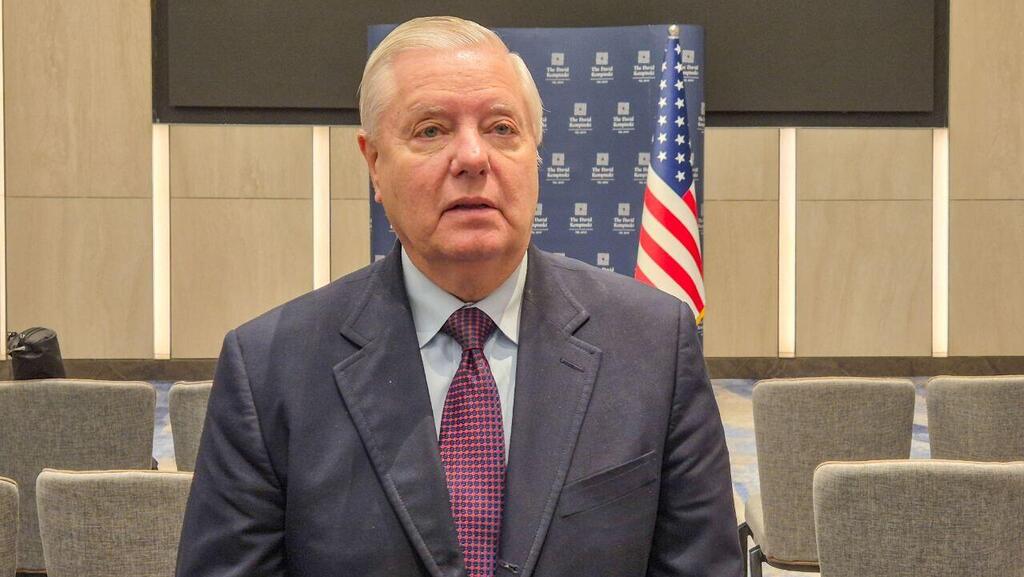
Sen. Lindsey Graham
(Photo: Ido Erez)
Later, Pentagon spokesman Sean Parnell said Navy Secretary John Phelan would leave his post “effective immediately,” without providing a reason. His deputy, Hung Cao, will serve as acting secretary of the Navy, which oversees both the Navy and Marine Corps.
Sources familiar with the matter told Reuters that Phelan was fired, citing clashes with Hegseth and difficulties implementing shipbuilding reforms. One source said he had strained relationships with Hegseth, Deputy Defense Secretary Steve Feinberg and Cao, and that an ethics investigation involving his office is underway.
First published: 16:32, 04.23.26