

The frenzy surrounding the upcoming conversion reform is a battle between Zionist Jewish Orthodox men and non-Zionist Jewish Orthodox men. A battle for the future of the Jewish people in Israel, with the secular public left entirely out of the conversation.
However, it is not the fault of the Chief Rabbinate of Israel or the religious establishment, it is the result of non-religious people's lack of ability to act when it comes to the struggle surrounding the Jewish identity of Israel.
This is not a new phenomenon. The political and legal power of the religious parties in Israel is embodied by the apathy of the non-religious. Zionism gave up its part in the discussion on who is Jewish and who is not, in exchange for political cooperation of the religious parties.
For decades, Israel's prime ministers, ministers, and Knesset members have been honoring the top rabbis without questions asked, always in fear that the alliance between the religious and non-religious sector is fragile and might fall apart at any moment. And the religious parties used this to their advantage, to fulfill their own vision for the Jewish people.
The non-religious people, knowingly, left all the official religious institutions of Israel in the hands of the religious parties, creating an absurd situation in which the minority controls the majority and creates official bodies that become more and more powerful as time passes. These institutions take not only large chunks from state budgets, but also from the identity of the country.
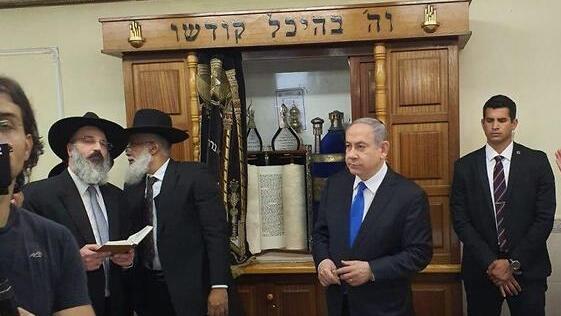
Former Prime Minister Benjamin Netanyahu
(Photo: Kikar HaShabbat)
In the early 1970s, the Law of Return was amended to allow the release and immigration of the prisoners of Zion in the Soviet Union, some of whom were not Jewish according to the Halakha, which is the collective body of Jewish religious laws.
Some 20 years later, as part of a big immigration wave following the fall of the Iron Curtain, some half a million people, eligible to make Aliyah under the Law of Return, made their way to Israel, while the issue of whether some of them were not Jewish was ignored. Thus, creating the problem we are dealing with now.
The root of the problem, however, lies in the ancient sin of Zionism. The Zionist movement did not see fit to rely on Judaism as it evolved during some 2,000 years of exile.
The climax came with the signature of David Ben-Gurion on the status-quo document in front of Rabbi Avrohom Yeshaya Karelitz, who was one of the leaders of Haredi Judaism in Israel between 1933 to 1953. This move erased any possibility of reconciliation between the Zionist and the rabbinical interpretation of Judaism. Ben-Gurion had a variety of historical reasons to act as he did, but the very act created the core of the inner Jewish conflict.
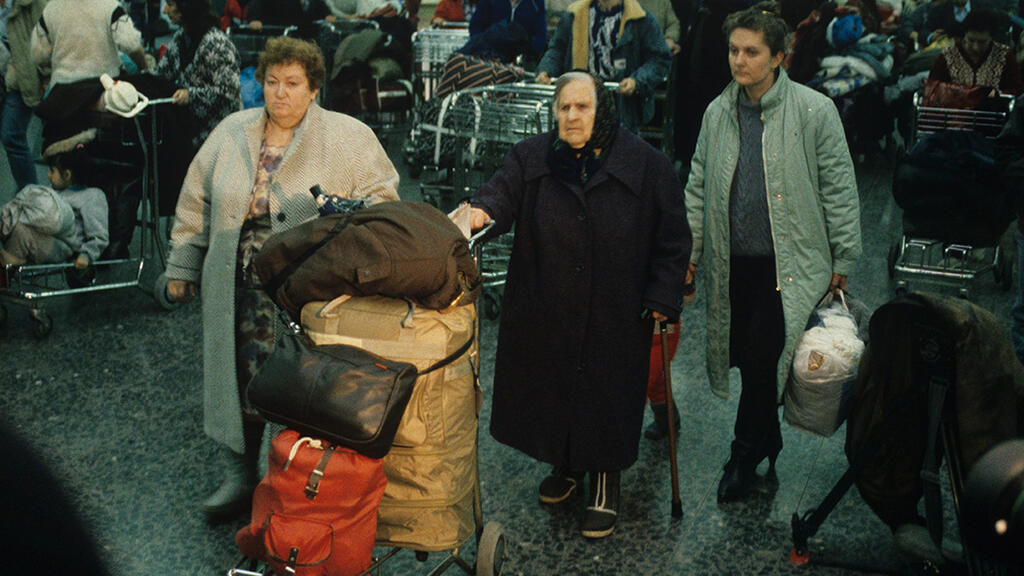
Immigrants from the Soviet Union arrive in Israel, 1990
(Photo: David Rubinger)
For 74 years Orthodox rabbis have tried to take over the national conversion system that is in the hands of non-Zionist Orthodox rabbis, while the non-religious Zionist factions sit quietly. The conversion reform may become the most dramatic referendum on the identity of the Jewish state since the amendment to the Law of Return. Yet, the country's majority refuses to act on this issue.
One way or another, the conversion reform is a smokescreen and not the solution to the issue. Even if it passes, what interest do millions of Israelis have, especially women, in going through this process? Why should an Israeli Russian female humiliate herself in front of a rabbi who sees her as inferior?
She celebrated all Jewish holidays according to the Israeli calendar, volunteered at the Magen David Adom emergency medical services in high school, served in the IDF, and now works in the service of the state. Surely she doesn't need the permission of the rabbis to consider herself Jewish.
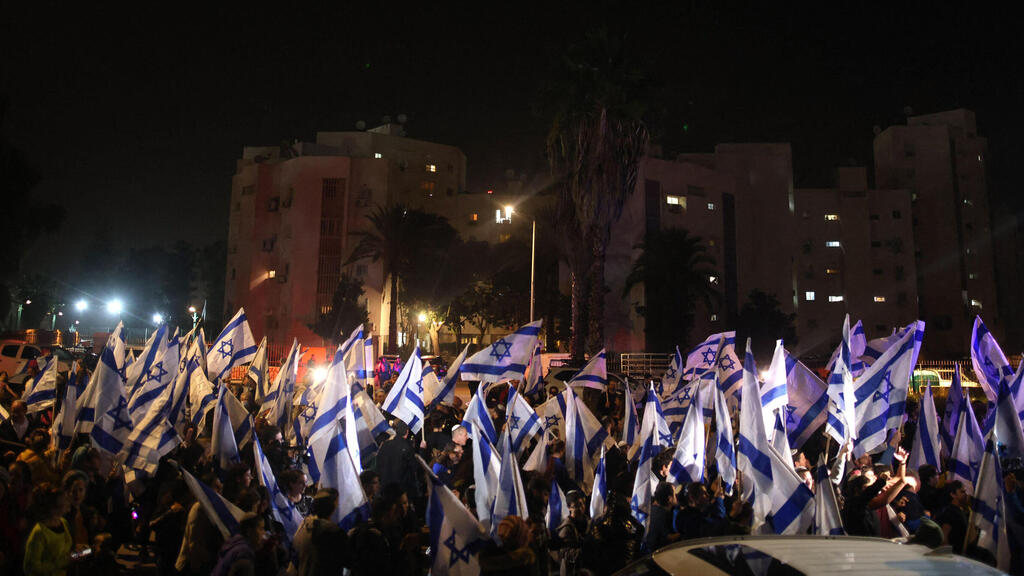
Israel's Flag Parade
(Photo: AFP)
The truth is that many other Israelis also don't need the permission of the rabbis to see themselves as part of the Jewish nation. Those for whom the Halakha is relevant, will have to deal with the consequences of this reform. But they are the ones who choose the life of being bitter about everything, discriminating against Jews who don't live as they do.
The discourse on the conversion reform is an opportunity for Zionism to grow and embrace its Jewish identity and do so out of knowledge and power. For thousands of years, the Jews have been able to break down and rebuild their framework in order to keep their people from internal threats.
As long as Israel continues to debate on what it means to be a Jew, the situation will not change. I mean, what interest does a non-Jewish person have in the Orthodox vision of the conversion process?
The Israeli society is at boiling point when it come to its Jewish identity, and that is without addressing the Jewish people who enjoy their secular lifestyle overseas.
Bottom line is that Zionism has created this problem, and Zionism is the one that has to solve it.