


Iran’s Assembly of Experts has selected Mojtaba Khamenei, the son of slain Supreme Leader Ayatollah Ali Khamenei, as the next leader of the Islamic Republic, according to a report Tuesday by Iran International, which cited sources familiar with the decision and said the vote was held under pressure from the Islamic Revolutionary Guard Corps.
Senior Israeli officials said they assess that the Assembly is expected to formally announce Mojtaba Khamenei as successor in the coming hours.
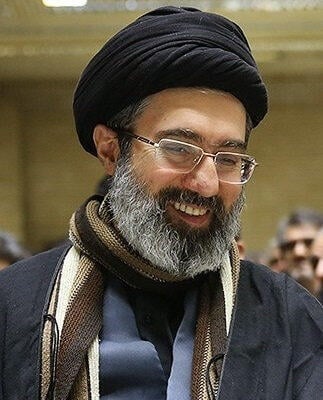
Mojtaba Khamenei
(Photo: Iranian news agency)
The reported decision comes after Iranian media earlier said members of the 88-member Assembly of Experts were not inside the building in Qom that Israel struck earlier Tuesday and would soon declare a replacement for the supreme leader, who was killed at the outset of Operation Roaring Lion.
According to Iran International’s correspondent, the selection of Mojtaba Khamenei was made “under pressure from the Revolutionary Guards.”
Mojtaba Khamenei, the supreme leader’s second son, is considered aligned with Iran’s hardline conservative camp, similar to his father. He has publicly supported suppressing regime opponents inside Iran and backing an assertive policy toward external enemies.
A mid-ranking cleric who teaches Shiite theology at a seminary in Qom, Iran’s religious center, Mojtaba has never held a formal government position but is widely believed to wield considerable influence behind the scenes. He is known to have cultivated close ties with the Revolutionary Guard.
Analysts outside Iran have previously described him as a “gatekeeper” within his father’s inner circle. In 2019, the United States imposed sanctions on Mojtaba Khamenei, saying that although he did not hold an official title, he effectively “represented” the supreme leader.
Despite his name repeatedly surfacing over the years as a possible successor, Mojtaba has not been widely viewed as a leading candidate. Observers have noted that elevating him could be perceived as a hereditary transfer of power — echoing the monarchy overthrown in the 1979 Islamic Revolution — and that he is not considered a sufficiently senior cleric by traditional standards for the post.
Israeli officials have previously said Mojtaba does not appear to hold a prominent public profile and suggested Iranian authorities have sought to keep him “out of sight.”
Under Iran’s constitution, the supreme leader is chosen by the Assembly of Experts, whose members are elected but must first be approved by the Guardian Council, a body appointed directly or indirectly by the supreme leader. The position holds ultimate authority over the military, judiciary and key state institutions.
There was no immediate confirmation from Iranian state media of Mojtaba Khamenei’s reported selection.
First published: 21:42, 03.03.26