

In 2023, Hassan Nasrallah, Hezbollah’s secretary-general, made the biggest mistake of his life — he sent his men into war with Israel. The terror group entered brimming with confidence: over 150,000 rockets, precision ballistic missiles, thousands of well-trained operatives, and infrastructure two decades in the making.
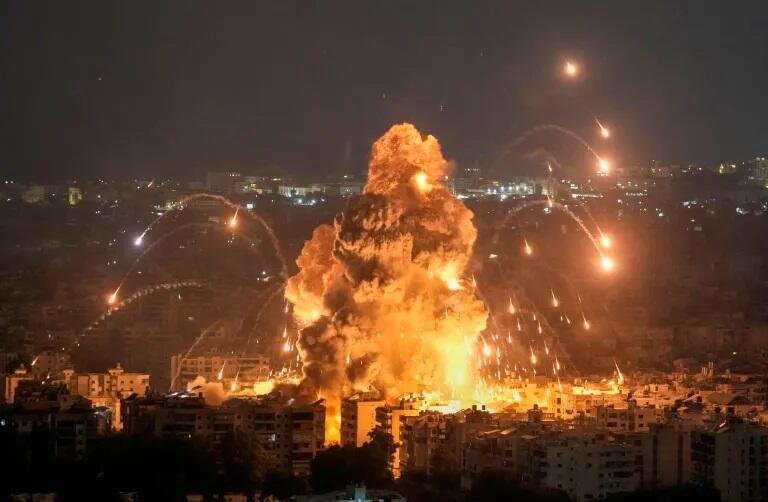
But Lebanese optimism met the wall of Israeli reality. The IDF shattered nearly everything Hezbollah had through technological superiority, intelligence innovation, and overwhelming firepower. Yet, as always in the Middle East, what doesn’t kill your enemy often makes him stronger — and the next round is always just around the corner.
IDF eliminates Hezbollah terrorists in Lebanon
(Video: IDF)


Rebuilding a wounded army
Hezbollah is now rebuilding its capabilities at full speed, facing little interference. The group’s new structure could pose fresh challenges for Israel — particularly in three areas: rockets and missiles, drones, and the infrastructure supporting them.
Traditionally, Hezbollah’s firepower relied on a vast artillery network — precision ballistic missiles hidden inside homes, and rocket launchers spread across southern Lebanon. The IDF learned this system well and responded effectively. Most of the ballistic missiles — Iranian-made Fateh-110 variants — failed to impact Israel’s rear. Many were intercepted, while the air force destroyed launchers before they could fire.

Hezbollah terrorists and Grad rocket launchers mounted on light trucks
(Photo: TSANIM)
Heavy rockets such as the Fajr-5 and Grad caused destruction when they hit, but Hezbollah struggled to sustain massive barrages. According to IDF data, the group never launched more than 230 rockets in a single day — and that only once, at the end of August 2024.
Why so few? Because rockets in storage aren’t rockets on launchers. The group ran into severe logistical problems: moving ammunition, deploying enough launchers at the right time, and coping with wounded field commanders still recovering from burns in Beirut hospitals.
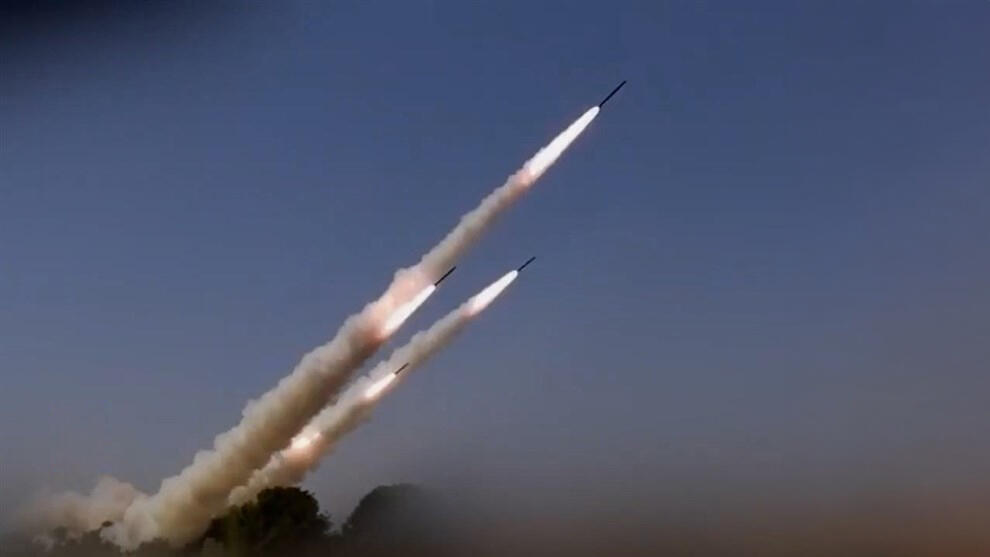
Rocket barrage launch
(Photo: Hezbollah)
The IDF capitalized on these weaknesses, destroying hundreds of launchers at once. In Operation Gadid Tamarim on September 21, 400 rocket launchers were wiped out within hours. Even when Hezbollah managed to concentrate fire, most rockets were intercepted by Iron Dome batteries. Israel’s detection and air defense systems performed exceptionally.
Cheap, deadly, and hard to stop
One of the most damaging weapons Hezbollah used was the primitive Burkan rocket — essentially an explosive barrel with a small rocket motor. Its short range made interception difficult, and Iron Dome sometimes couldn’t react in time. Long-range Almaz anti-tank missiles, guided optically and fired from complete concealment, also proved dangerous. Operators could lock onto targets using the missile’s onboard camera, allowing precise hits on bases, vehicles, and homes.

A Burkan rocket on display at the Hezbollah museum in Lebanon
(Photo: VOA)
While Israel’s Trophy active protection system can intercept such missiles, it only defends the specific vehicle it’s mounted on. There’s no way to place such systems on every home near the border or every tractor in the Galilee.
As a result, Hezbollah may shift to a mix of “smart” missiles and “dumb” rockets — smaller arsenals but more effective weapons that bypass Israel’s defenses.
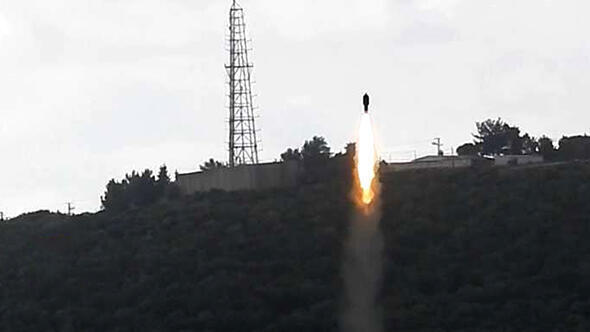
A rocket launched toward an IDF base in northern Israel
(Photo: Hezbollah)
Hezbollah’s air unit, built over decades with billions of dollars in Iranian investment, stocked long-range cruise missiles like the DR-3 and advanced attack drones such as the Shahed-129 and jet-powered Karrar. These could drop guided bombs or intercept other drones. But Israel’s air force destroyed most of this elite fleet before it made an impact.
The real threat came from simpler kamikaze drones — the flying bombs launched en masse from Lebanon into Israel. Cheap and effective, models like the Ababil-T, long-range Samad-2, and the small, elusive Shahed-101 and -107 inflicted injuries and property damage.

Shahed 129: big, expensive, and unnecessary
(Photo: AFP)
Each is a one-way weapon, but they cost next to nothing: the price of a single Shahed-129 could buy around 300 of these. They’re easy to launch from anywhere, even without proper infrastructure. Hezbollah has already been shifting production toward these low-cost drones. Israeli strikes in Beirut’s Dahiyeh district and other locations in June destroyed five drone factories, yet the group continues rebuilding at scale after losing about 70% of its drone stockpile.

A Hezbollah suicide drone
(Photo: AFP/ Jalaa Marey)
The next battlefield
What’s most concerning, however, are the practical implications. Almaz missiles can be fired from hidden positions — even holes in the ground — making it far harder for Israel to eliminate launch crews. Fewer fighters will be needed to pose serious threats, and despite their cost, the high price of these missiles may balance out through savings on manpower.
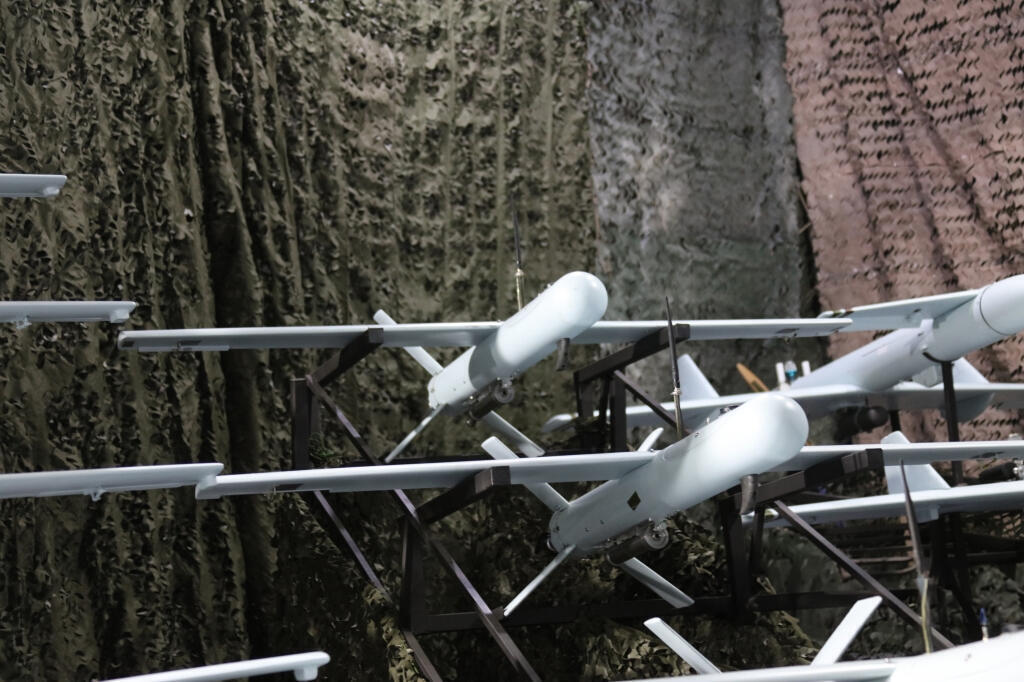
Hezbollah suicide drones arranged in a warehouse
(Photo: Hezbollah)
Similarly, launching suicide drones requires no runways or complex facilities. A Shahed-101 fits in a crate the size of a TV cabinet — easy to hide, cheap to store, and capable of reaching targets hundreds of kilometers away. Hezbollah no longer needs vast underground bunkers that cost millions and attract Israeli intelligence.
That’s the danger: the simpler the weapon, the harder it is to stop. Hezbollah’s new arsenal demands fewer people, less money, and minimal infrastructure — yet poses greater challenges than ever.
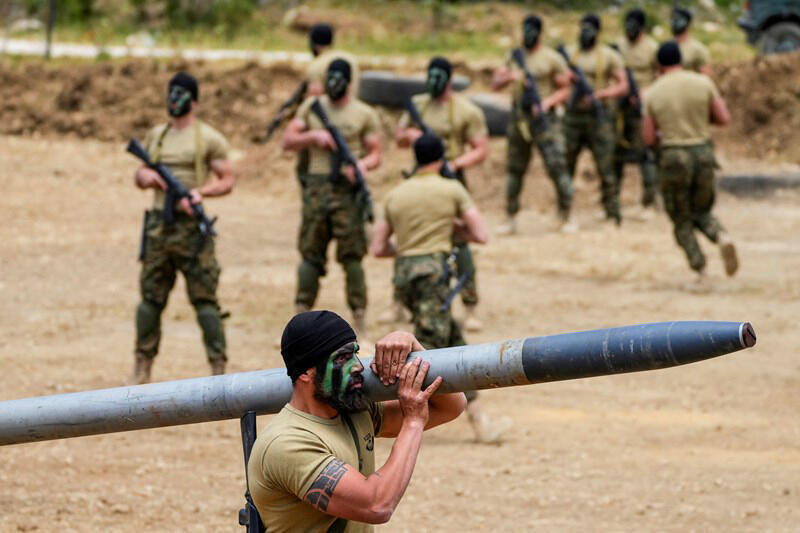
Hezbollah terrorist carrying a rocket
(Photo: AP)
The 2023–2024 conflict — effectively the Third Lebanon War — ended in an extraordinary military victory for Israel. The IDF fought with determination, creativity, and unmatched success. But strategically, little has changed. The battered enemy is rebuilding, largely unchecked within Lebanon, while Israel strikes only when new capabilities are detected.
This time, Hezbollah’s recovery could be faster, cheaper, and more dangerous. The next round — whenever it comes — may test Israel just as severely as the last.