

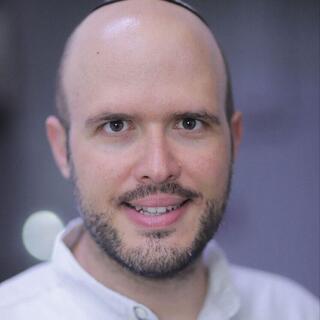
Ali Abu-Ria, 71, from the northern Israel town of Sakhnin, was calm and at ease. In his mind, he was on an exotic beach in Thailand, resting under coconut palms as the sound of waves rippled in the background, imagining places he still hoped to visit one day.
But in reality, he was lying in a sterile operating room at Galilee Medical Center in Nahariya. A team of neurosurgeons was drilling into his skull. Abu-Ria, who has Parkinson’s disease, was wide awake—not under anesthesia or even sedation, but in a deep hypnotic trance, guided solely by the calming voice of chief psychologist Dr. Udi Bonshtein.
For the first time in Israel: brain surgery under hypnosis
(Video: Roni Albert)


The innovative procedure, described by Bonshtein as the first of its kind performed this way in Israel, was a deep-brain stimulation (DBS) surgery in which electrodes were implanted in the patient’s brain. The aim: to help him endure the extreme anxiety, pain, and muscle stiffness that result when Parkinson’s patients must stop their medications ahead of such an operation.
“It was like magic,” Abu-Ria recalled of the surreal experience. “I could hear his voice the whole time, even while the drill was boring into my skull. I was awake, I heard everything around me, but nothing bothered me. He took me on a trip to Thailand, and I told him what I saw there at every moment. He really created a wonderful experience for me, like a dream.” He laughed and added, “Now I just have to make sure I actually go.”
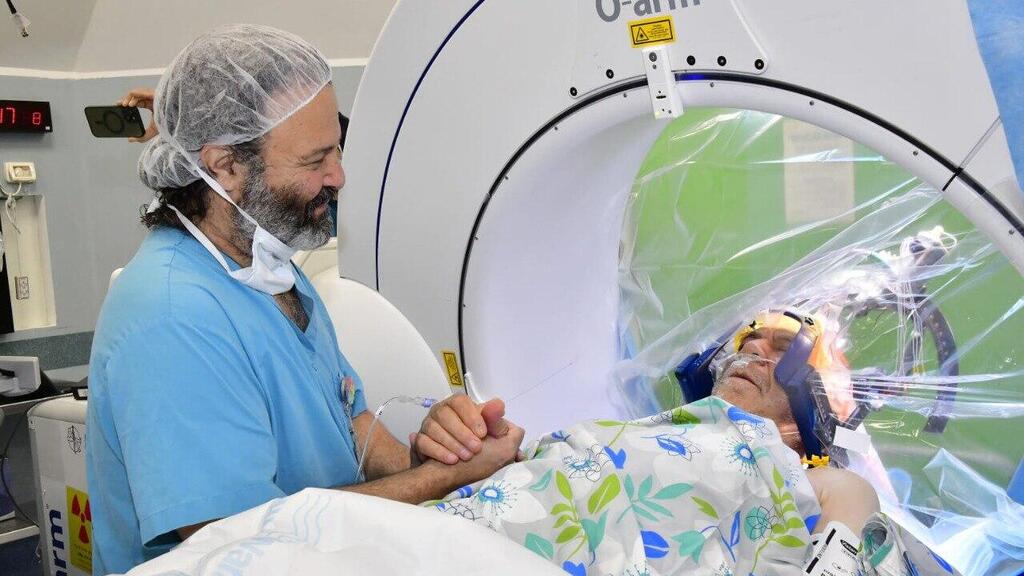
The five-hour operation, led by senior neurosurgeon Yuval Gruber, requires the patient to be fully conscious so the surgical team can test the electrodes’ stimulation in real time. “It’s a very long and very unpleasant surgery,” explained Bonshtein, who heads the hospital’s psychology service. “The brain itself doesn’t have pain receptors, but drilling through the skull and scalp does, and the entire process feels like dental treatment on steroids. For Parkinson’s patients, it’s even harder—they arrive at the surgery without medication, their muscles are extremely rigid, and their bodies are in pain.”
According to Bonshtein, hypnosis changed the picture completely. “It allows them a much more comfortable and pleasant experience. The sense of pain is greatly reduced—at one point, we were even able to remove the local anesthetic altogether. It’s incredible. And when the patient is relaxed, the surgical team can work much more easily.”
Gruber confirmed he had never encountered a patient so calm during such a complex operation.
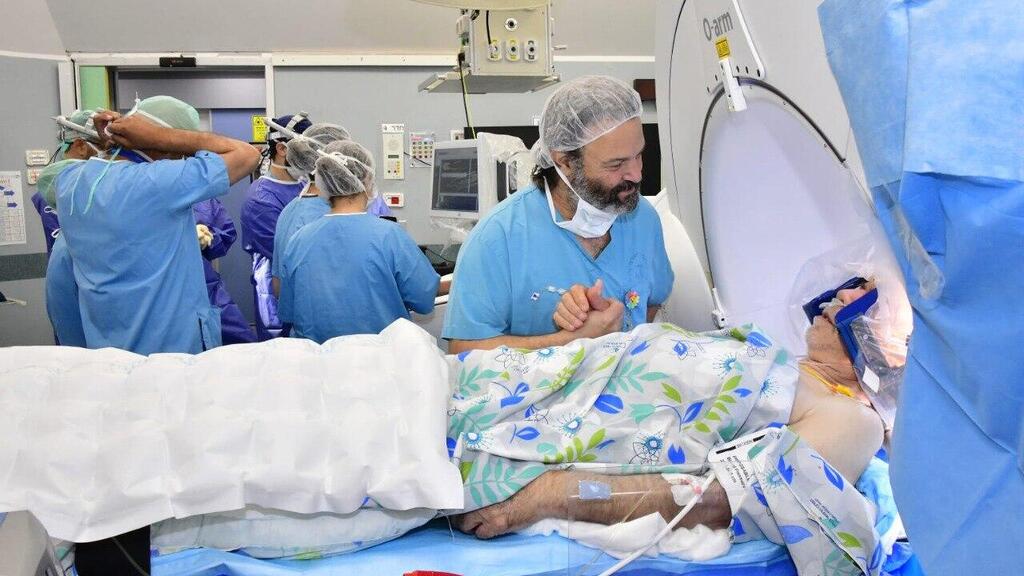
(Photo: Roni Albert)
The breakthrough marked the culmination of Bonshtein’s 20-year effort to integrate clinical hypnosis into the hospital’s work. “Most people are very skeptical about this tool and its potential,” he said. “In reality, it’s very different from the swinging pendulums you see in movies. I help patients focus their attention inward, toward me, not the noises or sensations around them, and create a separation between function and feeling. Together, we plan the pleasant place they want to be, and during the procedure, I guide them there, like in a dream. I don’t do magic. These are the patients’ own abilities.”
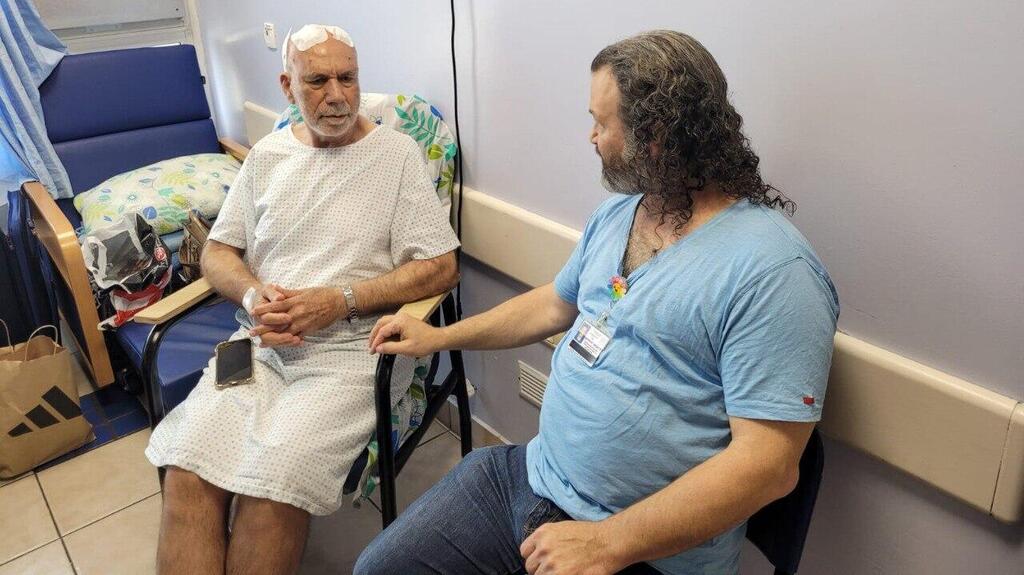
Ali Abu-Ria and Dr. Udi Bonshtein
(Photo: Galilee Medical Center)
Last week, the hospital performed a second complex surgery using hypnosis, again with striking differences compared with procedures done under chemical sedation. “As a result, I’m now called into the ER to help with painful interventions when no anesthesiologist is available,” Bonshtein said. In response to the growing demand, Galilee Medical Center has opened a dedicated hypnosis clinic, staffed by 20 doctors and psychologists trained in the method. The team is now exploring ways to expand its use to additional medical procedures.
For Abu-Ria, the surgery’s success was more than just a medical milestone—it was a release from years of suffering. “I’ve had Parkinson’s for more than seven years. I couldn’t sleep at all because of the tremors. It’s a very difficult disease,” he said. “Now I put my head on the pillow, and within seconds I’m dreaming. It’s amazing. I feel like a new person.”