

Will Smith assaulted Chris Rock on stage at the Oscars after the comedian joked about actor wife’s alopecia, an autoimmune disease that causes hair loss. Disparaging others’ medical conditions is inappropriate. It is behavior that parents teach their children to not emulate.
I grew up watching The Fresh Prince of Bel-Air, a 90s sitcom that helped Smith rise to prominence and which revolved around his character’s constant degradation of his on-camera uncle named Phil, cousin Carlton and others. Uncle Phil for being overweight and bald, and Carlton for being short and nerdy.
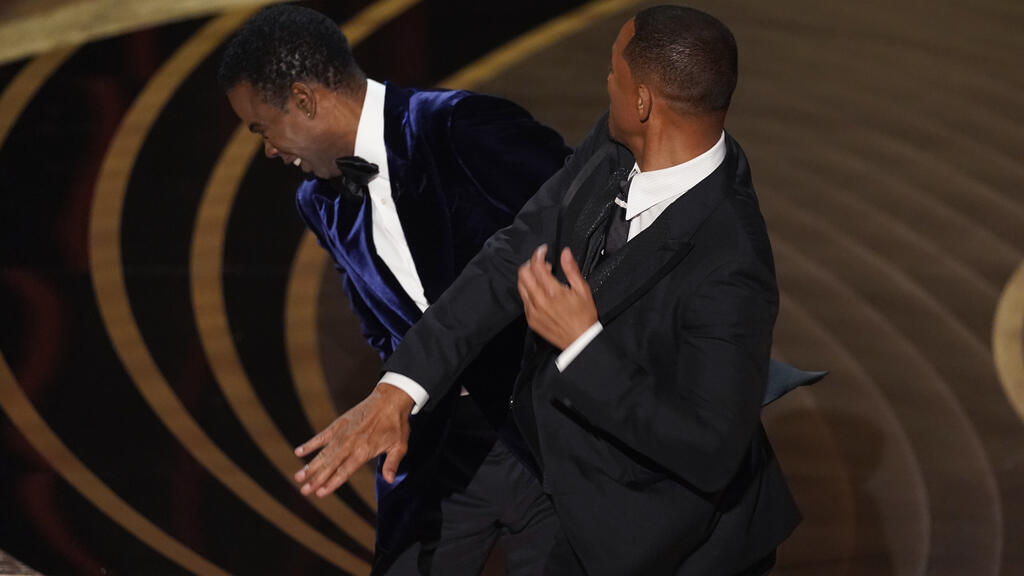
Reflecting on the altercation, I think of those we made fun of when I was in school. Students were disparaged for being overweight, less intelligent or for being immigrants. I do not think of myself as having been more of a bully than most classmates but I too denigrated others. I do not think of myself as having been abused or traumatized but I was also targeted for being short.
The prevailing attitude was to shrug off these micro-aggressions as good natured “humor”. Will Smith was an integral influence propagating the attitude that it is okay to deride those around you for entertainment.
Carlton and Uncle Phil are characters created to be derided for entertainment and lots of characters have been created for that purpose. Chris Rock’s “humor” at the Oscars is reminiscent of nothing more than the “humor” that much of our comedy, including much of the comedy that made Smith a celebrity, is based on and which society often accepts under the premise that it is “good natured”.
Uncle Phil and Carlton were fictional characters and while Smith’s wife Jada may be real, James Avery and Alfonso Ribeiro [actors who played Uncle Phil and Carlton] are also real people, one of whom was really fat and bald, and the other is really seven inches shorter than Smith.

Will and Jada Smith
(Photo: Getty Images)
Notwithstanding the fact that they chose as actors to be degraded on camera for money, and even if they were average sized, fully haired men who had been presented to appear overweight, bald and short - obesity, baldness and shortness are real conditions that affect innumerable people who are impacted by the sentiments Smith helped propagate. It is interesting that during the incident at at the Oscars, Smith told Rock not to talk about his wife, but said nothing about alopecia or others who might be disparaged for having the disease.
There is a line between celebrities who place themselves in front of the public and their children or spouses whose privacy is to be respected but Jada Pinkett Smith has herself appeared in more than 30 movies, is a celebrity in her own right and is therefore a legitimate target.
Some might outgrow their taste for derisive “humor” but when you find the show you are watching detestable, you may walk out. Nobody forces you to stay, but if there is anything holy in Hollywood, it is the sanctity of the stage. You may not heckle or interrupt the show. Those who do so are removed. To go on stage and assault a comedian in the middle of a performance is unconscionable.
I do not fault the security though. The man responsible is Will Smith, and as events were unfolding, many were unsure if it was scripted so an immediate response was probably not possible. After returning to his seat, Smith was asked to leave but he refused. Physically removing him would have caused additional disruption.

Will and Jada Smith in the 90s
(Photo: Getty Images)
The Board of Governors of the Academy of Motion Pictures Arts and Sciences - which oversees the Oscars - is considering disciplinary action against Smith who received his Academy Award for Best Actor in tears and has since apologized in writing. Smith may be sincere but if non-violence and the line between the audience and the stage are to be held and maintained as holy, we must recognize that though these norms are not established by any single individual, it only takes one person to destroy them and when a single individual perverts the sacred in public, it has influence on others.
That is why there must be a decisive punitive response by the Hollywood community as a whole and by the Academy in particular to demonstrate, that there are lines not allowed to be crossed. That crossing them is not an optional act where an individual decides of their own volition to cross or to not cross and that they, the Academy, will act for themselves when necessary to maintain those rules and not allow them to be broken by individuals choosing to act of their own volition, regardless of any apologies after the fact.
It is common to say that on-screen portrayals are fictional and are not meant to be emulated but even fictional portrayals have influence. It was Smith who broke the line between the way fictional characters sometimes act on-screen and reality. If Hollywood wishes to continue maintaining that on-screen portrayals are only meant as fictional entertainment, then Hollywood must be willing to keep the rules of real life.
Baruch Stein is a writer from the United States now living in Jerusalem