


Prime Minister Benjamin Netanyahu on Monday vowed that Turkish and Qatari soldiers would not operate in Gaza, acknowledging a disagreement with the United States over the makeup of a proposed governing framework for the strip as Israel prepares for what it calls Phase Two of the war.
Speaking to the Knesset plenum, Netanyahu said Israel is currently holding about 53 percent of Gaza “from a position of strength” and reiterated that Phase Two means the disarmament of Hamas and the demilitarization of the territory. “These goals will be achieved,” he said, “either the easy way or the hard way.”
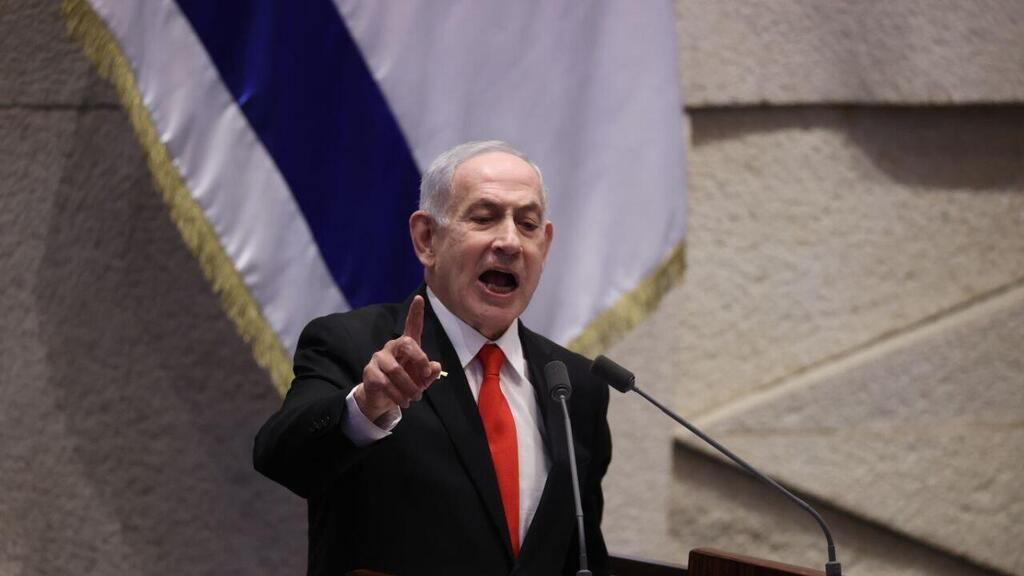
Later in the session, Netanyahu addressed calls for a state commission of inquiry into the October 7 Hamas attack, insisting he has “nothing to hide” and accusing the High Court of Justice of intervening only after he delivered what he described as “shocking testimony” to the state comptroller.
Netanyahu was speaking during a “40 signatures” debate initiated by the United Arab List, focusing on the government’s failure to curb violence and organized crime in Arab communities. Lawmakers cited official figures showing that 255 Arabs were killed in violent incidents in 2025 alone.
“Criminal organizations are terrorist organizations in every sense,” Netanyahu said. “We will wage an all-out war against them.” He said the government would pass legislation defining organized criminals as security offenders and pledged to restore law and order, particularly in the south.
Netanyahu accused legal advisers and bureaucracy of obstructing government initiatives and lashed out at the opposition, saying it lacked vision. Opposition lawmakers shouted back that his vision was “Hamas is an asset,” a reference to past remarks attributed to the prime minister.
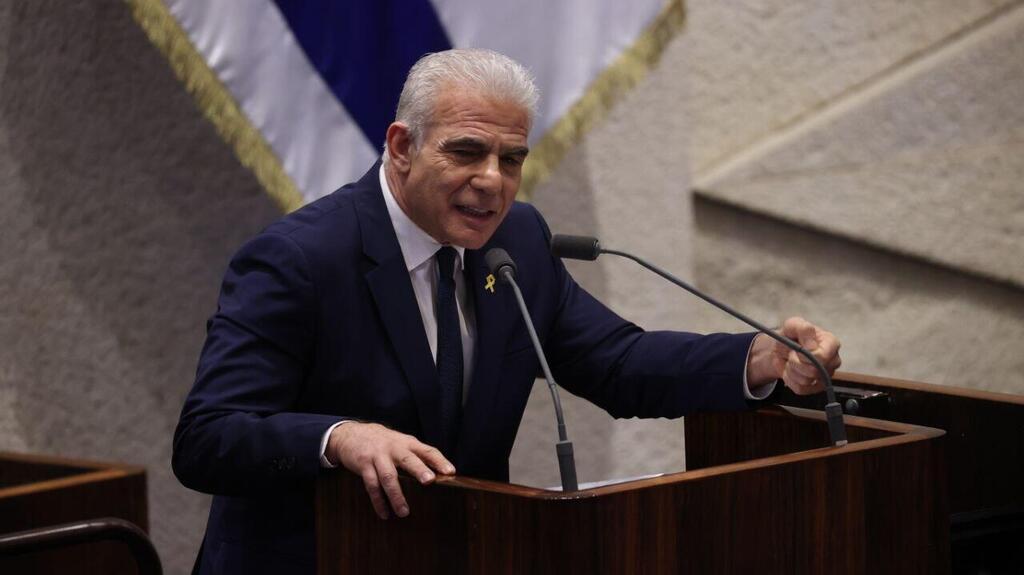
Yair Lapid
(Photo: Alex Kolomoisky)
He also blamed the previous government for allowing criminal organizations in Arab society to gain control over municipal tenders and accused it of capitulating to demands by United Arab List leader Mansour Abbas. Netanyahu referred to the Bennett-Lapid coalition as the “brothers government,” adding that such a political configuration must not return.
Turning again to October 7, Netanyahu said a commission of inquiry would eventually be formed but stressed that he had already appeared before the state comptroller and submitted documents, protocols and decisions, including from the days preceding the attack.
“I showed up,” Netanyahu said. “Who didn’t show up? The former Shin Bet chief, the former IDF chief of staff, the former head of Military Intelligence.” He claimed that shortly after his testimony, the High Court issued an interim injunction barring the comptroller from continuing to deal with the issue. “What changed?” he asked. “My testimony and the documents I brought.”
Opposition leader Yair Lapid responded sharply, accusing Netanyahu of misleading the public over Gaza’s future governance and saying U.S. President Donald Trump had published details of a proposed Gaza governing body that included Turkey, Qatar and the Palestinian Authority.
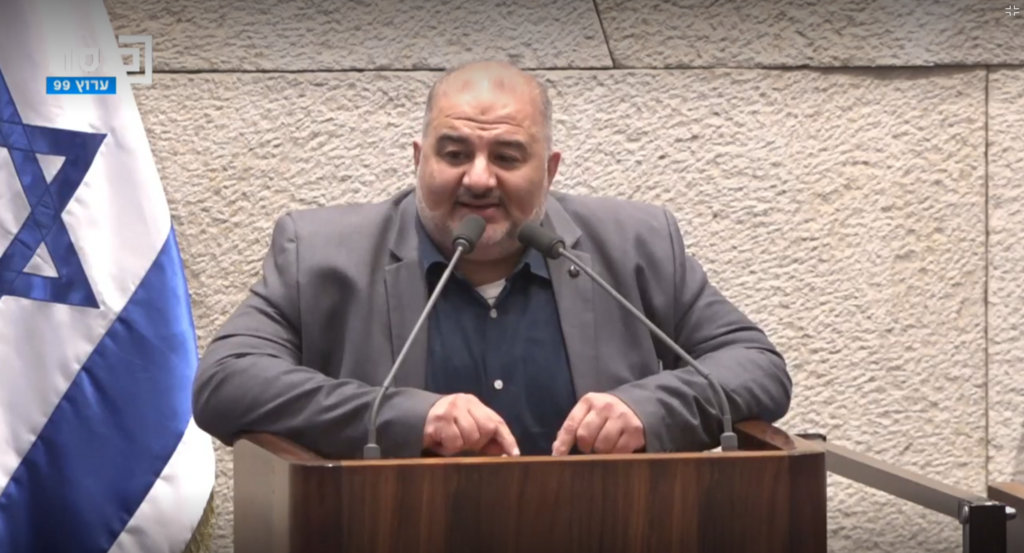
Mansour Abbas
(Photo: Knesset Channel)
“If you returned from Mar-a-Lago saying you and Trump are fully coordinated, then either you agreed behind our backs to Turkey, Qatar and the Palestinian Authority running Gaza, or Trump doesn’t count you at all,” Lapid said.
Lapid warned that Israel could be forced back into fighting in Gaza because of what he called Netanyahu’s diplomatic failures. “After two years of war and hundreds of dead, we are not returning to the starting point,” he said, “but to a much worse one.”
Netanyahu rejected the criticism, accusing Lapid of failures during his own tenure as prime minister and mocking his diplomatic record. Lapid fired back that under his leadership, Hamas did not breach the border or kill 1,200 Israelis.
Earlier in the debate, United Arab List leader Mansour Abbas accused the government of abandoning Arab citizens and failing to confront entrenched criminal organizations. He said thousands had been killed or wounded over the past two decades, families destroyed and businesses extorted, while enforcement remained weak.
Blue and White leader Benny Gantz also criticized Netanyahu, accusing him of neglecting Arab society and blaming his appointment of National Security Minister Itamar Ben Gvir for undermining law enforcement and Israel’s deterrence.
According to updated figures presented during the session, 18 people have been killed in violent incidents in Arab communities in the first 19 days of 2026. Overnight, a woman in her 40s was shot dead in the Bedouin town of Sa’wa in the Negev, and her husband was arrested on suspicion of domestic violence.
First published: 18:52, 01.19.26