

In the corner of a small office near Portsmouth in southern England sits a black telephone. It does not look unusual: a simple office phone, almost outdated, a relic from the 1990s. But when it rings, the three people on duty instantly become one of the key nerve centers of the maritime crisis in the Middle East.
The office is home to the United Kingdom Maritime Trade Operations, or UKMTO, a British maritime security agency linked to the Royal Navy that monitors vessel traffic in the Red Sea, the Persian Gulf and the northern Indian Ocean. Since Iran effectively closed the Strait of Hormuz more than two months ago in response to U.S.-Israeli strikes on its territory, the number of emergency calls received there has surged sharply.
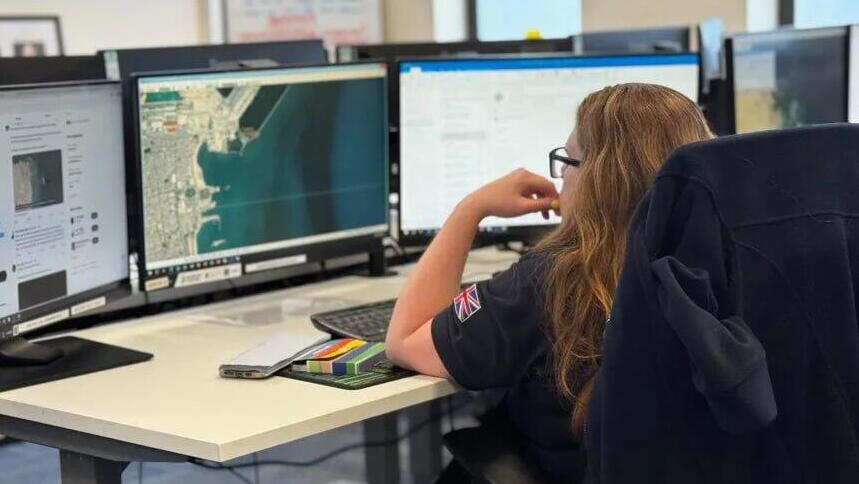
“The first moments after a call comes in can be very stressful,” Cmdr. Jo Black, head of operations at UKMTO, told CNN. “The vessel may be under attack in real time. You can hear alarms and sirens in the background. Sometimes we have even heard gunfire.”
The Strait of Hormuz, one of the world’s most important shipping lanes, has become a persistent danger zone in recent months. A significant share of the world’s oil, gas and fertilizer supplies passes through the narrow waterway, and Tehran has sought to impose control over it as part of its response to the campaign being waged against it by the United States and Israel.
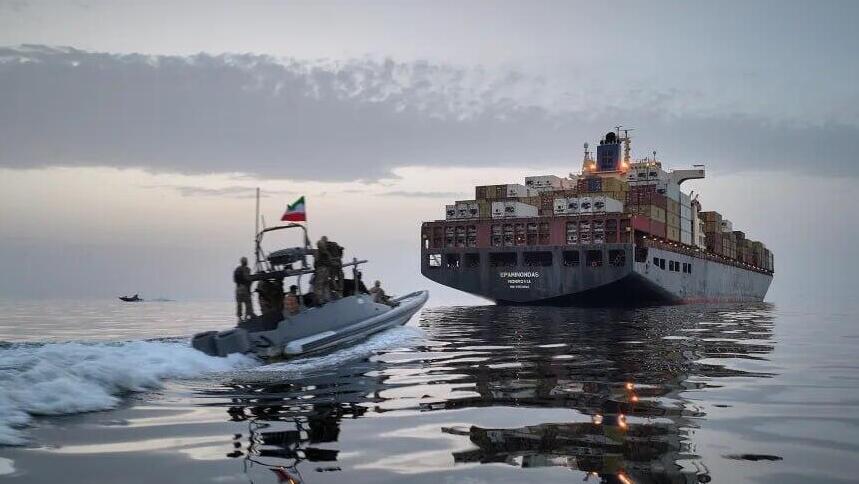
Merchant ships passing through the area have faced a range of threats: Iranian missile fire, drone attacks, fast assault boats encircling vessels and, more recently, delays, interrogations and attempts to enforce new Iranian regulations.
According to Black, as the war enters its third month, the nature of the threat in the strait is also changing.
“In early March, we mostly saw military activity,” she said. “More recently, it appears to be shifting toward more policing-type activity. Vessels are being challenged as they approach the Strait of Hormuz, questioned, asked to verify their claims and, in some unfortunate cases, actually detained.”
Strait of Hormuz
(Photo: CNN)
Once a ship reports an attack or unusual incident, UKMTO personnel known as “watchkeepers” move into action immediately. They speak with the ship’s crew, contact nearby vessels, warn them of the danger and ask them to assist or provide additional information. At the same time, they update shipping companies, local coast guards and military forces in the area that may be able to intervene.
The entire organization is staffed by just 18 people working 12-hour shifts. At any given moment, three watchkeepers are in the operations center, sometimes joined by an analyst.
“If you call UKMTO, you will get an answer,” Black said. “We cannot guarantee there will be an international force able to respond directly, but we will make sure the information is distributed as widely as possible in an attempt to generate a response.”
Since the war with Iran began, UKMTO has documented 44 incidents, including damage to ships, dangerous encounters and near misses. According to Black, 10 sailors have been killed in those incidents.
(Photo: CNN)
Even for the watchkeepers, who are thousands of miles away from the region and connected to the crisis only through a telephone line, the burden is heavy. They are “dealing with a very emotional situation,” Black said, and sometimes develop personal connections with crew members aboard the ships.
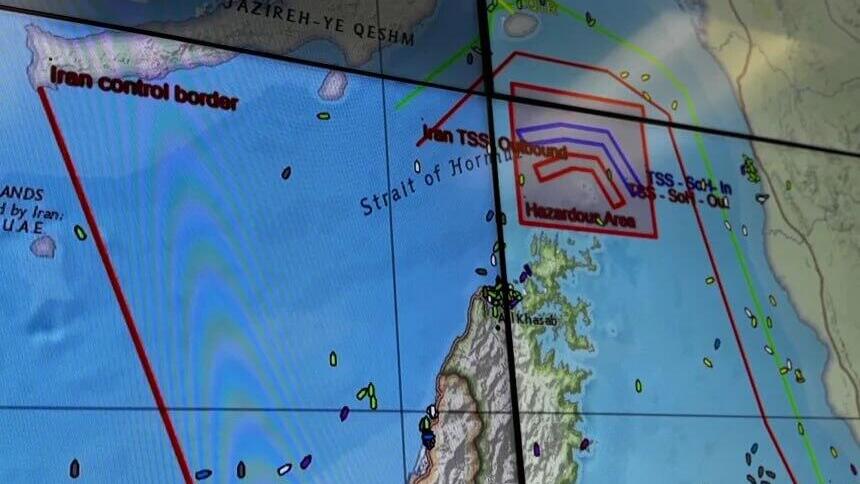
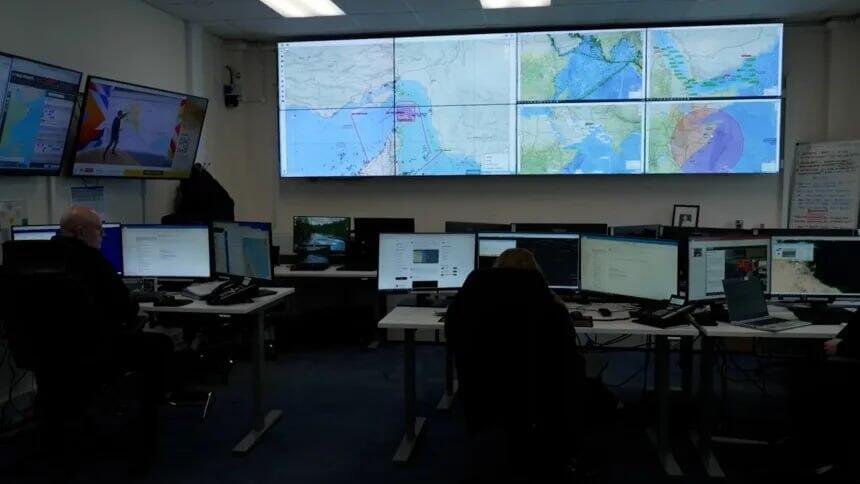
Despite the drama each time the phone rings, daily life at the center is relatively quiet. Rows of screens display maps of the region and the movements of ships passing through it. One map focuses on the Strait of Hormuz itself, marked with a red box labeled “danger area”, a zone that could contain Iranian mines and that vessels try to avoid.
Much of the staff’s time is spent filtering roughly 2,500 emails a day sent by ships voluntarily reporting their locations, contact details and information about nearby vessels. The reports make it possible to track ships even if they switch off their AIS, or Automatic Identification System. UKMTO’s ties with military bodies provide an additional layer of verification.
“We make major efforts to verify information quickly, but also efficiently,” Black said. Initial reports published on the UKMTO website and on X include a general location of the incident, with updates added later as additional sources confirm details.
Because media organizations around the world also monitor those reports, the war has cast an unusual spotlight on an agency that typically operates far from public attention.
From piracy to geopolitical upheaval
UKMTO was established shortly after the Sept. 11, 2001, attacks, when shipping companies struggling with rising piracy turned to the Royal Navy for coordination and assistance.
Because Britain is an island nation, securing maritime trade routes has always been a vital interest, and its colonial legacy and long naval history enabled the Royal Navy to play a central role well into the 21st century.
France, in cooperation with its European allies and UKMTO, also provides similar support by monitoring ship traffic in the Gulf of Guinea off West Africa.
(Photo: CNN)
Over the past quarter-century, the center has faced other maritime crises: the height of Somali piracy in the late 2000s and, later, attacks launched by Yemen’s Houthi rebels against ships in the Red Sea in 2023 after the outbreak of the war in Gaza.
But according to Black, the current situation is unlike anything the agency has previously experienced, even if the volume of reports resembles the peak of the Houthi threat.
“This situation is more challenging because there is such a broad range of threats on the ground, and because the geopolitical situation is constantly changing,” she said.
Indeed, guidance for ships changes almost weekly. President Donald Trump has repeatedly urged vessels to transit the strait and briefly launched an operation to assist ships before suspending it 48 hours later at the request of mediator Pakistan.
Iran, for its part, has adopted different methods to reinforce its control over the waterway and recently issued new rules for ships seeking safe passage.
Meanwhile, about 850 large merchant vessels and roughly 20,000 sailors remain stranded inside the Gulf. For them, Black said, the main problem is uncertainty.
“What does the future hold? When will they be able to go home and see their families? What will happen to their contracts and crew rotations?”
In the meantime, many sailors find themselves relying on the work of a small office in Britain perched on a ridge near Portsmouth, in an area that once housed one of the Allied headquarters preparing for the D-Day invasion during World War II and overlooking the city’s busy harbor.
Thousands of miles from the Strait of Hormuz, the black telephone continues to wait for the next call.