

The IDF said Saturday it struck terrorists in southern Lebanon and, for the first time, used the term “yellow line,” previously applied only to a line in Gaza to which IDF forces withdrew in October 2025 under the agreement with Hamas as part of the hostage deal.
The military later said it had eliminated a terrorist cell operating near troops in what it described as a forward defense line aimed at preventing direct threats to northern communities. It also struck an underground shaft south of the line and Hezbollah terrorists identified entering it.
IDF strikes in southern Lebanon
(Video: IDF)


Following U.S. President Donald Trump’s announcement of a ceasefire in Lebanon and his statement that Israel should halt strikes there, a “yellow line” has effectively been established where IDF forces remain deployed, similar to the arrangement in Gaza. During the ceasefire, the IDF continues to strengthen its hold on key positions in southern Lebanon.
Military officials said the IDF’s defensive layout in the area is divided into three lines: the red line, the yellow line and the Litani line. They stressed that forces have standing orders to act immediately to remove any threat wherever it is identified.
The red line marks villages near the border, many of which have been heavily damaged. The yellow line — an anti-tank defense line — is where forces are currently positioned to prevent direct fire toward northern communities. The third line runs along the Litani River, where the IDF maintains fire control. In some areas, troops are positioned about 10 kilometers (6 miles) from the border.
In effect, the IDF has defined a new line up to which it maintains control — the anti-tank line captured during ground operations in southern Lebanon. The area includes 55 Lebanese villages whose residents are not allowed to return. During the ceasefire, the IDF continues to clear what it describes as Hezbollah terrorist infrastructure within this zone, effectively treating it as a security buffer.
Terrorists believed to remain in the area, including in Bint Jbeil, have been called on to surrender. If they do not, the military says they will be targeted once located. The Israeli Air Force continues to operate over southern Lebanon to neutralize threats as needed.
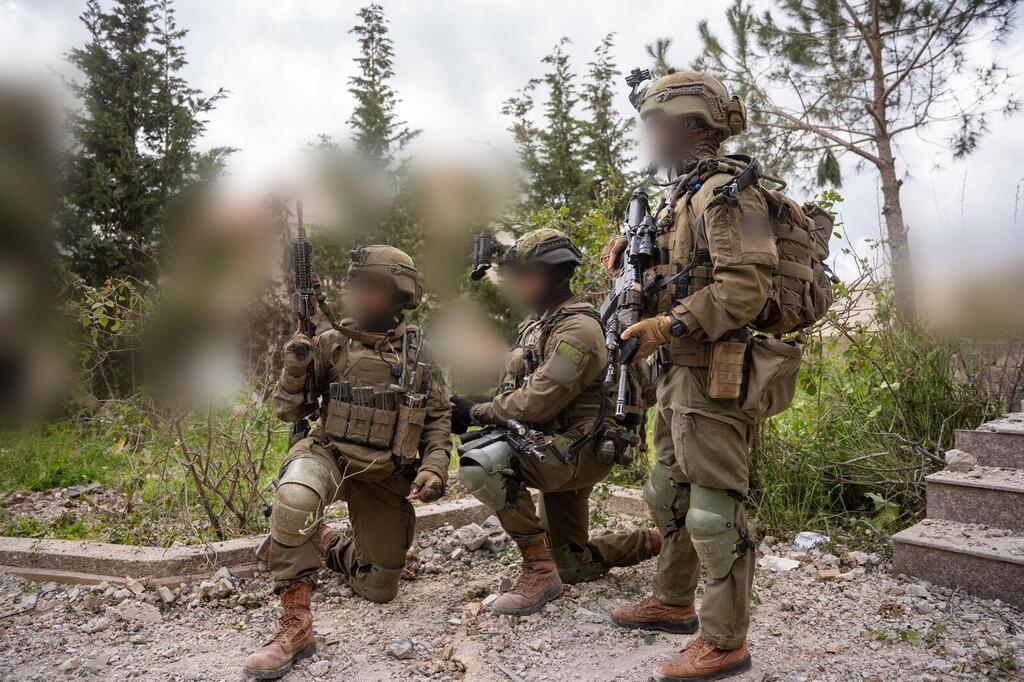
(Photo: IDF)
More than two weeks ago, during ground operations in southern Lebanon, multiple brigade combat teams under four division commands deployed along what the General Staff defined as the “yellow line” — a temporary line connecting key terrain to prevent direct fire on border communities.
The line runs in the east near a bend in the Litani River, beginning around the town of al-Khiam northeast of Metula, passing through Taybeh near the river and Bint Jbeil, then continuing along a ridge before ending in the west near Ras al-Naqoura.
During a recent cabinet call, Prime Minister Benjamin Netanyahu updated ministers on the yellow line, saying Trump is pushing to advance a ceasefire but that Israel must maintain freedom of action along the line.
In Saturday’s announcement, the IDF said troops operating south of the yellow line identified terrorists who violated ceasefire understandings and approached from the north in a way that posed an immediate threat. Air and ground forces then struck the suspects in several locations in southern Lebanon.
The military added that artillery fire was used to support ground forces and that terrorist infrastructure was destroyed in response to threats. It emphasized that it is operating under directives from the political leadership but retains the authority to act in self-defense.
The IDF said actions to remove threats and protect forces are not restricted by the ceasefire and that it will take all necessary measures to ensure the safety of Israeli civilians and troops.