


The IDF and Finance Ministry have agreed to slightly reduce the number of reserve duty days for combat reservists in 2026, trimming the standard service from two and a half months to two months per year, while retaining all financial benefits and wartime bonuses, ynet learned on Sunday.
Under the new plan, each combat reservist will be called up once in 2026 for a period of up to 60 days, down from the previously planned 72. The decision comes in the wake of reduced leave days granted during the war, including the “week on, week off” rotation for soldiers serving along the Gaza front.
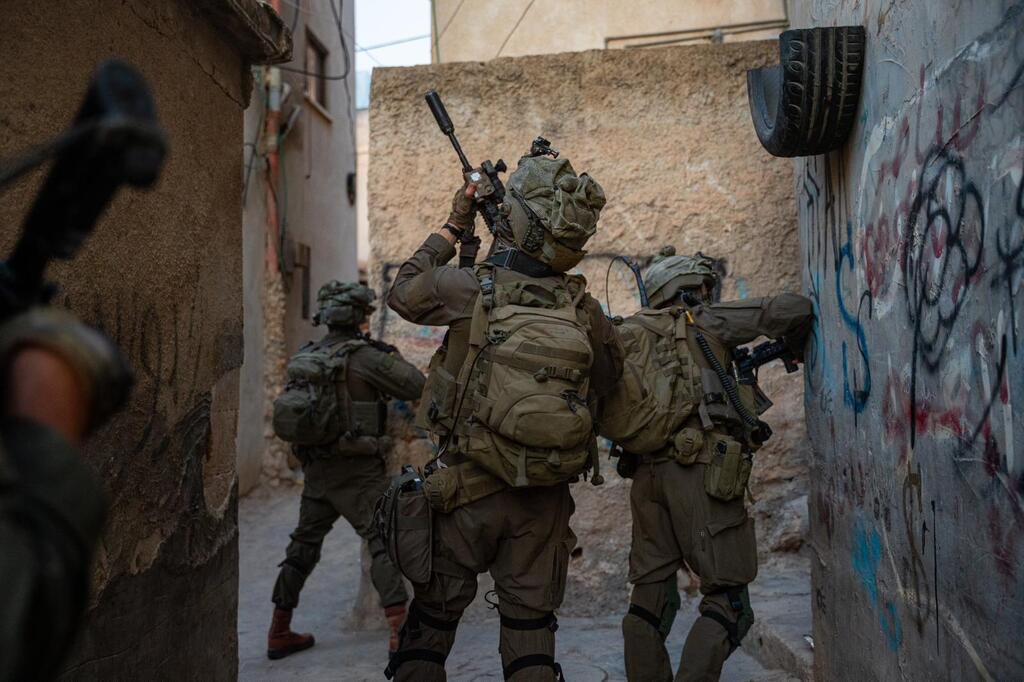
IDF forces operating in the West Bank
(Photo: IDF)
Finance Minister Bezalel Smotrich pushed to preserve all wartime grants in the updated framework, a move supported by IDF high command. The Finance Ministry not only agreed but also pledged to lower the required service threshold to receive benefits, ranging from supplemental bonuses and parental financial aid to vacation vouchers worth thousands of shekels.
The adjustments will be formalized through a temporary government directive in the coming weeks, serving as a stopgap alternative to amending the Reserve Service Law in light of post–October 7 realities. Both the IDF and Finance Ministry advocated for a legislative update to accommodate the expanded need for reserve forces in the coming years. However, legal advisers blocked the move, arguing the government cannot legally worsen reserve soldiers' conditions until a universal draft law for regular service is passed, a law stalled in the Knesset's Foreign Affairs and Defense Committee.
Although future reserve deployments will still be issued under emergency orders, despite the war’s official end, Finance Ministry officials said reservists will receive two to three months’ notice ahead of their duty periods. The goal is to reduce uncertainty that has burdened reservists and their families since the war began.
The new arrangement is central to closing a 20,000-troop gap caused by a political deal last month between the Finance and Defense ministries. The IDF initially aimed to maintain 60,000 reservists on duty at any given moment in 2026, primarily to uphold wartime leave policies that offered one day off at home for each day of service, sometimes on even more generous terms.
Despite continued financial incentives, including a new income tax break worth up to 1,000 shekels per month for reservists, the practical cut in service is minimal—about 10 to 14 fewer days over a two-month period, after many reservists already endured five to six extended deployments during the war.
To make up for the 20,000-person shortfall, soldiers serving the full 60 days will spend more time in uniform and less at home. The week-on, week-off system will be discontinued, with an average rotation of 10 days on base and four at home, resembling the schedules of young regular-service soldiers.
The announcement has sparked frustration among reservists, some of whom have voiced opposition online. “This created distorted norms in the army—military service trading that bordered on the criminal,” IDF officials said. “We can’t continue the week-on, week-off pattern indefinitely, especially now that the war is over. It's a values issue. We need consistency while preserving the support system for soldiers. We also want to end the devaluation of reserve duty, which will help commanders better manage operational deployments.”
The IDF’s Operations Directorate, which oversees the yearly deployment schedule, is tasked with ensuring the benefits remain in place this year. Officials hope this stability will help improve the postwar reserve turnout rate, which fell to around 60–70 percent in most battalions.
Military officials also stressed that all changes depend on a stable security situation in a year classified as “heightened security,” with more than double the number of combat troops deployed across sectors following the lessons of October 7. Should security deteriorate, the current agreement may be revised, potentially placing even greater demands on reservists.
“There’s also more certainty for employers, who will now know in advance when their workers will be away for reserve duty,” Finance Ministry sources said. “We also agreed with the IDF to limit the practice of attaching additional reservists mid-deployment. It’s important this plan be anchored in a formal government decision to avoid giving the military flexibility to increase the number of serving troops.”