


The fighting stopped just after midday prayers. Smoke still curled above the market streets, and stray gunfire echoed in the hills to the north, but in central Sweida, residents crept back to their homes. After a week of sectarian violence that killed hundreds and forced tens of thousands from their homes, a U.S.-brokered ceasefire had taken hold—barely.
According to Jordanian media, the death toll has surpassed 900 since the outbreak of violence last Sunday, making it one of the deadliest weeks in Sweida's modern history. However, the Syrian Observatory for Human Rights has put the number even higher, estimating over 1,120 fatalities. This includes more than 400 Druze fighters, nearly 300 Druze civilians and dozens of Bedouin victims reportedly killed in retaliatory attacks. The discrepancy in figures demonstrates that the full scope of the devastation remains uncertain.
Gallery
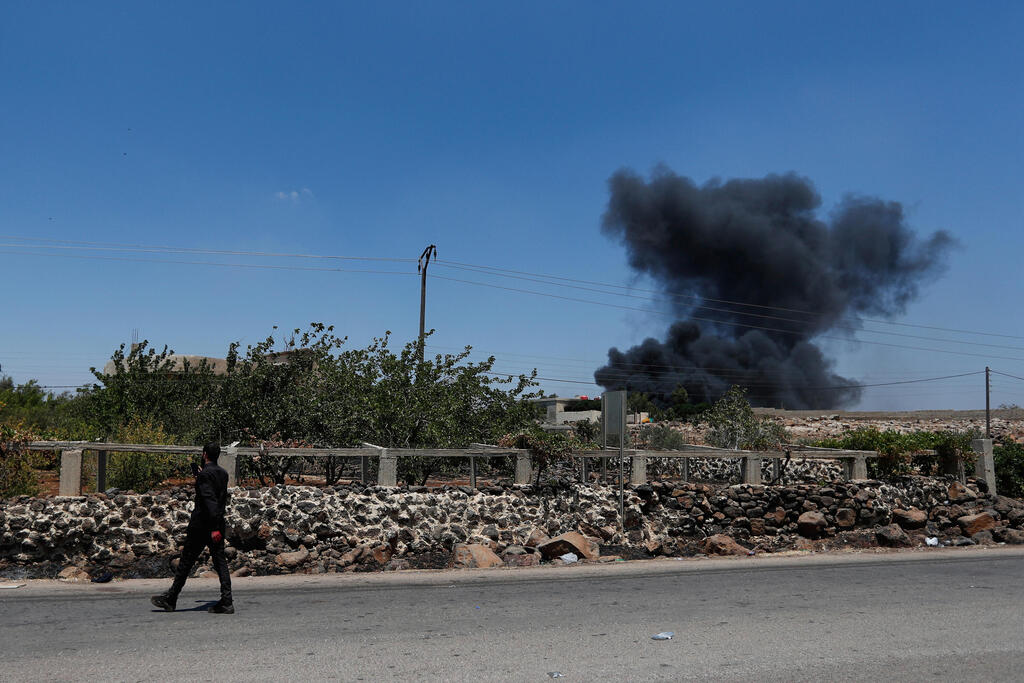
Smoke billows over Sweida amid fierce battles between Druze fighters and Bedouin militias
(Photo: AP Photo/Omar Sanadiki)
"We buried who we could," said Rose Hasson, an elementary school teacher. "The others, we had to leave them where they fell."
Hasson had just returned from a neighboring village, where she and her neighbors fled during the height of the clashes between Druze militias, tribal fighters and government forces. Now, she was trying to teach again, though most of her students were still scattered or grieving. "This isn't peace," she said. "It's exhaustion."
The ceasefire, announced Saturday by the Syrian presidency and confirmed by U.S. envoy Tom Barrack, followed a series of diplomatic engagements, including meetings in Amman and high-level phone calls involving Turkish Foreign Minister Hakan Fidan, Syrian Foreign Minister Asaad al-Shaibani and Barrack. Turkey and Jordan backed the deal.
Jordanian news outlets also reported that tribal fighters withdrew from Sweida on Saturday evening, allowing state forces and Druze factions to retake key areas of the city.
According to Al Ra'i, an Amman daily, the Internal Security chief in Sweida announced that detained Bedouin families would be released within hours and assured that they would return to their homes, emphasizing a continued commitment to respecting the ceasefire and ensuring calm.
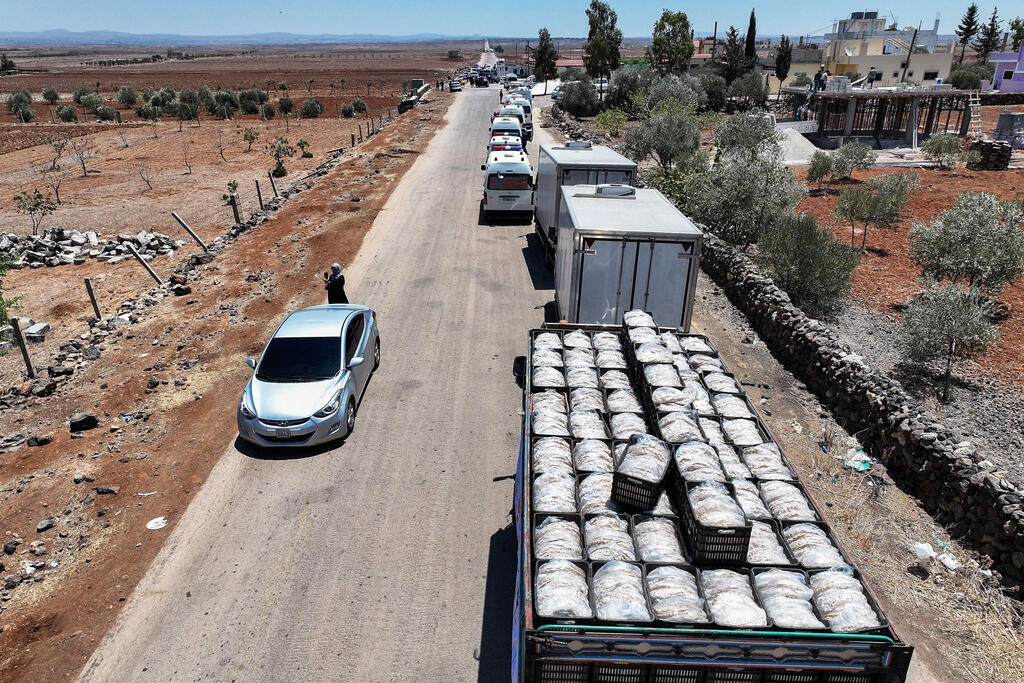
Humanitarian aid trucks en route to Sweida
(Photo: OMAR HAJ KADOUR / AFP)
On Sunday, Syria's Health Ministry dispatched an urgent convoy to Sweida, including 20 ambulances, medical teams and critical supplies. Health Minister Musab al-Ali said the aid had been delayed by Israeli airstrikes, but was finally allowed to move after Syrian security forces cleared out tribal fighters and enforced the ceasefire.
Interior Minister Anas Khattab stated that the Internal Security Forces (ISF) had been deployed across Sweida city, particularly in the northern and western regions. "The deployment of the ISF in Sweida represents a safety valve for stability and calm," he said on X, outlining a phased approach: securing roads, opening crossings to Daraa and gradually reactivating state institutions.
Still, tension flared when Druze religious leader Sheikh Hikmat al-Hijri refused entry to an official government delegation accompanying the convoy, permitting only the Syrian Arab Red Crescent to deliver aid. The Syrian Foreign Ministry condemned the obstruction, blaming armed militias aligned with al-Hijri for repeatedly thwarting humanitarian efforts since Wednesday.
The ministry said Israel's airstrikes and the withdrawal of security forces had exacerbated instability and hindered aid delivery. It vowed to continue coordinating with domestic and international partners to ensure the safe return of displaced residents.
Despite a lull in the city center, violence continued in northern Sweida. Human rights monitors described sporadic clashes, especially near Arika and Shahba. UN officials estimate that at least 87,000 people fled during the past week.
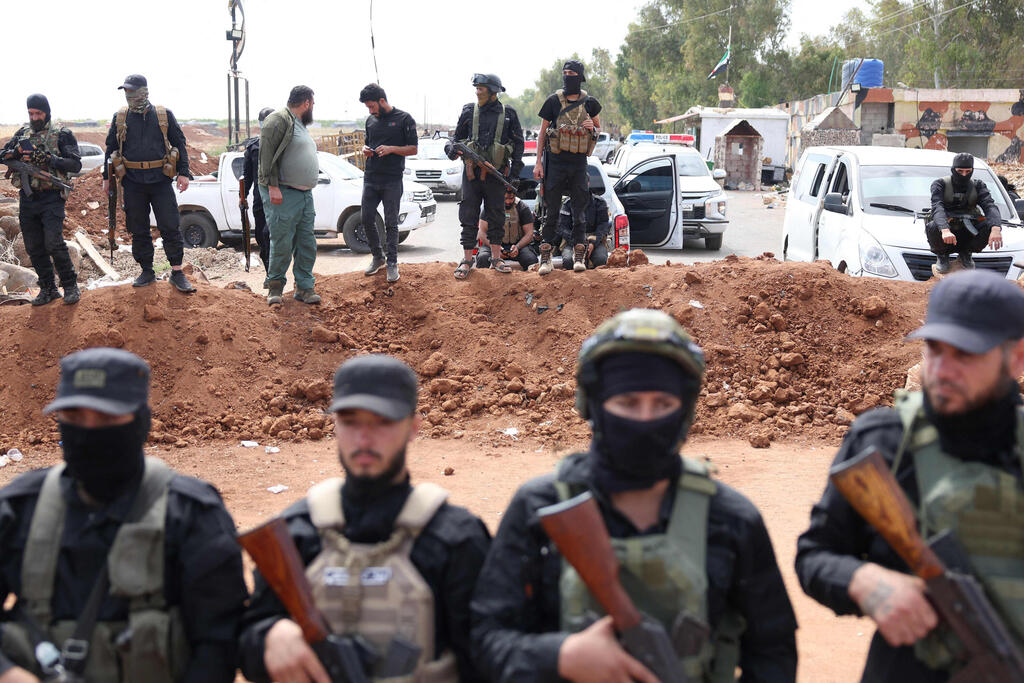
Syrian regime forces in Sweida
(Photo: OMAR HAJ KADOUR / AFP)
Hospitals, running on minimal supplies, reported shortages of antibiotics, anesthesia and electricity. Emergency teams remain stationed at humanitarian crossings to assist families evacuating on foot, according to Minister of Emergency and Disaster Management Raed al-Saleh.
"The scenes last week were painful and shocking," said Murhaf al-Shaer, director of the Sweida Media Center. "Entire families were killed. Houses burned. Property stolen. It was a terrorist attack by tribal and extremist factions and the state did nothing to prevent it."
Al-Shaer said the current truce is not a resolution, but a pause in ongoing violence. "There is no trust between the parties, and violations are still happening. This is not a peace; it's a temporary calm before the next eruption."
He pointed to systemic failures as the root cause. "This isn't just about security. The crisis stems from deep political exclusion, worsening living conditions, and constitutional paralysis. The state's failure to meet even basic responsibilities has pushed people toward the edge."
Al-Shaer warned that the transitional government is repeating the same mistakes as its predecessor. "Our war against the former regime and the hopes of Syrians for a new administration were shattered the moment tanks rolled into our streets," he said.
Amjad al-Hajji, a Sunni academic and political figure, accused Druze spiritual leader Sheikh Hikmat al-Hijri of monopolizing authority in Sweida. "He sidelined capable leaders, suppressed dissent, and framed any criticism as an attack on his religious legitimacy," Al-Hajji said. "His militias coordinated with Israel and carried out ethnic cleansing against Sunni civilians. This isn't about self-defense—it's a proxy war for partition."
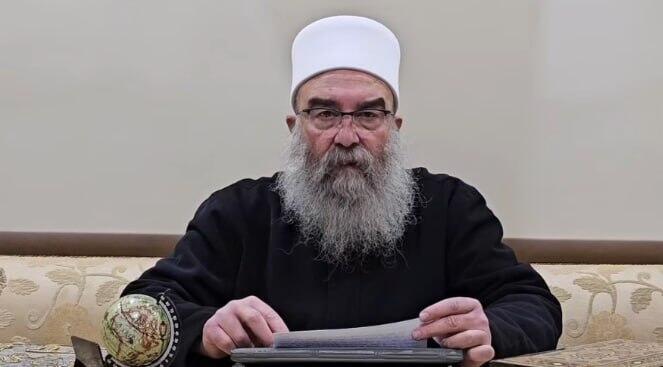
Druze spiritual leader Sheikh Hikmat al-Hijri
Still, Al-Hajji said the government must use the ceasefire as a starting point for broader reform. "We must rebuild trust, eliminate sectarianism, and treat Sweida as an integral part of Syria. The state must respond with restraint and make serious concessions."
He called for disarming militias, launching transitional justice mechanisms, and ensuring that only state institutions wield weapons. "We need a professional security sector and an inclusive political process. The era of soft sectarianism must end."
Fifty-seven civil society organizations issued a joint statement on July 18 warning that the pattern of human rights abuses in Sweida—extrajudicial killings, torture, looting, and sectarian incitement—mirrors atrocities carried out earlier this year in other parts of Syria. They demanded an independent investigation and called on the transitional authorities to immediately launch public, impartial trials for all perpetrators.
The statement accused the government of undermining its own credibility by failing to prosecute those behind previous massacres. "No transparent legal action has been observed from the transitional authorities against those accused," it read, "undermining the credibility of the transitional process in Syria as a whole."
In Homs, Alawite legal scholar Jafar Kadhor sees the crisis as part of a broader strategic game. "Sweida is not an isolated incident. It's a pressure valve for the entire country, a way for regional actors to test each other's limits," he said.
He blamed both the government's failure to control weapons and the Sweida factions' refusal to disarm, attributing the latter to historical trauma from earlier massacres.
Kadhor also questioned Israel's role. "They hit regime targets but avoided other factions. That's not neutrality. That's a message."
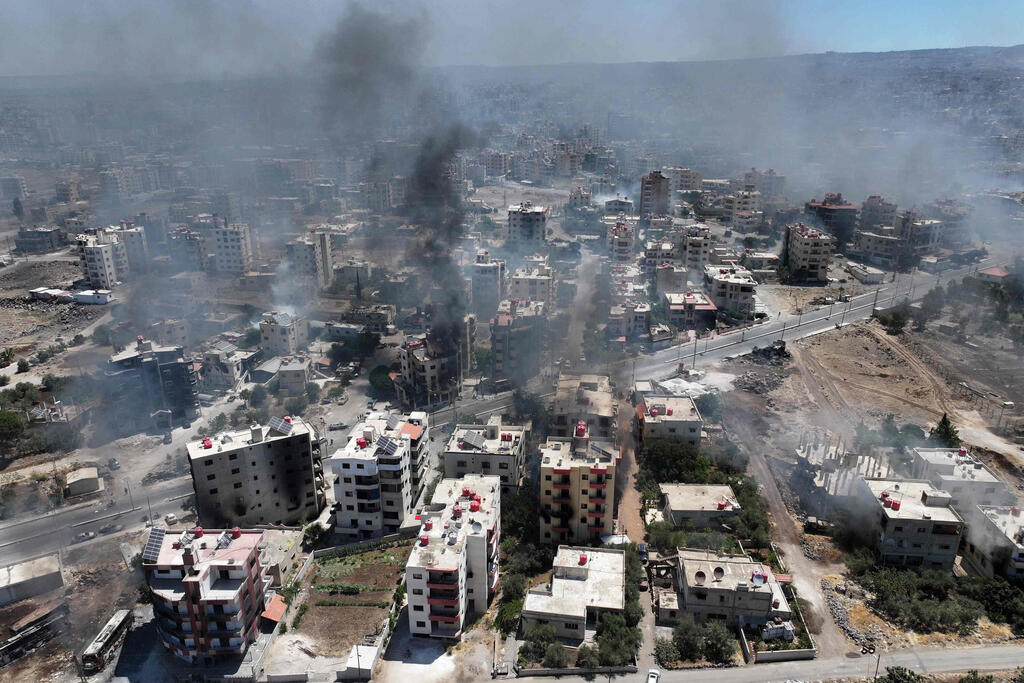
Smoke billows over Sweida amid fierce battles between Druze fighters and Bedouin militias
(Photo: Omar HAJ KADOUR / AFP)
He said minority communities along the coast, including Alawites, were increasingly alarmed. "Even when violence dies down, crimes against civilians spark fresh anxiety. What happened in Sweida wounded the conscience of the entire coast."
For Kadhor, preserving Syria's unity requires a dramatic shift. "We need strong parties, legislative independence, and organized political life. Right now, too much power sits with the president. That must change."
Meanwhile, voices from the Bedouin side offered a sharply different perspective. "We saw signs of separatist moves, foreign hands stirring things up," said Sheikh Mahmoud Jarbou' Al-Naimi, a tribal leader from the Arab Al-Naim tribe in Hama who had returned from the front lines. For Al-Naimi, tribal involvement in Sweida wasn't about politics or sectarian rivalry; it was about defending the country from outsiders exploiting local divisions.
Get the Ynetnews app on your smartphone: Google Play: https://bit.ly/4eJ37pE | Apple App Store: https://bit.ly/3ZL7iNv
"What really pushed us was seeing innocent Bedouin families, kids and women, driven from their homes by outlaw groups," he said. That moment, he said, wasn't just emotional; it was a line in the sand. His fighters mobilized not to expand territory, but to protect kin and restore tribal order.
Despite the bloodshed, al-Naimi expressed respect for Druze factions like the "Sheikhs of Dignity." "We stand with any group that's carrying the weight for the homeland," he said, praising Sheikh al-Balous as a true patriot.
And in the bigger picture, he drew a clear line between internal chaos and foreign interference: "Any foreign power trying to mess with Syria's stability? That's a problem." For al-Naimi, the Syrian state, flawed as it may be, remains the country's safety valve.
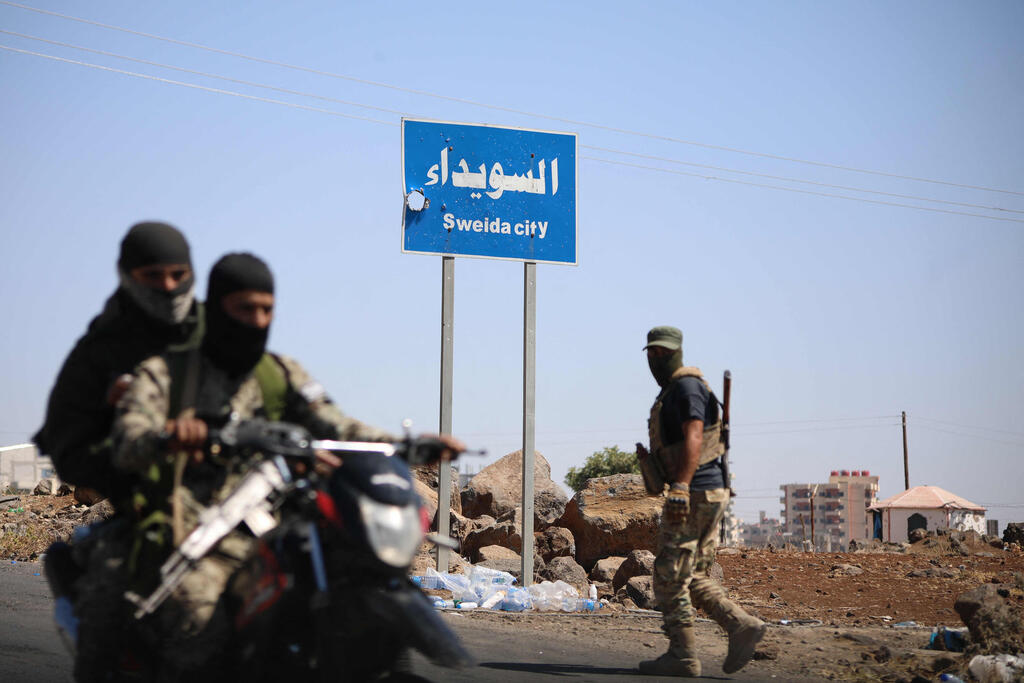
Bedouin militiamen in Sweida
(Photo: Abdulaziz KETAZ / AFP)
One Syrian-American businessman with ties to Gulf development projects said the messaging from both sides missed the mark. He cited a recent declaration by exiled opposition figure Fahad Al-Masri, which condemned Israeli airstrikes in Sweida and rejected foreign interference in Syrian affairs, as overly strident and unproductive. "It sounded more like a declaration of war than a call for national dialogue," he said. "Most Syrians I know, even in the opposition, want peace with Israel. Ideological rhetoric doesn't reflect today's reality."
The businessman, who advises Saudi Arabia's Public Investment Fund on postwar reconstruction, said opposition leaders must broaden their perspective. "You can't just criticize al-Hijri or the regime. You have to acknowledge the full picture, including abuses by state forces," he said. "If you want credibility, start with the truth."
He emphasized the need for military reform. "That means public rosters of officers, clear chains of command, and real accountability. Otherwise, people will never trust these institutions again."
Despite international diplomacy and high-level deployments, the situation remains fluid. While aid trucks roll in and the government speaks of reconstruction, skepticism runs deep.
"I've seen this movie before," said Hasson, the teacher. "They say it's over. Then it starts again." She now escorts students home after school and avoids certain roads where sporadic gunfire is still heard. "The children flinch at loud noises. We all do."
"Trust is gone," said Al-Shaer. "It can't be restored by decree. It has to be earned."
The civil society statement called on Syrian authorities to launch an inclusive national dialogue and to allow UN investigators into Sweida to probe allegations of abuse. Without these steps, they warned, the risk of renewed conflict and the spread of violence to other regions remains dangerously high.
"What we're seeing," said Al-Hajji, "is the collapse of Syria's transition before it even began."
- The story is written by Ahmed Qweidar and reprinted with permission from The Media Line. Jacob Wirtschafter reported from Istanbul.