

Jordan’s King Abdullah II delivered one of the week’s sharpest attacks on Israel at the UN General Assembly, accusing the Israeli government of war crimes, an “expansionist appetite” and pursuing policies designed to make a viable Palestinian state impossible.
The king devoted a substantial portion of his Tuesday speech in New York to the war in Gaza, developments in the West Bank and Israeli activity in southern Syria. He also accused the international community of spending years trying to “manage” the Israeli-Palestinian conflict instead of resolving it.
Gallery
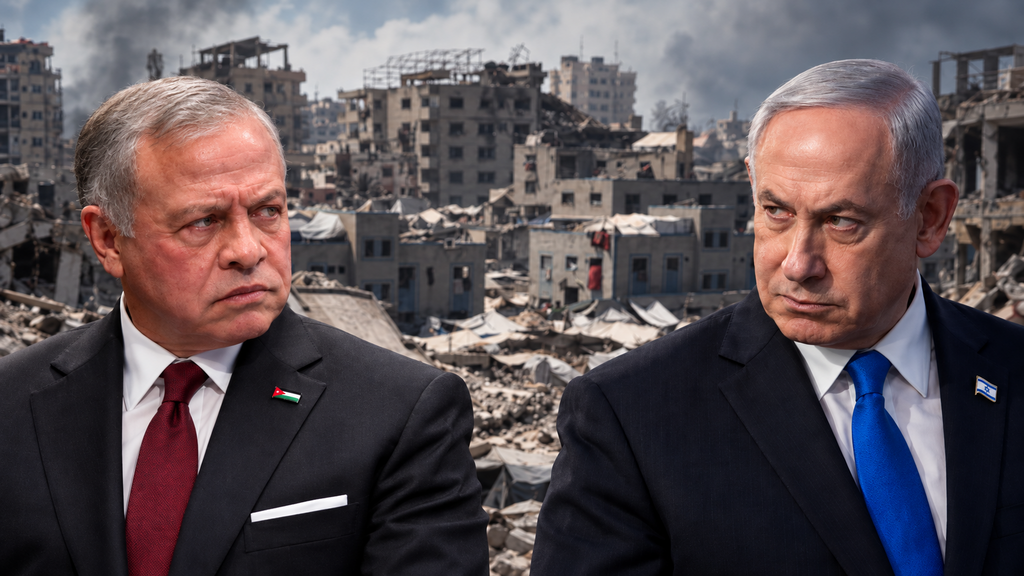
Jordan’s King Abdullah attacks Israel at UN, Foreign Ministry answers with 1988 jab
(Photo: REUTERS/Dawoud Abu Alkas, : ANGELA WEISS / AFP), Jack GUEZ / AFP)
The Foreign Ministry answered publicly on Wednesday, directing its criticism at the Hashemite monarchy and invoking Jordan’s 1988 decision to sever its administrative and legal ties with the West Bank.
“It is particularly amusing to hear King Abdullah II of Jordan speak so passionately about international law and the rights of Palestinians in Judea and Samaria,” the ministry wrote on its official X account.
It went on to accuse Abdullah’s father, King Hussein, of stripping Palestinians in the West Bank of Jordanian citizenship and rights after the 1988 disengagement.
“Tell us more about international law,” the ministry concluded.
Prime Minister Benjamin Netanyahu, by contrast, has so far avoided issuing a detailed diplomatic response to Abdullah’s speech.
He referred to the Jordanian king’s remarks in a video released Wednesday, but mainly as a vehicle to attack Yisrael Beytenu leader Avigdor Lieberman over his proposal to involve Jordan in administering parts of the West Bank.
“A day after Jordan slandered Israel from the UN podium,” Netanyahu said before turning to Lieberman’s proposal. He announced no measures against Amman and issued no separate response to the substance of Abdullah’s accusations.
Despite the harsh rhetoric, Israel and Jordan continue to cooperate in critical areas, most notably water.
Daham Metqal al-Fawaz, a Jordanian commentator on Middle East affairs, told ynet that Amman does not view that cooperation as inconsistent with its public criticism of Israel.
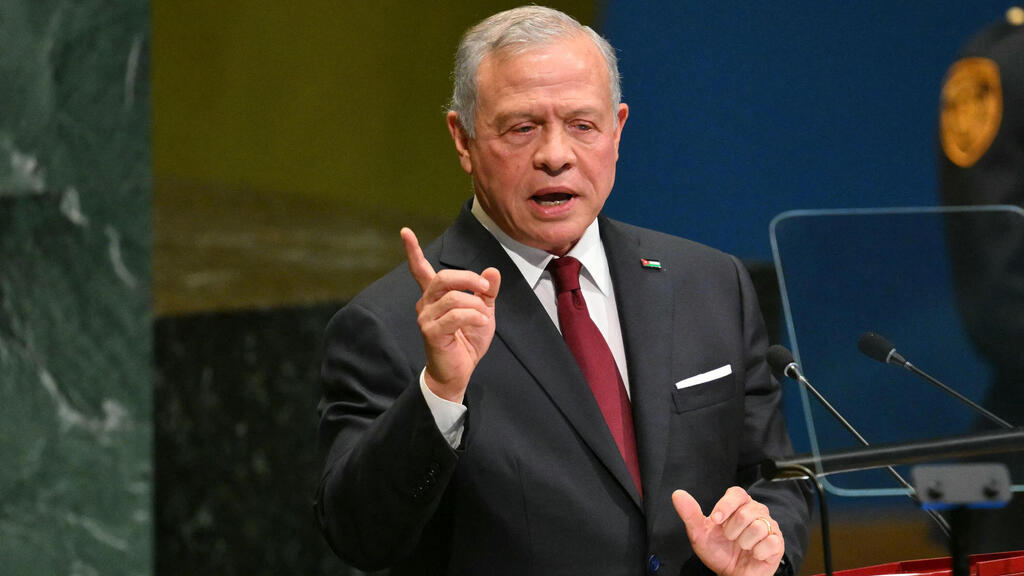
Jordan’s King Abdullah II
(Photo: ANGELA WEISS / AFP)
“Regarding the existing cooperation between Jordan and Israel, including water, borders and other issues, it is part of a reality imposed by the 1994 peace treaty,” he said. “The water issue was explicitly defined in the peace agreement, and that does not mean political disagreements should disappear.”
Al-Fawaz said Jordan’s position at the UN reflects its commitment to peace while insisting that any lasting settlement must rest on what Amman views as a just political solution, above all a two-state solution.
He said current tensions stem largely from Israeli policy toward Gaza, the West Bank, Jerusalem and settlements, which Jordan believes harms the prospects for peace and increases regional instability.
“Preserving peace and cooperation is important to Jordan,” he said, while warning that continued Israeli policies could make it more difficult to preserve those ties.
Ultimately, he added, Jordan approaches the issue primarily through its own national interests, including stability, security, borders and strategic concerns.
‘The Israeli government keeps moving the goalposts’
In his UN speech, Abdullah also addressed U.S. President Donald Trump’s efforts to end the war in Gaza.
“President Trump has worked vigorously for peace and for a path to ending the war, but the Israeli government keeps moving the goalposts,” the king charged.
He accused Israel of continuing strikes, destroying civilian infrastructure, refusing to withdraw and pushing Palestinians into an ever-smaller area of the Gaza Strip.
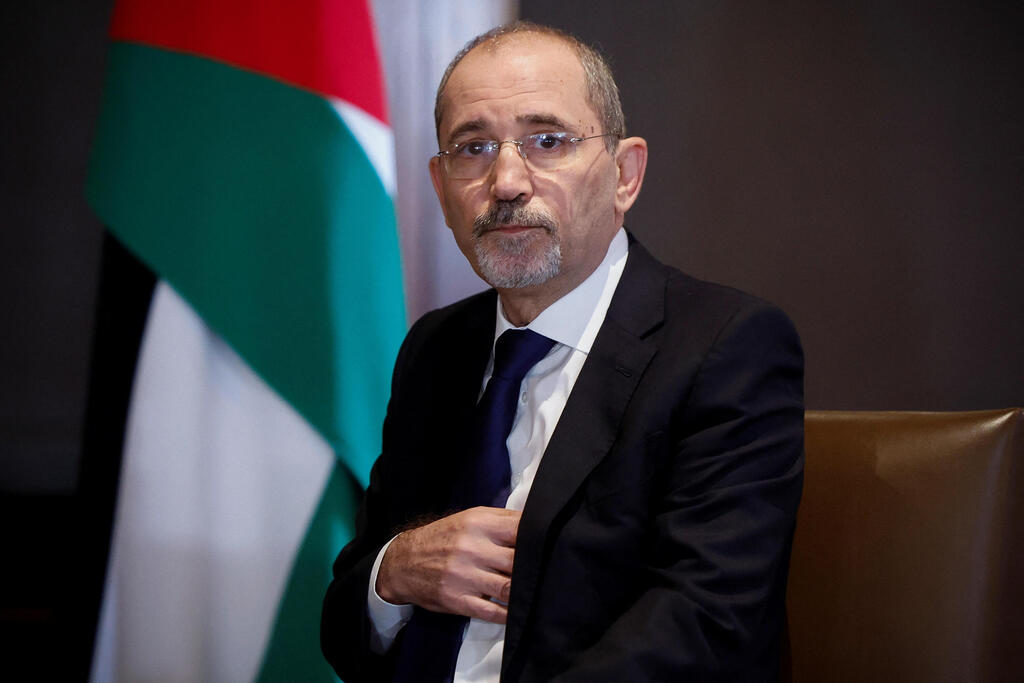
Jordanian Foreign Minister Ayman Safadi. Sharpening the rhetoric: 'The Israeli government is holding the region’s future hostage'
(Photo: REUTERS/Evelyn Hockstein)
Abdullah argued that these could no longer be described as temporary military measures and accused Israel of trying to “erase Palestinian life” while imposing a new territorial reality in Gaza.
The king also sharply criticized Israeli policy in the West Bank, saying settlement expansion, land seizures and violence in the area were not separate incidents but part of a broader policy aimed, in his view, at driving Palestinians from their land.
He described the process as “forced displacement” and a “war crime,” and said Israeli policy in Gaza and the West Bank shared the same ultimate goal: “to make a viable Palestinian state impossible.”
Abdullah also criticized the international response to Israel, noting that governments possess tools including sanctions, asset freezes, embargoes and diplomatic isolation and have used them elsewhere.
“But when it comes to Israel, decisions end where they begin, on paper,” he said, arguing that the result was “a state without restraint.”
His criticism extended beyond the Palestinian arena. Abdullah warned about Israeli activity in southern Syria and said “the expansionist appetite of the Israeli government has become a regional threat.”
“Syria is the warning the international community chooses not to see,” he said.
The king added that Jordan would not tolerate threats to its northern border or water security and argued that Israeli actions in the area could directly affect the kingdom’s national security.
Arab media sees an attempt to ‘reshape the narrative’
Media outlets in Jordan and across the Arab world gave Abdullah’s speech extensive coverage.
The Egyptian outlet Al-Rad described it not as another routine Jordanian speech on Palestine and Gaza, but as an “attempt to rearrange the narrative that has dominated the scene since Oct. 7, 2023.”
The analysis said Abdullah did not ignore the Oct. 7 massacre but sought to shift the discussion toward occupation, international law and Palestinian rights and to reject what it described as an attempt to treat the Hamas attack as an “open check” for everything that followed.
Jordanian media also portrayed the speech as unusually direct. Al-Rad and other outlets described it as one of Abdullah’s strongest public statements on Israel and the conflict.
That harsher rhetoric is not new. Since the start of the Gaza war, senior Jordanian officials, particularly Foreign Minister Ayman Safadi, have repeatedly intensified their criticism of Israel. Queen Rania has also sharply criticized Israeli policy in public appearances and interviews.
Safadi continued that line Thursday morning, writing on X that “the policies and illegal actions of the Israeli government, which threaten the security and stability of the region, have been exposed to the world.”
He said voices at the UN were increasingly condemning what he described as the “killing of children, destruction of schools, starvation of civilians and denial of freedom to five million Palestinians living under occupation.”
Safadi also accused Israel’s public diplomacy apparatus of running campaigns intended, in his words, to “distort history” and attack the UN, humanitarian organizations and foreign leaders who criticize Israel.
Jordan, he said, would work to “restrain the expansionism and aggression of the Israeli government,” adding that Amman believes “the Israeli government is holding the future of the entire region hostage.”
For all the increasingly bitter rhetoric, however, the practical relationship remains intact in key areas. Water, border arrangements and other cooperation continue under the framework established by the 1994 peace treaty, even as the political dispute between Jerusalem and Amman grows more public and more severe.