

Israel’s National Security Council convened a special meeting Monday evening to discuss how the country should respond to a growing wave of international recognition of a sovereign Palestinian state, ahead of next month’s UN General Assembly session.
So far, about 15 nations have formally announced plans to recognize Palestinian statehood.
Gallery

(Photo: JUSTIN TALLIS / AFP, AP Carlos Osorio, Oliver CONTRERAS AFP, Sarah Meyssonnier / POOL / AFP, Toby Melville, Pool Photo via AP, Sean Gallup/Getty Images)
Prime Minister Benjamin Netanyahu, Strategic Affairs Minister Ron Dermer, Finance Minister Bezalel Smotrich, Foreign Minister Gideon Sa’ar, and senior aides to Shas leader Aryeh Deri were among those invited. But tensions flared when National Security Adviser Tzachi Hanegbi excluded Hanamel Dorfman, chief of staff to National Security Minister Itamar Ben Gvir.
Ben Gvir, angered by the move, sent Hanegbi a sharp message: “You don’t want to hear our criticism that the NSC has failed to properly prepare for this issue.”
Among the measures discussed was Sa’ar’s proposal to close the French Consulate in Jerusalem. France quickly pushed back, warning that such a step could severely damage bilateral relations and trigger a harsh response. A French Foreign Ministry spokesman said: “We have received no official notification from Israel of such a move, which could gravely harm our bilateral relations.”
French diplomatic sources also reiterated Paris’s commitment to internationally recognized borders and a two-state solution, rejecting Netanyahu’s recent comment that he “believes in the idea of Greater Israel.”
Meanwhile, settler leaders urged Netanyahu during a visit to the Ofra settlement to act proactively rather than reactively: “Declaring sovereignty after a UN resolution will only legitimize the narrative drawn by Israel’s enemies. Sovereignty must come first.”
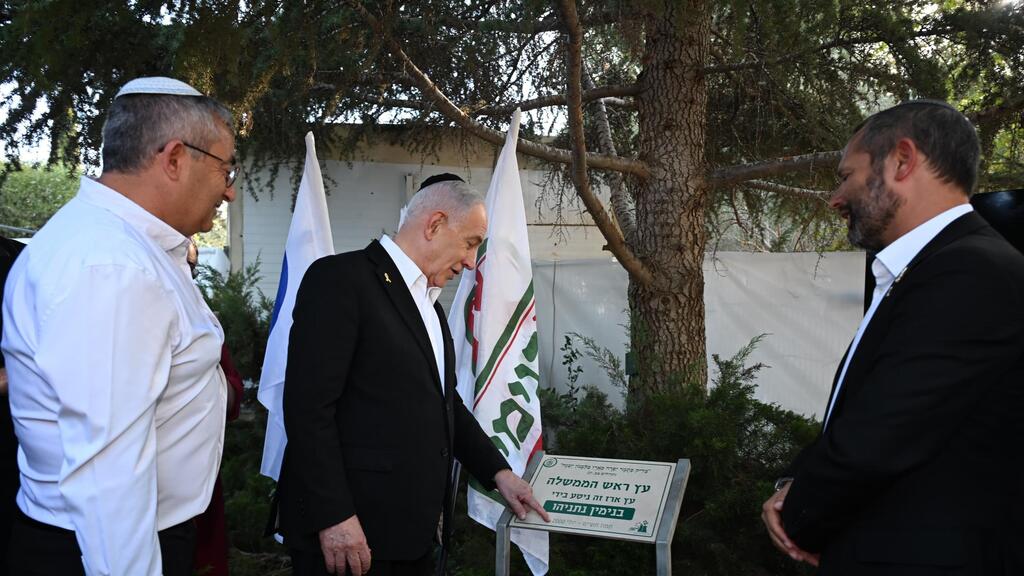
Prime Minister Benjamin Netanyahu visits Ofra settlement
(Photo: GPO)
They warned that Israel’s hesitation in recent years had fueled diplomatic momentum toward Palestinian statehood. “While the IDF fights in Gaza, Lebanon, and against Iran, a political vacuum in the West Bank undermines settlement security,” they said.
The leaders called for a full sovereignty move across Judea and Samaria, not just in settlement blocs: “This is the order of the day — Jewish, historical, moral and security-driven.”
Netanyahu assured them: “We will do everything to ensure our hold on the Land of Israel, to prevent the establishment of a Palestinian state, and to resist attempts — past and present — to uproot us from here. What I promised, I delivered.”
He added, “It was not easy. There were many forces and pressures — internal, external, from a series of American presidents who wanted to uproot us and establish a Palestinian state. Together we stood firm. We fulfilled the promise of generations. Look at what has happened since.”