

New satellite images published by The Wall Street Journal on Friday show extensive damage to the U.S. Navy Fifth Fleet base in Bahrain from strikes during the war with Iran, including damage to command centers and at least 12 other buildings, according to the newspaper.
The Journal said its analysis was based on satellite imagery, social media footage and interviews with current and former service members.
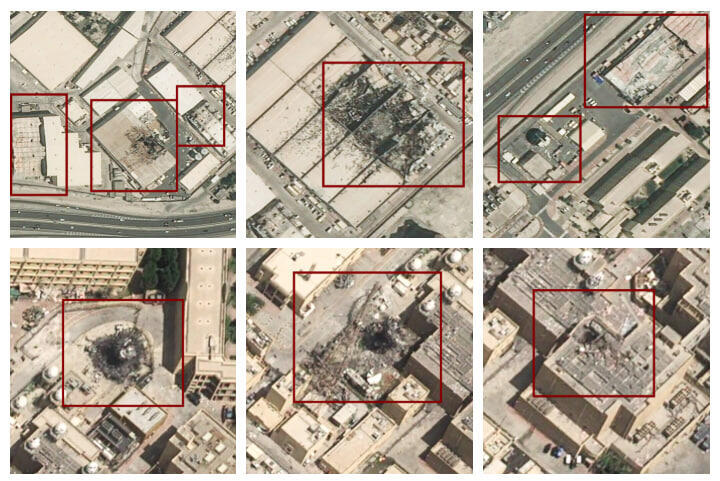
Satellite imagery shows extensive damage to the US Navy Fifth Fleet base in Bahrain
(Photo: Airbus, from Wall Street Journal)
The base, about 240 kilometers, or 150 miles, from Iran’s southern coast, has served for decades as an anchor of U.S. naval power in the region. It can host any type of U.S. Navy ship and has played a key role in efforts to counter arms smuggling, mines and attacks on tankers. It is also the only U.S. military base in the Middle East where families can live, functioning as a small city with restaurants, a school and a softball field.
According to the report, Iranian strikes hit the pier area, the center of the base housing administrative and command buildings, and a warehouse complex. One image showed damage to the headquarters of the U.S. Fifth Fleet, which one official said is no longer usable. The estimated cost to repair it is about $200 million.
The base’s Navy security forces training building was destroyed, the Journal reported. About 400 meters, or a quarter-mile, east of it, an emergency management warehouse housing ambulances was damaged. A freshwater tank, another warehouse near the piers, the main dining hall, housing for 450 personnel and a warehouse complex were also damaged.
The repair cost for all the sites is estimated at about $386 million, though the final cost could be higher because that figure covers reconstruction and not equipment damaged inside the buildings.
Mackenzie Eaglen, co-chair of the National Commission on the Future of the Navy, a bipartisan panel created by Congress, and co-author of an April analysis by the American Enterprise Institute on damage to U.S. bases, said the strikes “exposed weakness and vulnerabilities across the board” at a base built long before Iran developed its current missile and drone capabilities.
“We’ve been there for more than 50 years, and the base grew up the way the base grew up,” said retired Vice Adm. John “Fozzie” Miller, a former commander of U.S. naval forces in the Middle East. “I think there are some things we would do differently.”
The Trump administration previously pressed satellite companies to restrict access to images showing damage to U.S. assets in the region and has declined to discuss the costs with Congress. The Pentagon has not publicly updated the extent of damage at Naval Support Activity Bahrain.
Tim Hawkins, a spokesperson for U.S. Central Command, said no one was killed and that the strikes did not significantly affect operations.
Over the course of the war, “CENTCOM rightfully prioritized the protection of people over buildings, and our strategy of protecting people worked. Iran shot more than 8,000 missiles and drones and only two hits resulted in U.S. fatalities,” Hawkins said.
A person familiar with the matter said the damage to the only U.S. naval base in the region, along with damage to about 20 other U.S. sites, has prompted Washington to reconsider its military footprint in the Middle East.
Other officials said the military is considering renovating the damaged base in Bahrain, reducing the U.S. presence in Kuwait and Saudi Arabia, and moving service members to bases farther from the range of Iranian missiles and drones.
Some buildings may not be rebuilt, officials said. Command-and-control centers could be moved underground, while other military capabilities may be spread more widely across the region. Israel is among the locations being considered for a base, they said.
The Journal previously reported that military officials had warned that U.S. bases in the Persian Gulf were exposed.
U.S. Secretary of State Marco Rubio met Thursday in Bahrain with foreign ministers from the Gulf Cooperation Council. In a joint statement after the meeting, the United States and Gulf states affirmed “enhancing coordination and joint consultation in a manner that supports regional security and stability and protects shared interests.”
The statement also said the sides emphasized “the need to maintain momentum in negotiations to end attacks and prevent Iran from developing nuclear weapons.” It said peace in the region requires addressing threats posed by Iran, including missiles, drones and support for proxy groups.