

Lebanese Prime Minister Nawaf Salam said on Wednesday that economic talks would be part of any normalization process with Israel, which would have to follow a peace agreement.
If both countries adhere to a 2002 Arab peace plan, "normalization will follow, but we are not there at all," he told journalists.
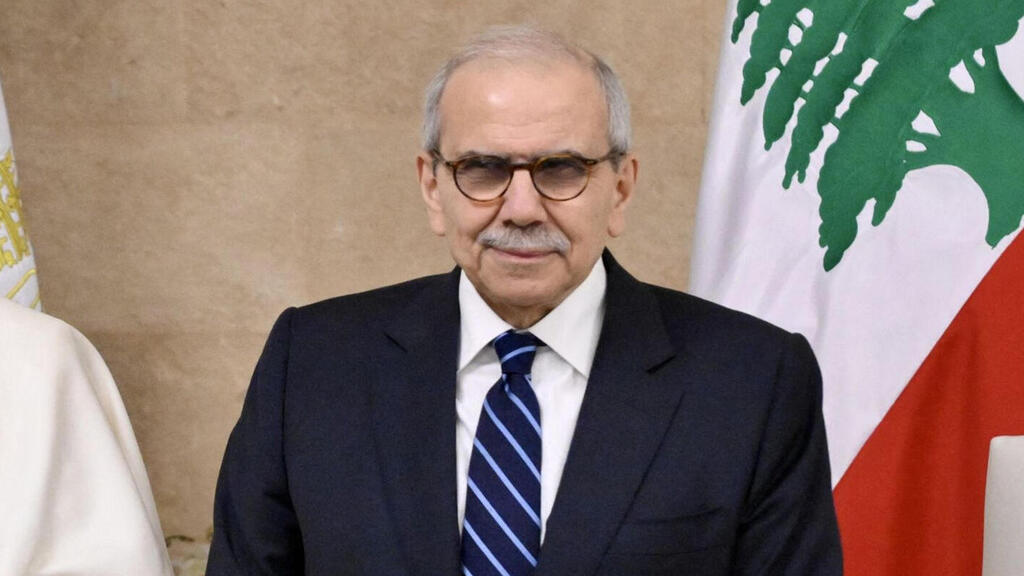
His comments came as both Israel and Lebanon each sent civilian representatives to a ceasefire monitoring meeting in Naqoura on Wednesday, marking a rare moment of direct engagement between the sides as tensions with Hezbollah continue to rise.
Lebanon announced that former ambassador to the United States Simon Karam would join its delegation to the committee that oversees the ceasefire mechanism. After Beirut’s decision, Prime Minister Benjamin Netanyahu instructed the acting head of the National Security Council to dispatch a representative as well. Dr. Uri Resnick, a senior director for foreign policy at the NSC, took part on Israel’s behalf.
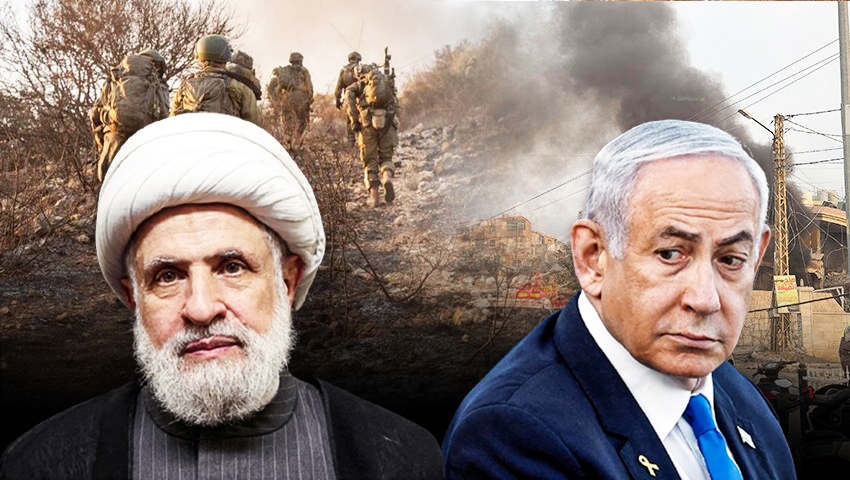
Naim Qassem, Benjamin Netanyahu
(Photo: IDF, Amir Cohen/ Reuters)
Netanyahu’s office said the step was “a first attempt to build a basis for relations and economic cooperation between Israel and Lebanon,” though officials acknowledged that the security situation in southern Lebanon remains volatile.
Lebanon’s presidential office said Karam’s appointment followed an American update that Israel had agreed to the inclusion of a civilian participant. The move came after coordination with Parliament Speaker Nabih Berri and Prime Minister Nawaf Salam. Lebanon’s Al-Mayadeen network, aligned with Hezbollah, reported that civilian participation was added because the matters under discussion were not purely technical. Al-Akhbar reported that U.S. envoy Morgan Ortagus, along with representatives from France and UNIFIL, also attended.
A statement from the U.S. Embassy in Beirut said the meeting — the 14th gathering of the Pentalateral mechanism — was held to assess efforts toward a lasting cessation of hostilities. The embassy confirmed the participation of Karam, Resnick and Ortagus, noting that their inclusion underscored the mechanism’s effort to deepen “political and military discussions with the aim of achieving security, stability and a durable peace for all communities affected by the conflict.” All parties welcomed the addition of civilian participants.
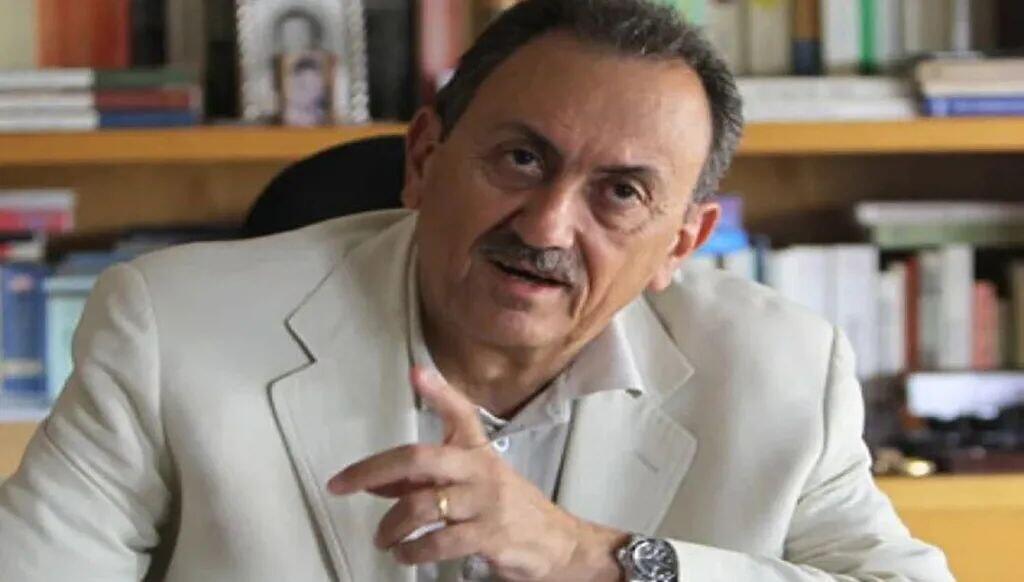
Simon Karam
Lebanon’s MTV network reported that the U.S. State Department is closely monitoring developments in Lebanon, particularly in the south, and is preparing a report for Secretary of State Marco Rubio on the dismantling of Hezbollah’s weapons.
Meanwhile, Syria’s state-run Al-Ikhbariyah reported that security forces foiled an attempt to smuggle 1,250 land mines intended for Hezbollah near Yabrud, arresting four suspects.
During a meeting in Jerusalem, Military Intelligence chief Maj. Gen. Shlomi Binder presented Ortagus with updated intelligence on Hezbollah’s growing military strength and what he described as the Lebanese Army’s inability to confront the terrorist group, noting that many Lebanese soldiers are Shia. Officials told the U.S. envoy that Hezbollah continues to smuggle short-range rockets from Syria and move infrastructure north of the Litani River. More than a year after the ceasefire went into effect, Hezbollah operatives remain deployed in villages along the border.
Given the intelligence, a senior official said Jerusalem does not believe Hezbollah will give up its weapons under any arrangement. “There is no point in continuing with this agreement,” the official said. “We are heading toward escalation, and we will decide when, according to our interests.”
First published: 17:08, 12.03.25