

More details have emerged in the car-ramming and stabbing attack on a synagogue in Manchester during worship services on Yom Kippur on Thursday that killed two Jewish men.
Britain authorities identified the attacker as 35-year-old Jihad al-Shami, a British citizen of Syrian origin. The Guardian reported he arrived in Britain as a small child and was granted citizenship in 2006. British media described him as an Islamist but said he was not previously known to the authorities for earlier incidents. Police said al-Shami, who was initially suspected of wearing an explosive belt, was shot dead by officers who were called to the scene.
Three suspects have been arrested in the investigation — two men in their 30s and a woman in her 60s — though their connection to the attacker is not yet clear. They are suspected of planning and incitement to terrorism.
Gallery
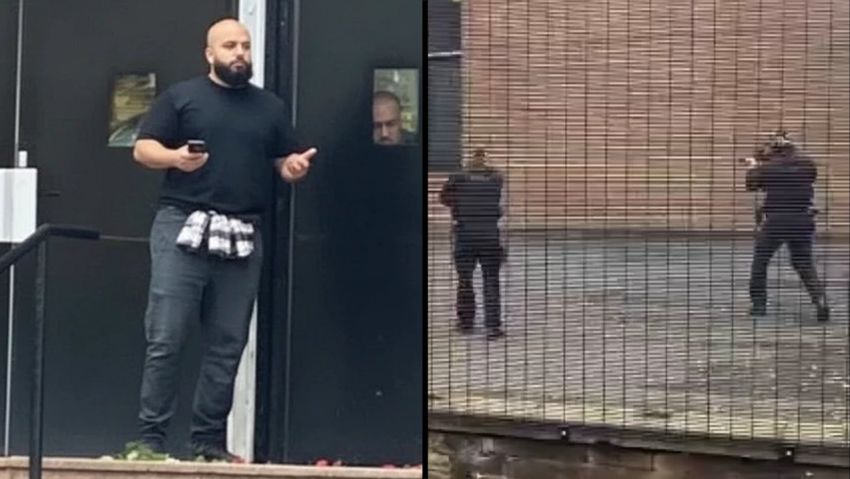
At right, terrorist seen standing outside locked synagogue door, at left, he is shot and killed
Watch the moment of the elimination of the terrorist outside the Manchester synagogue


The identities of the two dead Jewish worshippers have not yet been released. Four other people were wounded, three of them seriously, including the synagogue’s security guard who confronted the attacker.
The attack took place at the Heaton Park synagogue in Crumpsall, a small Manchester suburb with both a large Jewish community and a large Muslim community. The killing spree lasted six minutes: it began at 9:31 a.m. local time (11:31 a.m. Israel time), about half an hour after worshippers began gathering there for Yom Kippur services and dozens were still outside when the attacker drove his vehicle at the group. He then left the car and began stabbing worshippers, and witnesses said those stabbed were Jewish men wearing kippot. He tried to break into the synagogue but worshippers barricaded themselves inside — and he was shot dead by police at 9:37 a.m.

Rabbi Daniel Walker outside the synagogue after the attack
(Photo: Paul Currie / AFP)

Worshippers were evacuated from the Manchester synagogue
(Photo: Christopher Furlong/Getty Images)

Worshippers react to the attack on a Manchester synagogue
(Photo: Christopher Furlong/Getty Images)
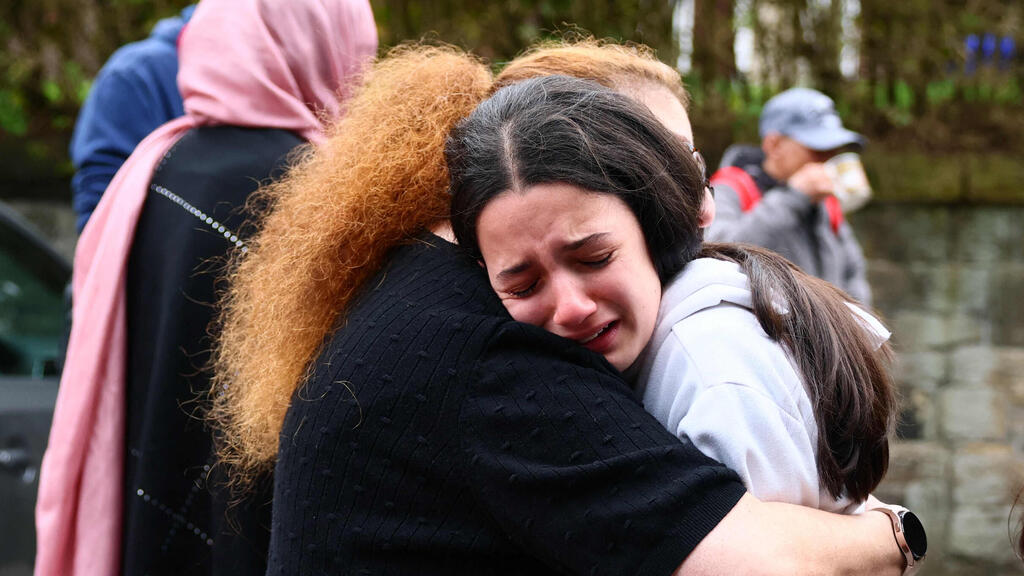
(Photo: Paul Currie / AFP)
Footage from the scene shows the attacker standing outside the locked synagogue with one of the worshippers visible in a window behind him. He was wearing a belt with suspicious packages; officers fired at him after he refused to heed their warnings. Disturbing video of the shooting shows the attacker lying on the ground after being shot by officers — and when he tries to get up he is shot again. One officer is heard calling to passersby gathered outside the synagogue gates: “Go back! If you’re not involved, go back, he has a bomb!”
British commentators have praised the composure of the synagogue’s rabbi, Daniel Walker, who locked the compound’s doors and so prevented the attacker from entering and continuing the massacre.
“Rabbi Walker was remarkably calm,” local resident Chava Levin said. “He closed the doors and blocked the entrance. He’s a hero. It could have been much worse.” After the attacker was killed, a police explosives squad was brought in and, using a robot, ruled out the worry that the belt contained actual explosives.
The Yom Kippur massacre — six years after a similar attack in Halle, Germany — comes against the backdrop of a dramatic rise in antisemitic assaults in Britain and other European and Western countries since the Oct. 7 massacre and the ensuing war in Gaza. In February this year a Jewish man was attacked after leaving a synagogue in central Manchester and, according to the Community Security Trust (CST), which monitors antisemitic incidents in Britain, 3,528 such incidents were reported last year in a country with about 290,000 Jews. That was the second-highest total since the CST began tracking incidents in 1987 and slightly below the 2023 record of 4,103 antisemitic incidents (about double the 2022 figure).
The CST said roughly half of last year’s reports were of inciting expressions against Jews related to the Gaza war. The Labour government under Keir Starmer allocated £70 million earlier this year to bolster security around Jewish community institutions, and on Thursday it announced increased police protection for synagogues nationwide.
'They compared us to the Nazis — almost every Jew knew this day would come'
The attack has crystallized fear in Britain’s Jewish community, and the CST urged people to avoid gathering outside synagogues and other community centers and to keep doors locked.
Dina, 46, who was attending a synagogue in Golders Green in London — which was vandalized last month with human feces smeared on the building — told Reuters she will now tell her two children not to wear kippot in public places like the London underground or buses. “I'll tell them to take off any signifying signs,” she said. Another Jewish woman, Vicky, added: “I’m totally terrified, I just don’t feel safe.”
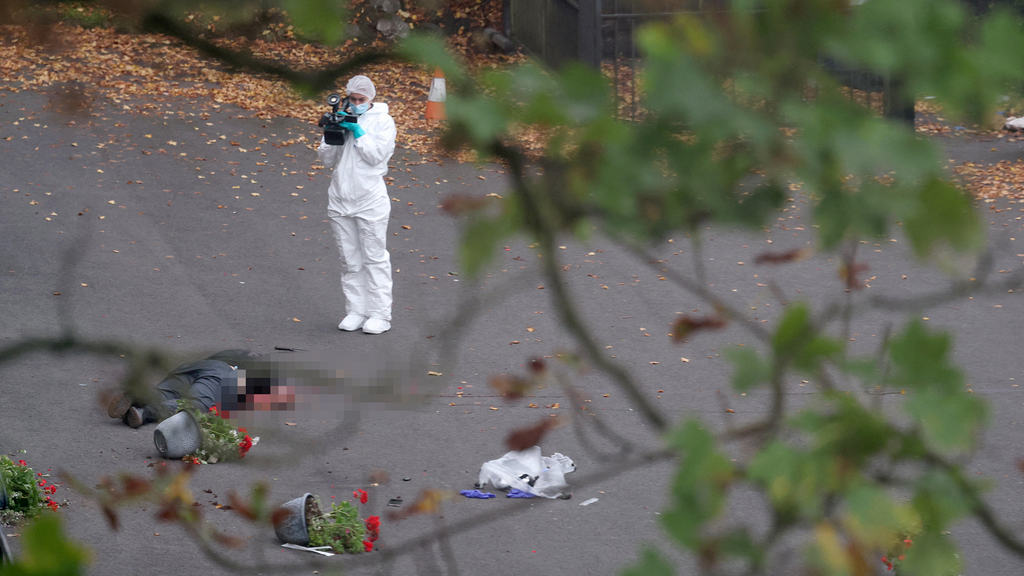
The terrorist is neutralized
(Photo: Hannah McKay/Reuters)

(Photo: Hannah McKay/Reuters )
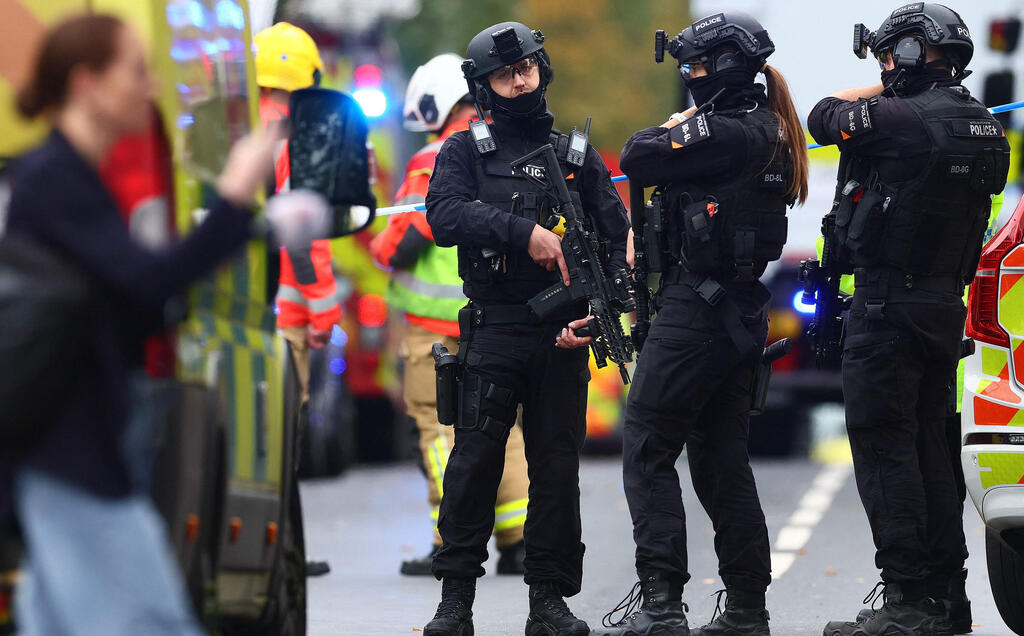
Security forces at the scene of the attack in Manchester
(Photo: Paul Currie / AFP)
Jews across the kingdom have long expressed grave concern about a climate of hate they say has been inflamed by anti-Israel activists who have staged frequent, sometimes violent demonstrations since the Gaza war began. Those protests have at times included explicit support for Hamas terrorists or chants that call for violence, such as “globalize the intifada.”
Similar demonstrations took place in several British cities after Thursday’s attack — even in Manchester, roughly 5 kilometers from the scene. Reuters reported that hours after the attack two cars drove through the area flying Palestinian flags and several masked men were heard by a Reuters reporter shouting insults at Jews. Jewish student Simon Kassel told Reuters: “I don’t understand how after hearing about this horrific attack someone comes and tries to provoke the victims.”
“Almost every Jew in this country knew this day would come,” Rafi Bloom, a Manchester resident and member of the Heaton Park synagogue community who was heading to the service when the attack occurred, told Sky News. He said Britain’s Jewish community has feared an attack like this for two years: “We’ve faced a tsunami of hatred since Oct. 7. Vandalism, physical assaults, online abuse, mistreatment by health workers, students who have been threatened and attacked on campuses. We’ve had almost weekly hate marches in our streets with disgusting scenes comparing Jews to Nazis. I never thought it would happen at my synagogue, to my friends, my rabbi, in my city.” Bloom blamed the attack on what he called authorities’ “inaction” in the face of “this wave of hatred directed at the Jewish community in Britain over a conflict 2,000 kilometers away.”
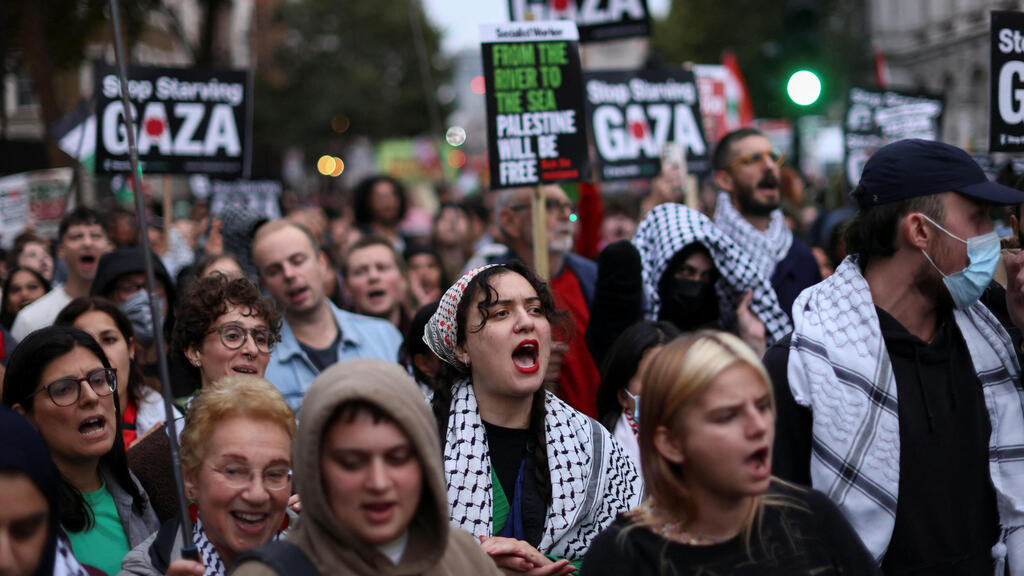
Pro-Palestinian protest in London following the interception of the Gaza flotilla
(Photo: Jack Taylor/Reuters)
An anti-Israel demonstration was held in central London on Thursday evening, and protesters there voiced shocking statements. ““I don't give a f*** about the Jewish community right now,” 42-year-old protester Fiona Smith told The Telegraph. “I thought about it and I’m sorry for what happened, but we are here because of what happened yesterday,” she added, referring to the detention of activists from the Gaza flotilla by the Israeli Navy.
Beside her, 39-year-old Sybil Todero said pro-Palestine activists are “also being attacked” and described the flotilla arrests as a “kidnapping in international waters.” Steph told the Daily Mail: "Over the last three years, Palestine protests have been over-policed as a tactic to instill the sense that we are somehow dangerous." Ron added: "We are not against Jews, we are against Zionists. There are Jewish people who come to our demonstrations."
Starmer cuts Denmark trip short; right attacks: 'The blood is on your hands!'
In response to the attack, Prime Minister Keir Starmer cut short a visit to Denmark and, after an emergency Cabinet meeting, delivered a special statement announcing stepped-up security around Jewish institutions and warning of a surge in antisemitism in the kingdom.
“Jews have been attacked simply because they are Jews,” he said. Starmer stressed that antisemitism is not new but now “is on the rise again,” and he vowed Britain “will defeat it again.”
Starmer is known for efforts to purge the Labour Party of antisemites, and his wife Victoria is Jewish. The two visited a London synagogue Thursday in solidarity with the community. Home Secretary Suella Braverman visited the attack scene and also condemned the assault on the Jewish community. “Those who try to divide us will fail,” she said.
British Prime Minister Keir Starmer issues a statement after the attack in Manchester
(Video: Reuters)
King Charles also denounced the murderous attack, saying he was “shocked and very saddened.” Mainstream right-wing voices in Britain issued condemnations similar to Starmer’s and government ministers’, without explicit criticism of the government’s handling.
But far-right activist Tommy Robinson, who led a large anti-immigration march in London last month, directly blamed Starmer’s recently critical policy toward Israel — including Starmer’s recent recognition of a Palestinian state. In an X post Robinson wrote that the violence was the result of what he called the government’s permission for “hate marches in our streets following the Oct. 7 massacre. After all this vile hatred, Starmer gave in to them. The blood is on your hands!” He later added: “This is what happens when you recognize a terror state.”
Foreign Minister Gideon Sa’ar issued a sharp statement blaming the British government for failing to act against what he called “blatant antisemitic and anti-Israel incitement.” He said the U.K. had “allowed this toxic wave of antisemitism to continue” and urged Starmer’s government to take action.
Prime Minister Benjamin Netanyahu was more restrained in his criticism; in a statement condemning the attack he said: “Our hearts are with the families of the murdered, and we pray for the swift recovery of the wounded. As I warned at the U.N.: weakness in the face of terrorism only brings more terrorism. Only strength and unity can defeat it.”