

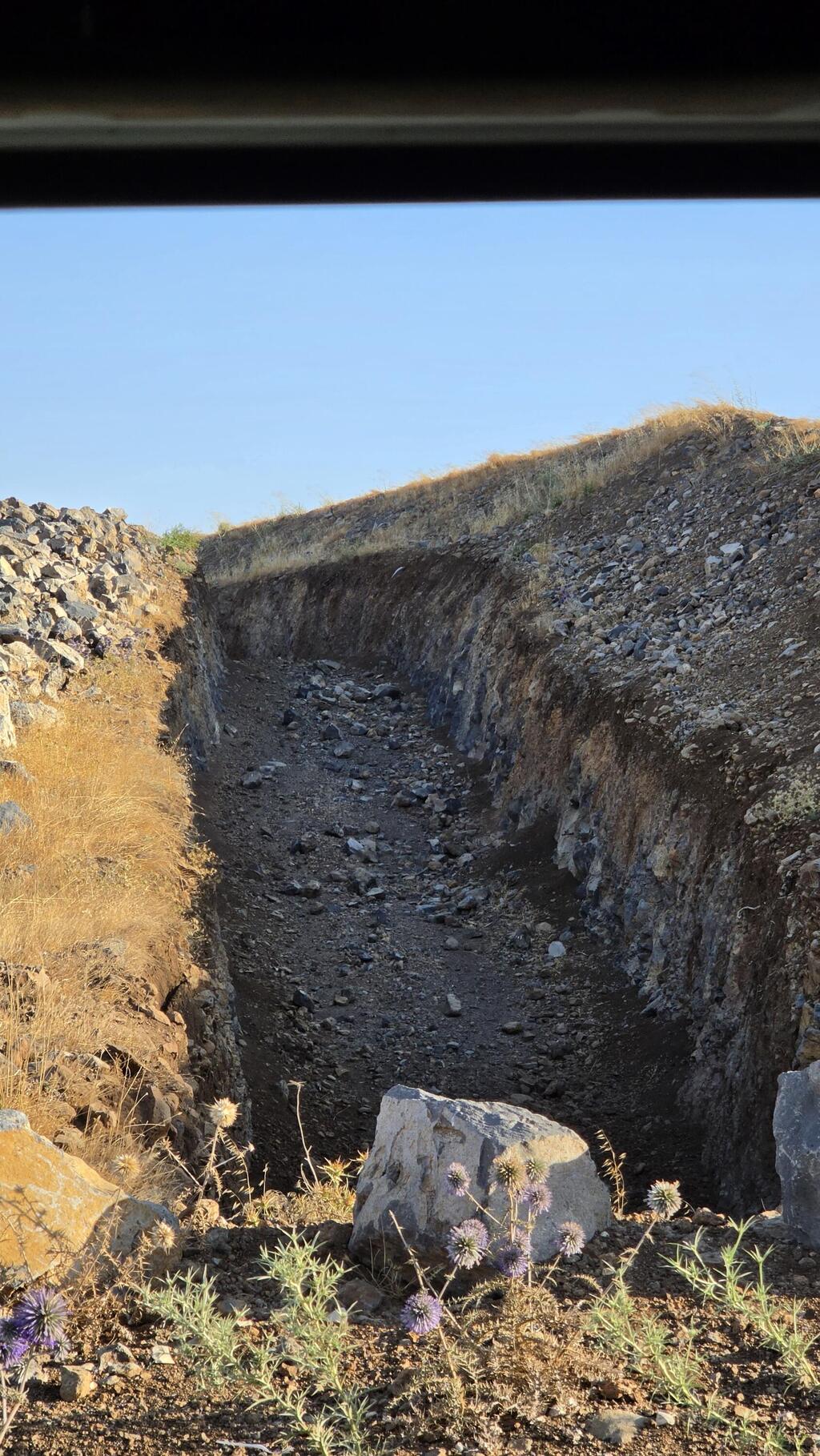
Two years after work began on the IDF’s “New East” project, designed to fortify the entire Israel-Syria border area, the military says nearly 80% of the trench excavation has been completed.
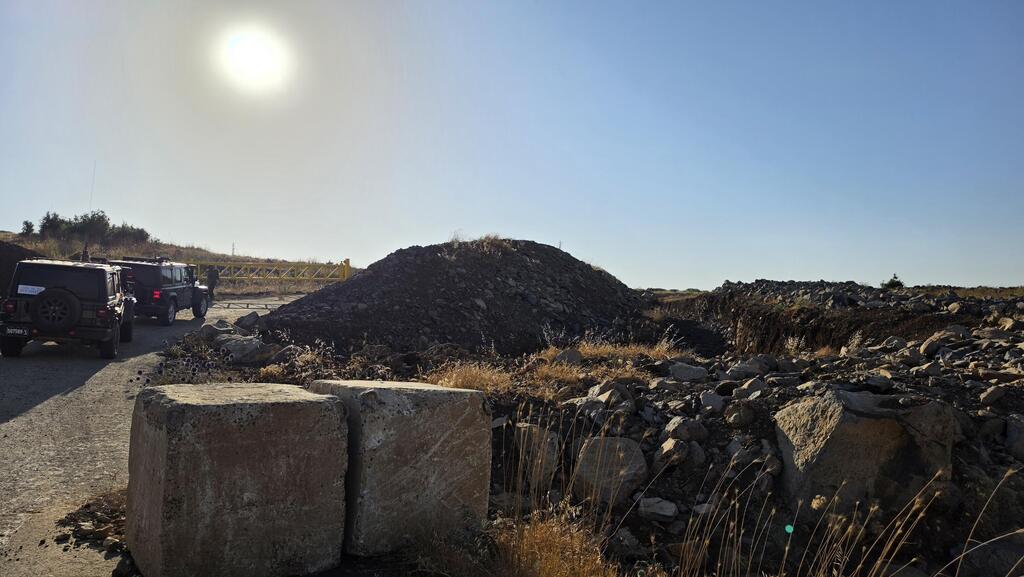
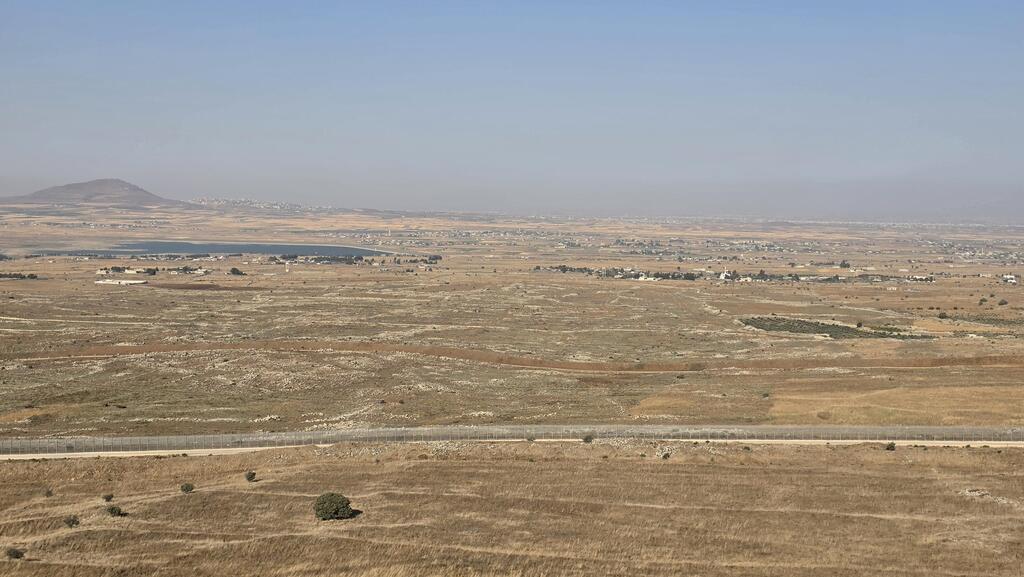
The project includes four-meter-deep and four-meter-wide trenches alongside large earth barriers, stretching from the area of Majdal Shams in the northern Golan Heights to the southern tripoint area.
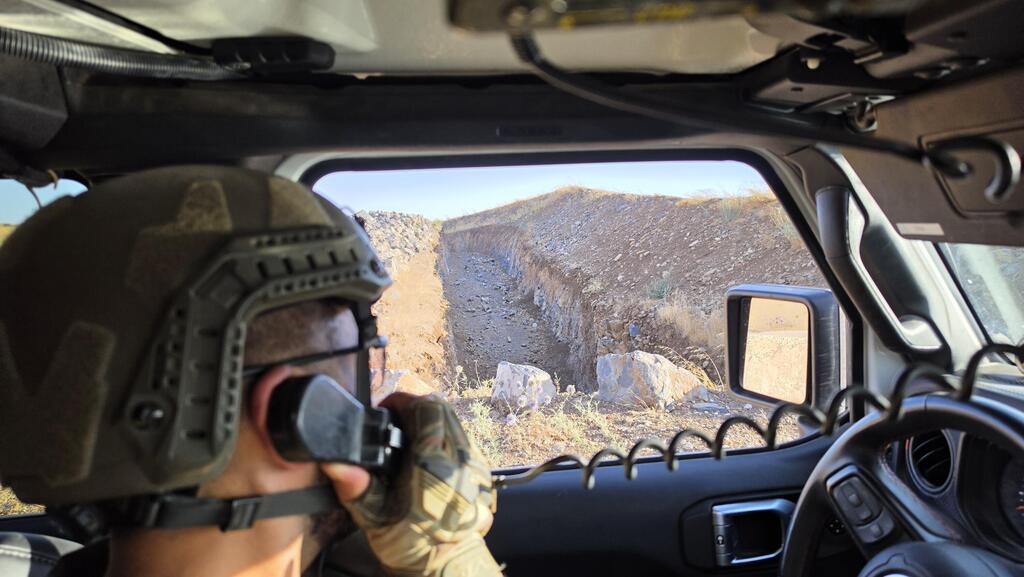
The work has taken longer than expected because engineering equipment has also been used for operations against terror infrastructure in neighboring Lebanon. However, along much of the border, the new defensive landscape is already visible.
A senior Northern Command officer who toured the Syrian side of the border with ynet said the main crossing points where enemy forces could attempt to enter Israel are controlled through surveillance systems and artillery capabilities.
According to the concept developed by the Golan Brigade, the defenses are designed to allow troops in the field to focus on dealing with individual threats, such as a lone terrorist or armed infiltrator.
At the same time, the IDF has expanded its control in the security zone beyond the border, with forces moving freely through Syrian villages and towns.
(Photo: Yair Kraus)
The shift reflects a new operational approach shaped by commanders who fought during the October 7 attack and the collapse of previous assumptions about Israel’s enemies.
“We no longer define our defensive response according to who the enemy is,” the senior officer said. “Whether it is Hezbollah, the Syrian army or a jihadist organization, the only question is what capabilities the enemy has and what it can do.”
“The area is a playground for terror organizations, armed groups and militias. From our perspective, any civilian or shepherd moving through the area could be armed and pose a threat.”
Unlike areas along the Gaza and Lebanon borders, however, civilians in the Syrian area are still allowed to move freely.
A border shaped by years of war
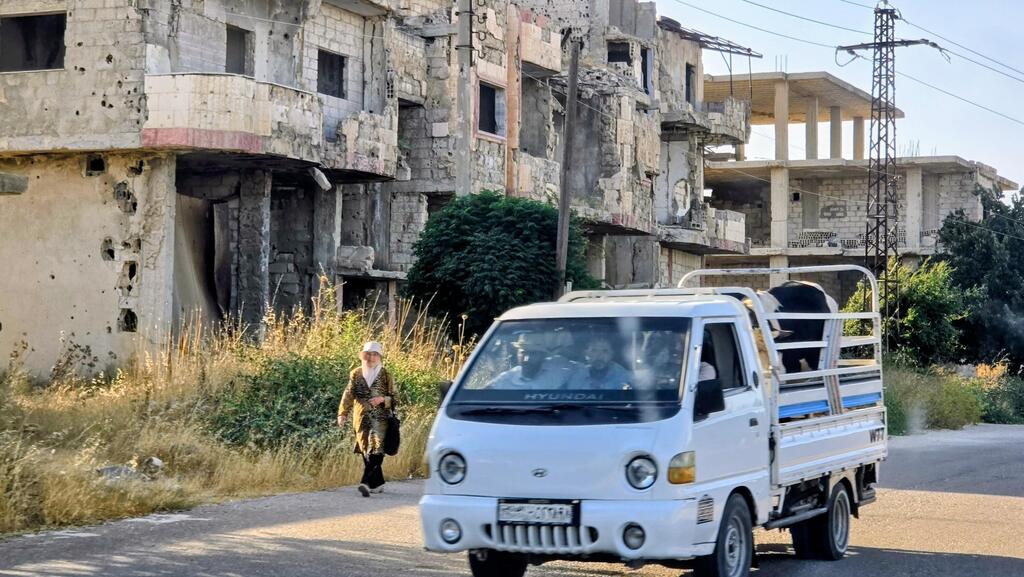
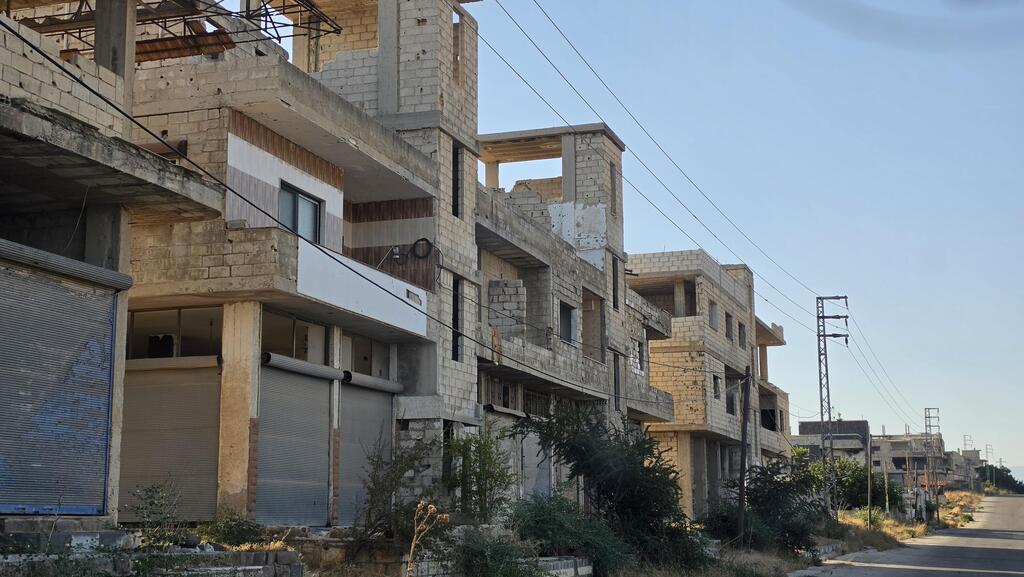
Near the Syrian town of Braika, just 1.5 kilometers from the Israeli border, the effects of years of fighting remain visible.
Many Circassian homes have broken roofs, walls damaged by explosions and gunfire, and abandoned orchards that have not been maintained for years.
In 2012, al-Qaeda-affiliated rebels captured the village. Years of fighting, looting and shelling followed before Syrian regime forces returned in 2018.
(Photo: Yair Kraus)
The collapse of Bashar Assad’s regime at the end of 2024 once again destabilized the area, and Israel later established control over the buffer zone along the border.
Today, the Golan Brigade maintains a security strip deep inside Syrian territory, including around nine company-level outposts, while conducting patrols in villages and open areas.
The area is home to a largely Sunni population that, particularly in southern Golan, is considered more hostile toward Israel than Druze, Christian or Circassian communities.
“During a real-time incident, it is difficult to determine whether an armed person is an enemy or a civilian defending himself,” the officer said.
Clashes and lessons learned
Operational friction has occasionally turned into direct confrontations.
At the end of June, IDF forces operated in the Abdeen area of western Daraa province. During the return of some troops to an outpost, locals threw stones at the convoy.
(Photo: Yair Kraus)
(Photo: Yair Kraus)
(Photo: Yair Kraus)
The forces dispersed the demonstration, but as additional troops left the area, gunfire was directed at them.
The soldiers returned fire, while mortar fire and an Israeli Air Force attack helicopter were also used during the response.
The incident ended without Israeli casualties, though forces left behind several items, including a classified military cellphone that was remotely disabled.
The IDF said it drew lessons from the incident.
“In villages like Abdeen, forces operate mainly at night,” the officer said. “We are not afraid of being seen or meeting locals.”
“But the main objective is preventing hostile elements from establishing themselves, while being careful not to disrupt civilian life,” he said.