

About 5,000 U.S. sailors and Marines are expected to spend the coming days in Pattaya after the aircraft carrier USS Abraham Lincoln arrived Wednesday at Laem Chabang port in eastern Thailand, ending a 286-day deployment.
For the resort city, which has struggled through a weak tourism season, the visit represents a potentially significant economic boost. It is also prompting heightened policing, tighter enforcement against street prostitution and a series of restrictions on U.S. personnel heading ashore.
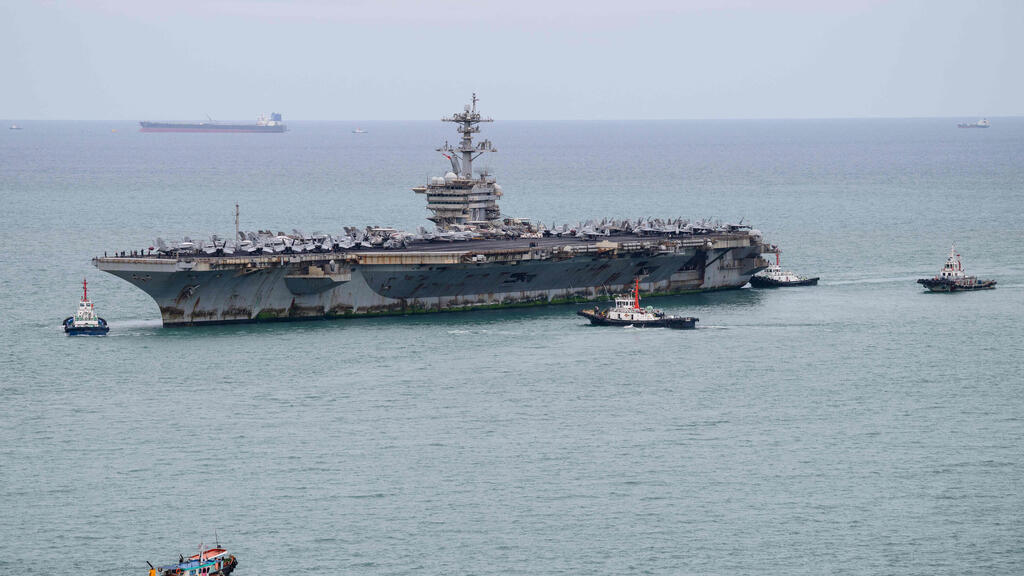
The carrier left San Diego in November 2025 for a deployment initially expected to last about seven months, but was later diverted to the Middle East because of the war between the United States and Iran.
The extended deployment raised concerns in the U.S. over living conditions and the mental health of crew members. After being relieved in the region by the USS George Washington, the Abraham Lincoln began its journey home, with a five-day stop in Thailand for rest and recuperation.
Pattaya officials hope the arrival of thousands of personnel within a short period will inject money into local businesses.
Mayor Poramet Ngampichet told Reuters that each visitor could spend between 1,000 and 3,000 baht a day, roughly $30 to $91, depending on how long they remain ashore and whether they stay overnight.
Footage of the USS Abraham Lincoln earlier this year
(Video: CENTCOM)


He said the visit could provide a short-term boost to the local economy. Not all crew members are expected to enter Pattaya at the same time, however, because shore leave will be staggered and some may choose to travel to Bangkok instead.
More than nightlife
Pattaya officials have also sought to emphasize that the city offers more than the nightlife for which it has long been known.
Alongside bars and entertainment venues, Pattaya and the surrounding area offer shopping centers, restaurants, water parks, botanical gardens, museums and golf courses.
In recent years, local authorities have tried to reposition Pattaya as a destination for families and tourists from elsewhere in Asia.
But the carrier visit has once again focused attention on one of the more controversial aspects of the city’s image.
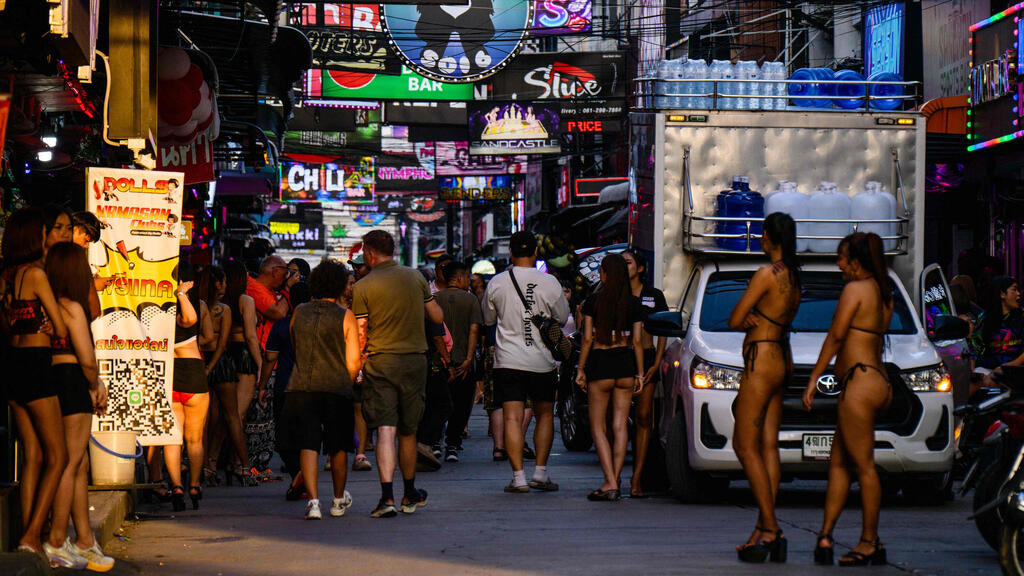
(Photo: ANTHONY WALLACE / AFP)
Pattaya has for decades been closely associated with a large sex industry, despite prostitution being illegal in Thailand.
Ahead of the arrival of the Abraham Lincoln, police increased their presence in tourism and nightlife districts.
Thai PBS reported that 25 people were arrested during an overnight operation along the beachfront on suspicion of engaging in prostitution in public areas. They included 18 Thai nationals, five citizens of Laos and two Ugandan nationals.
The mayor said the enforcement operation was not directly connected to the arrival of the Americans.
Restrictions for US personnel
U.S. personnel have also reportedly been given a series of rules ahead of shore leave.
According to Thai media, they have been barred from entering several nightlife areas, including Soi 6, Soi 6/1 and Soi 7.
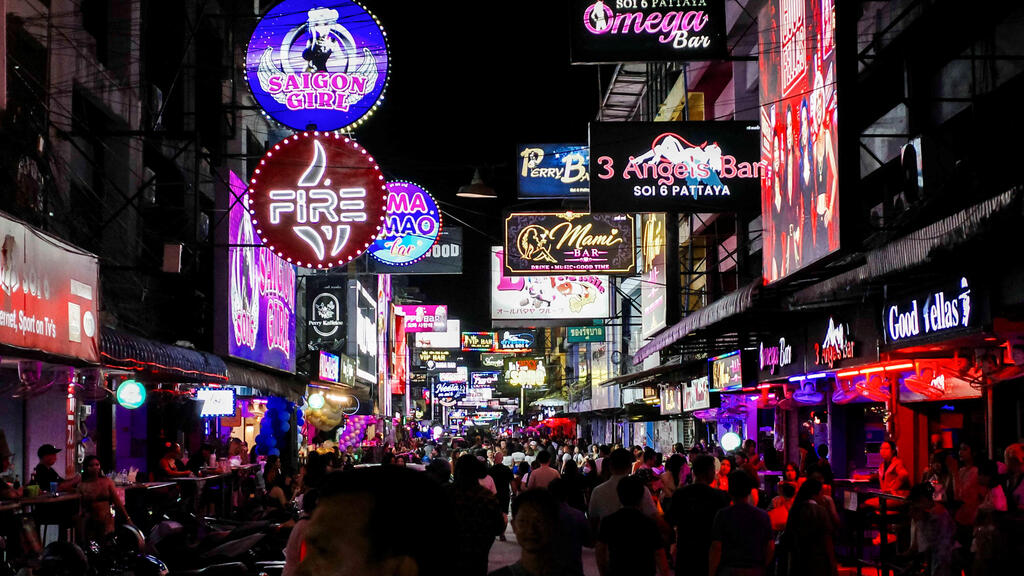
Passersby on a street lined with bars and entertainment venues in Pattaya, Thailand
(Photo: REUTERS/Chalinee Thirasupa)
Walking Street, one of Pattaya’s best-known nightlife districts, will remain open to them until 2 a.m.
Crew members have also reportedly been banned from consuming cannabis and from participating in activities considered high-risk, including jet skiing and parasailing.
Local authorities have increased the police presence, warned businesses against overcharging visitors and reiterated that prostitution remains illegal in Thailand.
A relationship dating back to Vietnam War
Pattaya’s ties to the U.S. military go back decades.
The city, about 150 kilometers southeast of Bangkok, was once a small fishing village. It developed rapidly during the Vietnam War, when U.S. military personnel began visiting the area for rest and recreation.
Hotels, restaurants and entertainment venues expanded around the influx of visitors, while the sex industry also grew and eventually became a prominent, if controversial, part of Pattaya’s international reputation.
Today, city officials are trying to present a different image.
Alongside the heightened security measures, local businesses are hoping the carrier’s visit will inject money into hotels, restaurants, shopping and entertainment during an especially difficult year.
“When we heard a U.S. Navy aircraft carrier was going to dock in Pattaya, it became a source of hope for us,” Lisa Hamilton, president of the Pattaya Night Business Association, told Reuters.
Hamilton said that after more than 20 years in Pattaya, she could not remember a tourism year as weak as the current one.