


'We are no longer citizens, but subjects.' Former Supreme Court President Aharon Barak used those blunt words Thursday night in a pointed rebuke of the government and Prime Minister Benjamin Netanyahu. Against the backdrop of Netanyahu’s formal clemency request to President Isaac Herzog, and Barak’s past involvement in failed plea bargain talks aimed at ending the prime minister’s trial, there had been expectations that Barak would address recent developments. Instead, he chose to focus his speech at the annual conference of the Israeli Association of Public Law, held in Haifa, on what he said are dangers facing Israeli democracy, some of which, he argued, have already materialized.
At the same conference, current Supreme Court President Yitzhak Amit delivered an unusually sharp address of his own. He described Justice Minister Yariv Levin’s boycott of him as a boycott of the entire judicial system and of the Israeli public, which is being harmed by paralysis in the courts. Amit also cited Levin’s own words from April: "What we built here over decades takes time to dismantle. It does not end in one day." Amit said, "The words speak for themselves." These were the rebukes from past and present leaders of the judiciary in the face of the renewed judicial overhaul, along with Levin’s angry response, in which he accused Amit and his colleagues of believing "everything is permitted" and claimed that what he is dismantling is a "fortress of lies."
Gallery
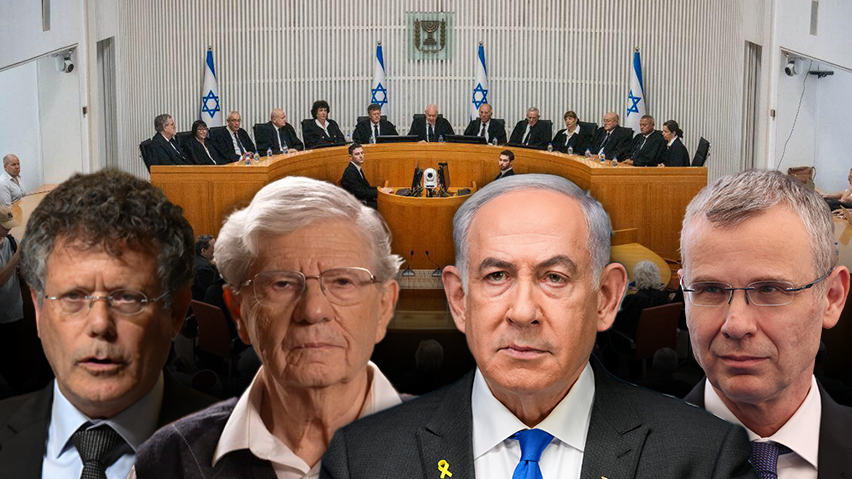
Supreme Court President Yitzhak Amit, former Supreme Court president Aharon Barak, Justice Minister Yariv Levin and Prime Minister Benjamin Netanyahu
(Photo: Shal Shalev Shalom, Reuters, Amit Shabi , Nachum Segal, Nati Borin)
Barak’s speech: 'Presenting the problem'
Barak opened by what he called "presenting the problem." "Ask a person on the street, 'What is democracy?' The answer you will get in most cases is: 'Democracy is elections' or 'Democracy is rule of the majority.' This is certainly what the coalition thinks, and this is certainly what the government and its head think. But no. Democracy is not only elections and not only majority rule. Democracy, as we understand it today, rests on two pillars. The first pillar is rule by the people. It is realized by electing representatives in a fair, equal and secret manner. Some call this the formal aspect of democracy. The second pillar is rule by values, including human rights, separation of powers, rule of law and the independence of the judiciary. Some call this the substantive aspect of democracy."
Barak stressed that both pillars, formal and substantive, are essential. "I repeat what is clear and known to each of you to point out that substantive aspects of Israeli democracy are under severe attack. Democracy does not become a dictatorship overnight. It weakens, and significant aspects disappear," he warned, before detailing what he said are the attributes now under assault.
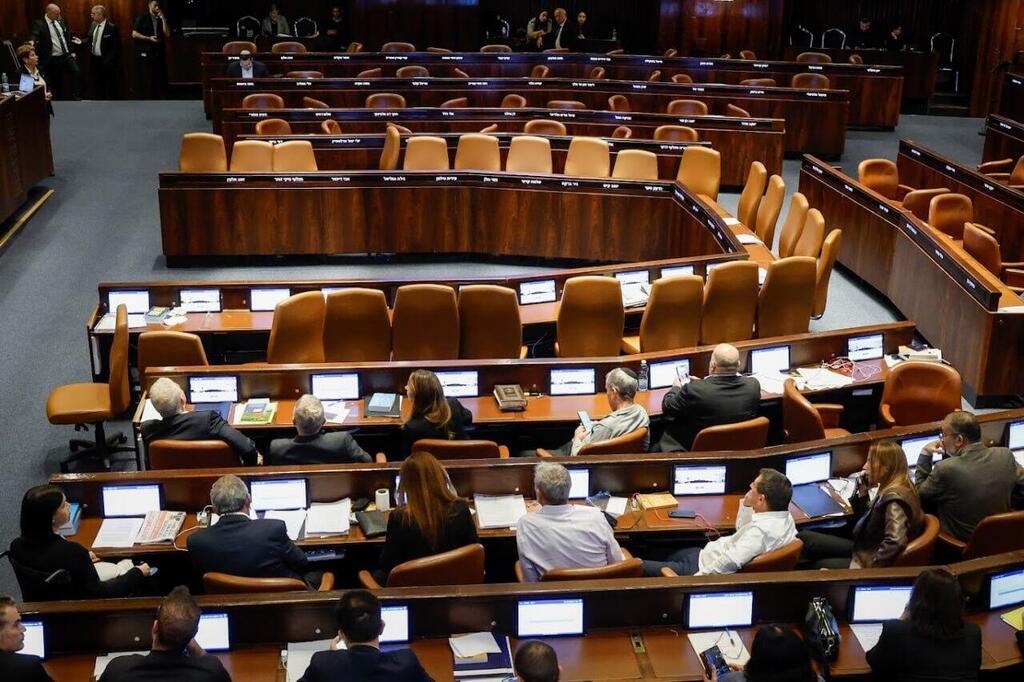
"The prime minister, who controls the government, which controls the Knesset, in practice rules the country alone."
(Photo Noam Moskovich/ Knesset)
On separation of powers, he said the ideal is a system of checks and balances among the three branches, "so that no branch can do whatever it wants: the government is not all-powerful, it must act according to the Basic Laws, Knesset laws and court rulings; the Knesset is not all-powerful either, it must act according to the Basic Laws and court rulings; and of course the court is not all-powerful, since its authority is limited by laws and Basic Laws. There must be balance among the branches." But, Barak said, the principle of separation of powers "has completely collapsed in our time." This collapse, he argued, is reflected in part by the fact that "the Knesset has stopped supervising the government. The government controls the Knesset."
"The prime minister controls the cabinet ministers. Menachem Begin used to say that as prime minister he was first among equals. Those days are gone. The prime minister of today sees himself as first, and does not see ministers as equals. In practice, cabinet decisions are usually the prime minister’s decisions, with routine approval
He added that Israel’s proportional electoral system, coalition discipline and coalition politics, which grant relatively great power to minority groups, have enabled the government to take over the Knesset and its legislation. "The government determines, in practice, the composition of Knesset committees. If a committee chair or a member operates independently, the government can replace them or set up a new committee headed by an MK who follows its instructions. The people elected the Knesset, but the government controls the Knesset."
Barak said there is no longer meaningful resistance inside the government either. "The prime minister controls the cabinet ministers. Menachem Begin used to say that as prime minister he was first among equals. Those days are gone. The prime minister of today sees himself as first, and does not see ministers as equals. In practice, cabinet decisions are usually the prime minister’s decisions, with routine approval. For example, although several ministers supported establishing a state commission of inquiry under existing law, the prime minister decided otherwise and all ministers aligned with that decision."
The combination of these two trends, Barak said, leads to "the bottom of our decline, that is, an authoritarian one-man regime. The prime minister, who controls the government, which controls the Knesset, in practice rules the state alone." In such a situation, he added, the judiciary’s role is to stand in the breach, ensuring that the executive and legislature act within their authority. "Judges must protect democracy. The Knesset, the government and the prime minister know that. What do they do? They look for ways to take control of the judges and appoint judges 'from our side.' This gravely harms the personal and institutional independence of judges."
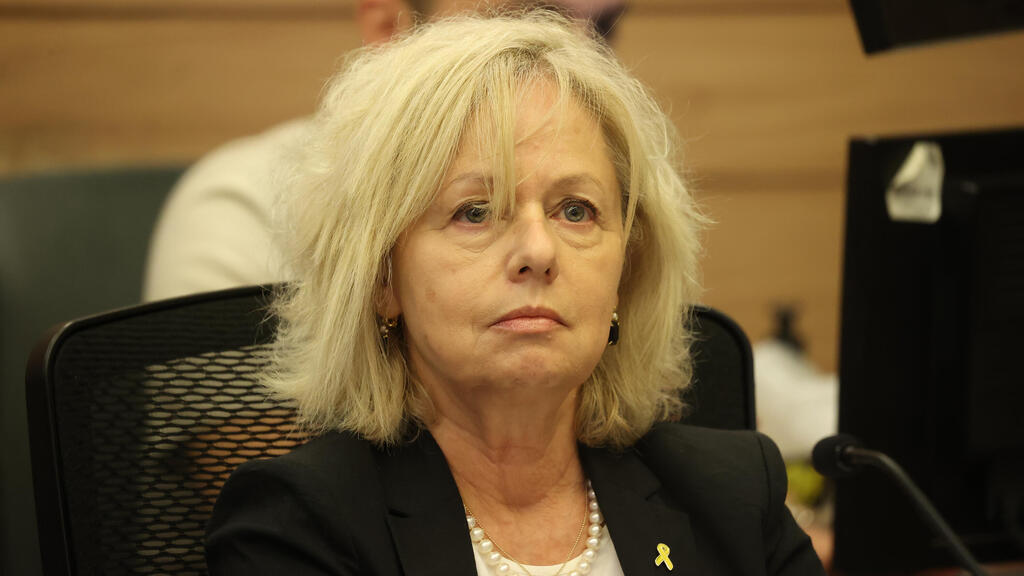
Gali Baharav-Miara. Barak praised her, saying, "Without you, where would we be?"
(Photo:Amit Shabi)
He said the government is acting in different ways, including changing the method of appointing judges, especially to the Supreme Court. "In the new method, politicians will appoint the judges. Given Israeli reality, in the end the one who will be able to appoint judges as he wishes is the prime minister, and the judges appointed will serve the interests of the government. Ministers show contempt for the judiciary, there are calls to ignore rulings, attacks on judges and a consistent delegitimization of the courts. There is no dialogue today. There is a monologue and breaking the rules of the game."
Barak backs Amit and the attorney general
Barak addressed attacks by ministers and coalition lawmakers on senior legal officials, especially Amit and Attorney General Gali Baharav-Miara. He said Amit was elected lawfully, referring to Levin’s claim that a High Court ruling ordering a vote in the Judicial Selection Committee, which Levin had long blocked, was illegal. "From the government’s perspective, the court has no president and the judiciary has no head, and the person who calls himself president is, in their view, a leftist whose objectivity cannot be trusted," Barak said. "Therefore they do not recognize his authority to appoint members of a state commission of inquiry. To Yitzhak Amit I say: Be strong and courageous. Do not surrender. You are the president of the Supreme Court, and we have full confidence in you as judge and president."
On the attorney general, Barak said she and other legal advisers are a critical layer of democracy, "gatekeepers" tasked with ensuring administrative and constitutional rules are upheld. He accused the government of trying to pass laws that would dismantle her role and the independence of ministry legal advisers, and of attempting an unlawful dismissal to replace her with someone "from our side." "As long as this destruction is not completed, they will make the attorney general’s life bitter," he said, adding directly to her: "Stand firm as you do today. Without you, where would we be?"

A protest in Habima Square last month called for a state commission of inquiry
(Photo: Jack Guez / AFP)
Barak said these moves also harm public service. He argued that ministers now focus only on whether the law formally grants authority, and then act at will, claiming absolute discretion that the court rejected long ago. "There is no absolute discretion in a democratic state. Administrative law, one of the crowning achievements of Israeli public law, no longer exists. For example, the justice minister does not convene the committee to appoint Supreme Court judges until he is convinced it will make the appointments he wants. For the current government, administrative law is part of the 'deep state' they say must be fought."
He warned that if the court becomes "ours," individual rights will be left without protection and majority rule could become tyranny. He also warned of deepening polarization in public discourse, calling it dangerous for democracy and for national resilience.
Barak said Israel’s "social covenant" has been breached, pointing to the draft exemption law promoted by the government to exempt large numbers of young ultra-Orthodox men. He accused the leadership of serving sectoral interests, replacing statism and unity with partisanship and separatism, and entrenching inequality in bearing the burden of war. "We are no longer a state whose values are Jewish and democratic," he said. He added that relations between the political echelon and the military, police and Shin Bet have been distorted, that protesters are treated as criminals, and concluded, "I think we are no longer citizens, but subjects."
Barak also warned about government moves against the media, saying Israel is already not the democracy it once was. He described what he called a "strategy of flood." "The defenders of democracy build a dam in one place, plug a hole, but there are endless holes. This policy ultimately exhausts the public and the gatekeepers and erodes their ability to defend democracy." He said the decline can still be stopped through protest and elections. "The people can stop it. The court alone cannot, over time, prevent this slide. The people must defend the court and the gatekeepers, and parties running for office must commit to stopping the regime change and to repealing laws that harm democracy."
Amit’s speech: 'The boycott is not against me'
In Haifa, Amit also delivered a forceful rebuke. He said the current attack on the judiciary continues at full intensity. Citing his own words from the reasonableness doctrine ruling, he said Israel’s "plane of democracy" is still in a turbulent vortex. He said criticism of courts is legitimate and necessary, but that the assault on the system is now unprecedented.
Amit referred to disruptions in Supreme Court hearings, including outbursts by members of Knesset, calling them organized attempts to sabotage proceedings. "The court exists for the public. When disruptions prevent the court from hearing arguments, they undermine litigants’ right to their day in court. The harm is not to the court itself, but to the public."
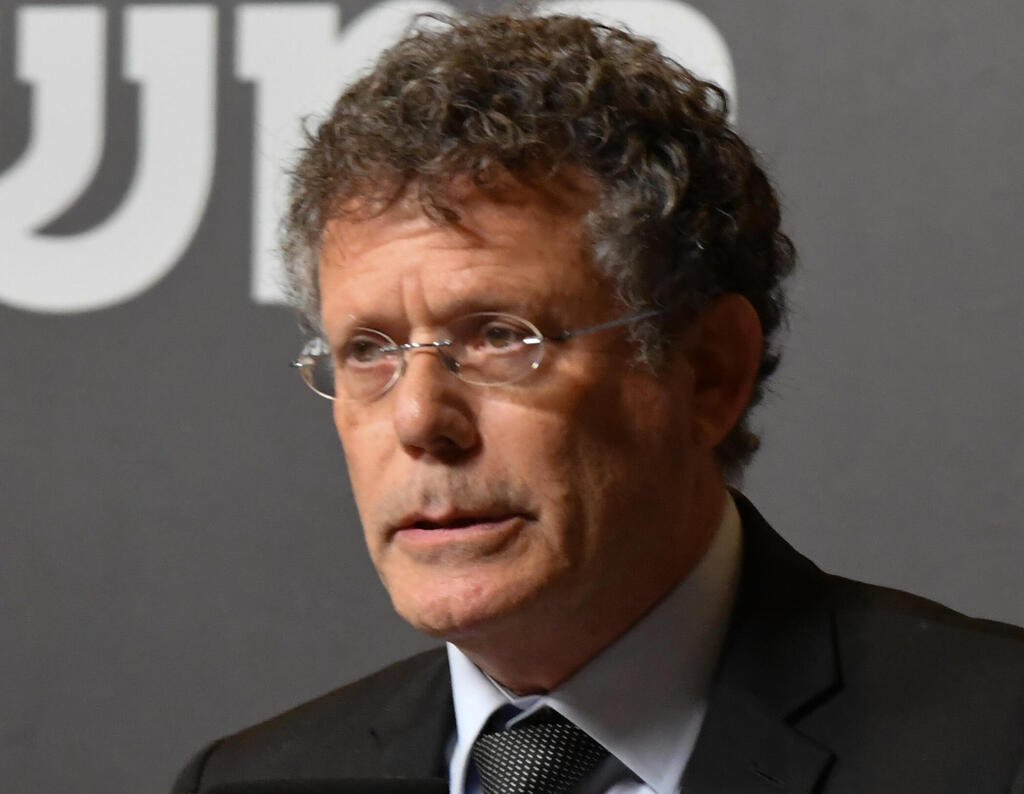
Supreme Court President Yitzhak Amit
(Photo: Nachum Segal)
He said the court recently ruled that when there is concern proceedings will be disrupted, public entry can be restricted. He described a broader trend in which substantive criticism is pushed aside for unrestrained attacks on judges. "At times it seems that serious legal discourse is at risk of extinction, replaced by a populist and dangerous persecution of the judge."
Amit emphasized that judges are human, working under immense overload to deliver justice in thousands of cases, bound by law and evidence even when public sentiment pulls another way. He contrasted the depth and caution of judicial writing with the speed and shallowness of parts of digital discourse, which is flooded with claims and speculation with no place in legal process. He said some exploit that gap to promote false and abusive attacks on judges, including personal labeling based on background, residence, beliefs and even family.
Amit said Levin’s boycott of him is in fact a boycott of the entire judiciary. He said the boycott began under his predecessor, acting President Uzi Vogelman, and has lasted about a year and a half, harming the public who turn to courts. He said Levin’s refusal to meet delays essential administrative steps, including forming search committees for court presidents and deputies, filling 19 deputy president positions, appointing senior judges and staffing other key roles needed to manage caseloads. He also cited Levin’s refusal to appoint retired judges as temporary reinforcements. In 2024 there were 33 such judges, but by the end of next year only 16 will remain because 17 positions are not being filled. "Anyone who says a shortage of 17 judges 'does not affect the citizen' either does not understand the enormous burden on the courts, or simply does not care about service to the public."
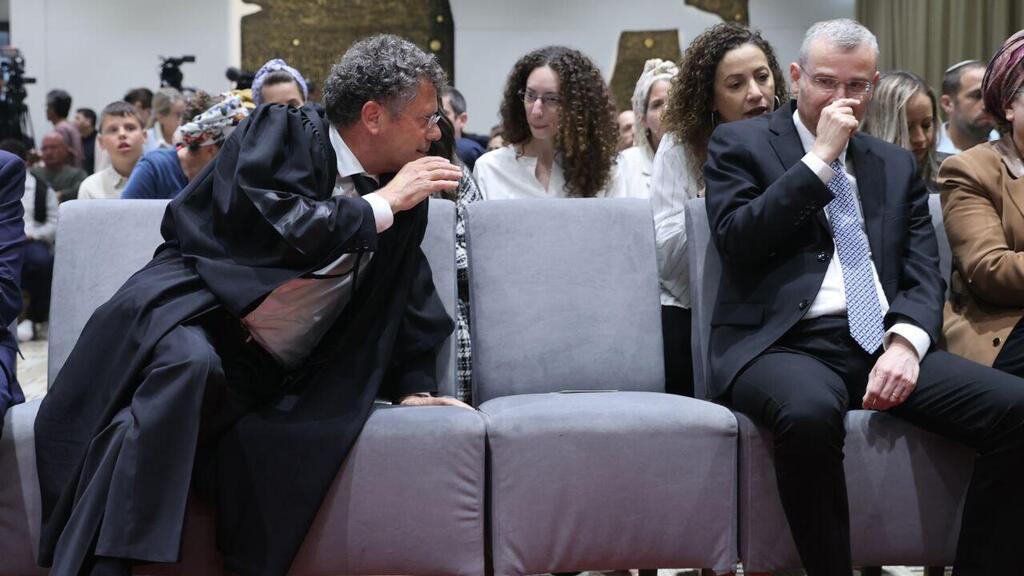
Justice Minister Yariv Levin ignored Supreme Court President Yitzhak Amit at an April ceremony for swearing in judges.
(Photo: Alex Kolomoisky)
He said Levin’s purpose is clear from the minister’s own April statement that dismantling what was built over decades takes time. "The words speak for themselves."
Amit closed on a note of hope. He said he sees hope as a working tool, the ability to look squarely at a hard reality while still building a plan to move forward. He said the judiciary must ensure that "cold winds from outside do not penetrate inside," and that the court remains a "Noah’s Ark" of sanity. "Not isolation from reality, but insulation that protects our professional culture. When the outside discourse is inflamed, inside we keep it respectful, inclusive and professional. When outside there is talk of 'us versus them,' inside there is only 'us,' public servants united by mission and statism."
Levin’s response, with an implied charge of racism
Justice Minister Yariv Levin published a harsh response after Amit’s speech, claiming he does not respect the Supreme Court president because Amit does not respect democracy. "Judge Yitzhak Amit, what did you think would happen when you and your friends, with an illegal order, took over the Judicial Selection Committee? What did you expect when you prevented an examination of the serious complaints filed against you? What did you imagine when you forced on Israel’s citizens a 'court president' who repeatedly tramples the majority of the public?
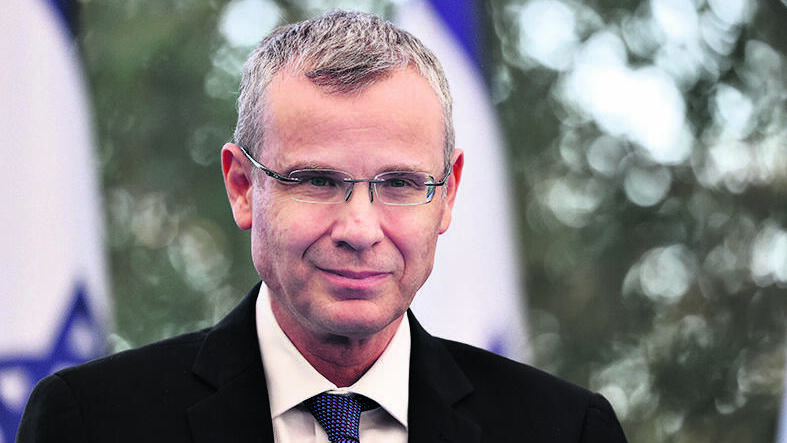
'Amit, respect democracy and I will be the first to respect you.' Justice Minister Yariv Levin
(Photo: Amit Shabi)
"You place yourself and your friends above the law. Everything is permitted to you. For more than two years you have prevented the spyware commission from operating, and now you are doing the same thing to block an inquiry into the military prosecutor general affair. You lead a culture of, 'You cover for me and I will cover for you.' So what do you expect? That I will cooperate with this?
"On Baharav-Miara you defend. But Biton, Bakshi, Ben Hamu, all are disqualified in your eyes," he added, in a remark interpreted by some as an implied accusation of racism. "Still, one thing you said tonight was true: I am indeed dismantling. I am dismantling, brick by brick, the fortress of lies that you and your friends sit in. But I am also building. Building again the justice system as it was in its glorious days under presidents Moshe Landau and Meir Shamgar. Judge Amit, every compromise offered to you was rejected with contempt. So I propose another compromise: Respect democracy, and I will be the first to respect you."
First published: 17:55, 12.05.25