


The mayor of the southern city of Arad issued a formal warning to the new owners of the city’s main shopping mall on Monday after reports that tenants were asked to remove images of women from storefronts and kiosks.
Mayor Yair Maayan sent a letter to members of the Ger Hasidic community — an ultra-Orthodox Jewish sect known for its strict religious observance — who recently purchased the mall.
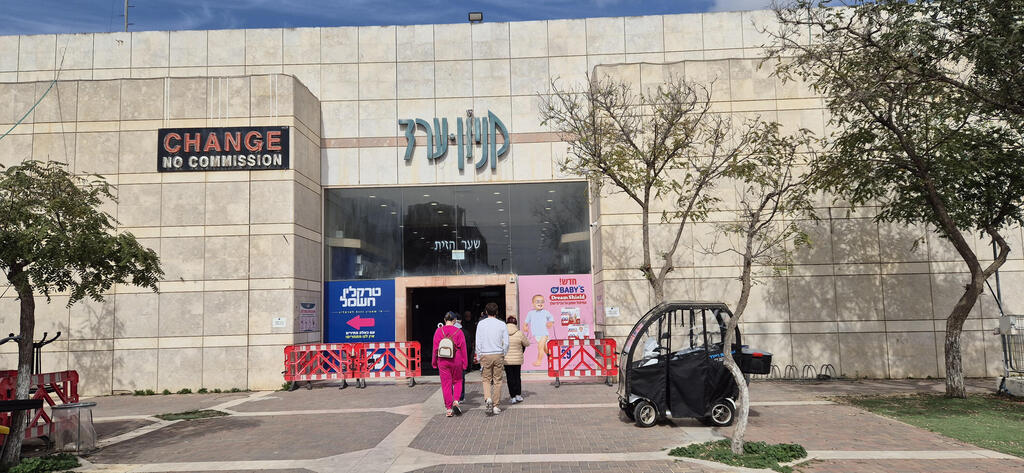
In the letter, he said the municipality “views with severity the attempt by the buyers to change the character of a mall that serves a secular city, in an effort to alter the city’s character. An attempt to exclude women from the public sphere in violation of the law.”
For years, Arad, a small desert city in southern Israel, has been the site of tensions between members of the Ger community and longtime secular residents over the city’s identity, land use and political influence.
Last month, the dispute intensified after Arad Mall was sold in a 40 million shekel (about $13 million) deal from the Ashtrom Group and a group of local shop owners to businessmen Menachem Kain and Simcha Greenboim, who are affiliated with Ger.
Soon after the sale, shop owners reported that images of women were removed, mannequins were dressed more modestly in line with ultra-Orthodox standards of dress and the background music was changed.
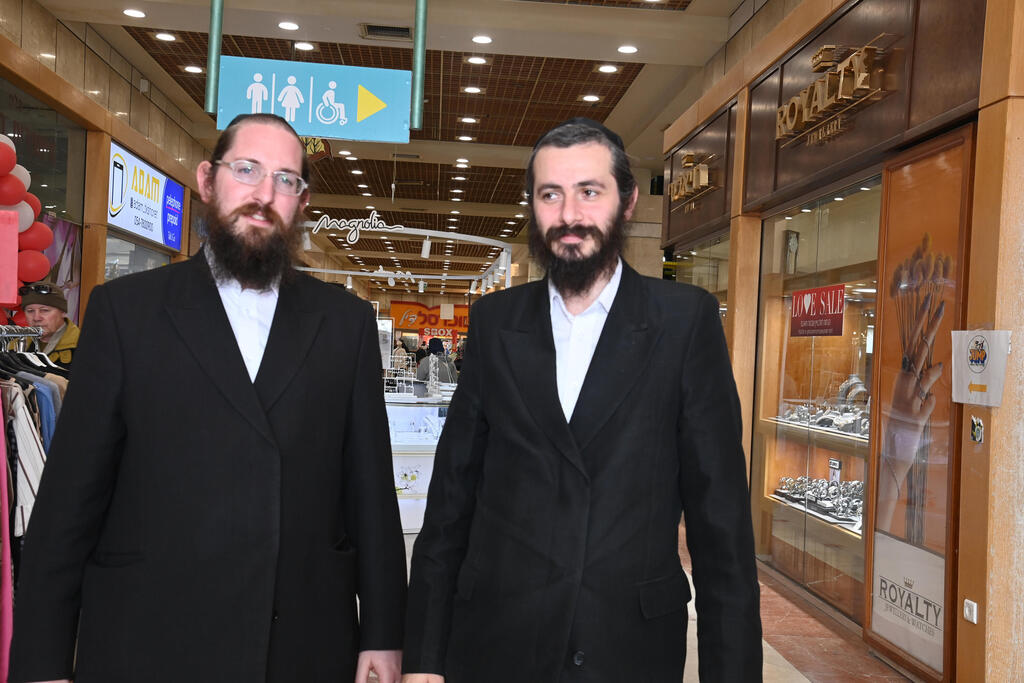
Menachem Kain and Simcha Greenboim
(Photo: Herzl Yosef)
In a warning letter to mall management, the city’s legal adviser, attorney Haim Shiman, wrote that any demand to remove images of women constitutes a “serious, improper and unlawful instruction.”
“The municipality or anyone on its behalf will not ignore this,” Shiman wrote. “This directive directly harms human dignity, gender equality and the fabric of public life in the State of Israel in general and in the city of Arad in particular, which is a secular and liberal city.”
Shiman added that “systematic exclusion of women from the public sphere, whether under the guise of sensitivity, modesty or any other euphemism, is not an innocent cultural matter but severe discrimination.” He said such actions normalize the erasure of women and subject public space to extremist interpretations that conflict with Israeli law and democratic values.
Under Israeli law, businesses that provide services to the public, including shopping malls, are prohibited from discriminating on the basis of gender. The municipality demanded that mall owners rescind any such instructions, restore any visual materials removed for those reasons and clarify that the new management does not promote gender-based exclusion.
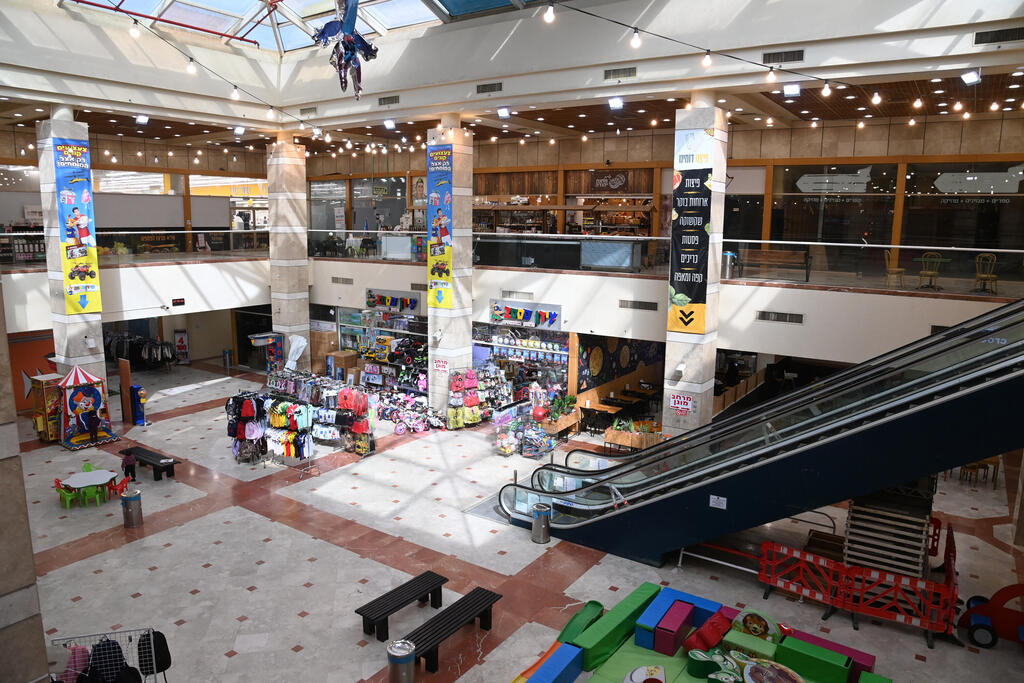
(Photo: Herzl Yosef)
“Arad will allow all populations to receive respectful and lawful service while preserving the city’s character,” Maayan said in a statement. “We will not allow any party to influence the character of a city in which an overwhelming majority of residents are secular and which functions as a secular city alongside religious and ultra-Orthodox communities that respect everyone. If the violation of the law at Arad Mall and the harm to women do not cease, the municipality will act to close the mall immediately.”
Uri Keidar, chief executive of Israel Hofsheet — a nonprofit that promotes religious freedom and separation of religion and state — said the mayor’s response would be judged by concrete steps.
“Better late than never,” Keidar said. “But it appears the mayor understands that if the city becomes captive to the Ger Hasidic community, it will turn into Beit Shemesh on steroids,” he added, referring to another city in central Israel that has seen similar tensions between ultra-Orthodox and secular residents. “The effort to stop gender segregation and prevent Arad from becoming another Ramat Beit Shemesh will be tested in deeds, not words.”
'Want to stay? Take down the pictures'
Shop owners at the mall say that in most cases, the new developers did not approach them directly and explicitly instruct them not to display images of women.
One vendor said that a member of the new management team “came here and said there can’t be a picture of a woman at the stand. Before that, most of the stand was filled with photos of couples — Valentine’s Day, weddings, families. But she demanded that there be no presence of a woman. I told her, ‘How does that even make sense? A bride and groom, a family — there’s a mother there too.’ And she said, ‘No, I can’t allow that.’ She was very nice about it, but she had no problem telling me that.”
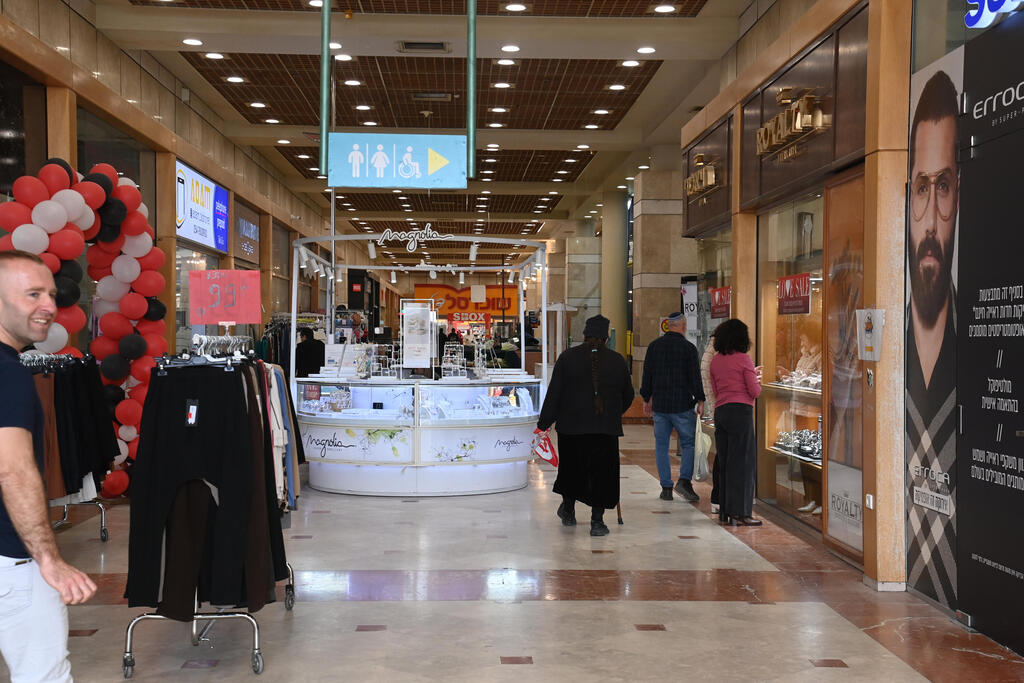
(Photo: Herzl Yosef)
“Our lease ends at the end of the month, and we received a letter saying they don’t want us,” said the kiosk owner, who ultimately complied. “They probably felt we weren’t in a hurry to remove the display and sent us a very clear message. The problem is we don’t really have anywhere to go. We built a home here. We got used to it. The customers know us.”
New co-owner Simcha Greenboim has denied that any instruction was given to shop owners to remove images of women. According to him, he and his partner held discussions with tenants to explain the economic potential of attracting ultra-Orthodox shoppers to the mall.
To illustrate his claim that the issue is purely business, Greenboim recounted a conversation with the owner of a women’s clothing store. “I told the owner that once the place invites our community, they will come and then you’ll make money. This isn’t politics; politics is at city hall,” he said.
Even so, some business owners say they feel the new management is pushing them out. “It will happen in six months or a year,” said one shop owner who asked not to be named. “They want this to be a mall with business owners from their community, with customers from their community, and there won’t be room for us. We knew when the management changed that it wouldn’t go exactly the way we wanted. But we didn’t imagine it would be this extreme and this fast.”
Describing the current situation, she said: “We took everything down, everything, everything — anything that had even a hint of a woman was removed from the display. I was shocked. I know it’s illegal. We all know it’s illegal. But they’re the owners, and it’s private property — they decide for us. If you don’t want to be here, leave. If you want to stay, take down the pictures.”
Limor Hoch, who owns a clothing store at the mall, was more blunt. “The atmosphere in the mall is very tense. They’re aggressive,” she said. “We lived peacefully with the Chabad community. But what’s happening with the Ger Hasidim is something completely different. They behave like criminals. They just trample everything. I don’t think this is Judaism — they’re asking to lower the music, to remove pictures of women.”
Speaking about the broader mood in the city, Hoch added: “There was a time I enjoyed living here. It’s a small, safe and quiet place, people respected each other — that’s not the case anymore.”
'We need 100% of the public to come'
Not everyone sees themselves as harmed by the new management. Yanai Radionov, who owns a toy store at the mall, said, “We reached understandings. These are legitimate things. They want to make adjustments for their sector, with their kosher certifications. That means, for example, that clothing stores will be more modest so their community will come into the mall. That’s legitimate.”

Yanai Radionov
(Photo: Ilana Curiel)
You’re a toy store. That shouldn’t affect you.
“Yes, but for example, Barbie in a skirt or things like that — it’s less suitable. Not that they told me anything, but adjustments are being made. They’re less fond of Barbies. They have their range and there’s the range for the secular public.”
When Radionov speaks about the city rather than the mall, he becomes animated. “I think Arad is an amazing city,” he said. “There are no traffic jams and I’m happy with the schools. But the articles about the mall and the Facebook posts hurt the secular businesses. To say you won’t enter the mall because of this or that owner — who are you hurting? Us.”
Kain and Greenboim say they do not want to harm anyone. Radionov is not the only shop owner who is not complaining. Another store owner said she signed a new lease with the new management and feels it is better for her.
Under the previous management of the Ashtrom company, which operated from central Israel, the mall had been in decline. It is in need of renovation and even basic cleaning after years of accumulated desert dust.
“We know the needs of the residents,” Greenboim said. “That’s what it means to be on the ground. We are people of Arad and we know every corner here. To this day, there are residents of Arad who have never set foot here.”
“Arad is a small city,” Kain said. “For this mall to succeed, 100% of the public needs to come here, including the Arab sector. Until now, the ultra-Orthodox sector wasn’t here, even though it makes up more than 50% of the city. These are large families with children who don’t shop online but in physical stores. That’s a very strong consumer force.”

(Photo: Herzl Yosef)
“It’s not that the ultra-Orthodox boycotted the mall because they wanted to boycott it,” Kain added. “It simply wasn’t suitable. If someone needed a pharmacy or the Interior Ministry, they came because they had to — but not for shopping.”
The two say proof of their initial success is that within just one month, three new lease agreements were signed, including a women’s clothing store called Tamari. “He opened three weeks ago and has branches in Jerusalem, Beit Shemesh and Bnei Brak,” they said.
Tamari’s neighbor, Orly Ivgi, who owns a women’s clothing store called Orkefet, says she has come to terms with the new reality. Since the new developers took over, she removed from display a picture that showed a woman. It now lies on the floor behind the counter.
She described a situation that reflects what she called the new spirit at the mall. “One day, I sold a shirt that was on a mannequin, and it was left naked. Then Simcha came in and said, ‘Orly, would you mind dressing the mannequin?’ I told him I’m selling first and then I’ll put a shirt on it — I have no problem.”
By contrast, a cosmetician who has been seeing clients at the mall for 15 years and wants to remain there said she removed images of women at the request of the new owners without objection.
“At first, I said I had no problem if it bothered them. They asked very nicely, they didn’t force me,” she said. “They just said, ‘If you can, please.’ Whether there’s a woman’s face there or not is not what makes my livelihood. When I said I had a big sign that cost me money, they said they would pay for the sign. In the end, I didn’t go ask for it, but they said, ‘Come, we’ll reimburse you.’ There was a sign and now there are butterflies. It’s also nice.”
Music and televisions
One of the most noticeable changes following the mall’s purchase has been the soundtrack in its corridors. Business owners reported that Hasidic religious music began playing throughout the complex.
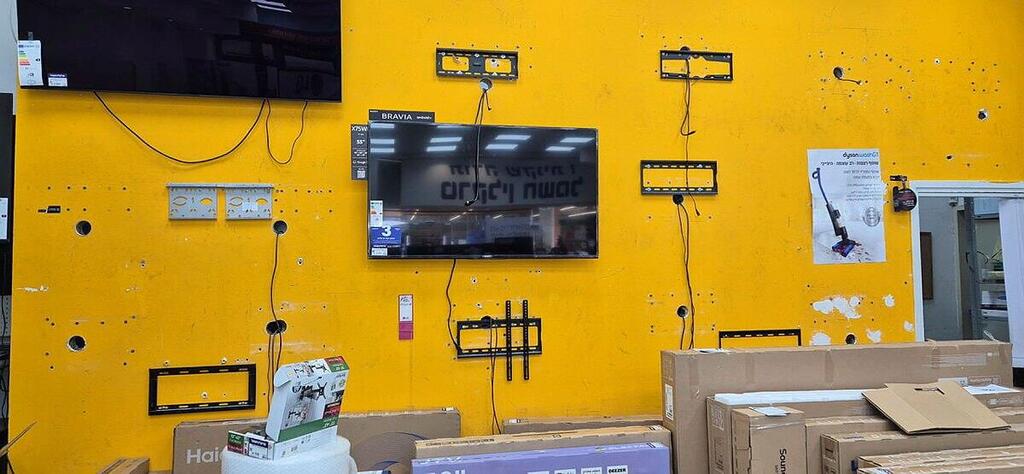
Televisions removed from a Traklin Hashmal store at Arad Mall at the request of members of the Ger Hasidic community
(Photo: Herzl Yosef)
Faced with the new reality, Ivgi took a particularly confrontational stance. “I told Simcha I don’t want to hear prayers in the morning — for that I can go to synagogue,” she said. After locating the concealed source of the sound system and turning off the music herself, she demanded that management switch to instrumental music. They agreed to her request, but for now, she said, the mall is mostly quiet.
Meanwhile, Dror Levy, the franchisee of Traklin Hashmal, an electronics retail chain, is moving his store from the mall to the city center. Levy was one of the shop owners who sold his share in the mall to the Hasidic investors.
According to Levy, the developers made clear that they “don’t want televisions in the mall” and that his store was no longer welcome. He has another branch in Arad, and the two will now be consolidated. He said he does not intend to lay off the two employees who work at the mall location.
“I took it easily,” Levy said, before beginning to tear up. “What worries me is what will happen next — if someone decides to close off a street. The fact that there are no pictures of women, for example, bothers me personally. Five years ago, when there was a photo of my mother on a mourning notice because my father wanted there to be a picture so people would remember, someone came and blackened it out.”
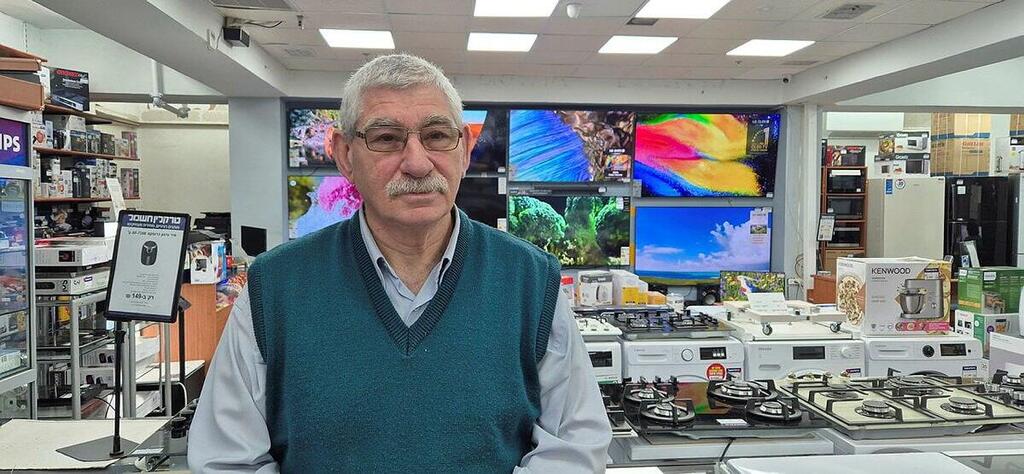
Dror Levy
(Photo: Herzl Yosef)
Even so, pausing to offer water, he asked that the article “not blacken Arad,” which he described as a wonderful city. “That’s the saddest part — our city is excellent,” he said. “None of the recent mayors managed to think of a solution that wouldn’t push anyone out, because there’s no interest in removing the ultra-Orthodox. They are part of the Jewish people, and that’s fine. But at the same time, they also didn’t succeed in preventing people from wanting to leave. And there are people who want to.”
Kain and Greenboim said that vacating some of the local shop owners was part of the purchase agreement. “When a person buys a car, he expects to receive the driver’s seat empty,” they said. “When someone buys a house from a person living in it, he expects the owner to vacate the property. That was in the agreement. We gave him time, and with God’s help, a new tenant will enter.”
Is it legal?
The mall dispute is only one piece of a broader struggle in Arad. Recently, members of the Ger Hasidic community won a government tender to build 404 housing units for the ultra-Orthodox population in the city. Compared with that project, the mall purchase is considered a relatively small real estate deal.
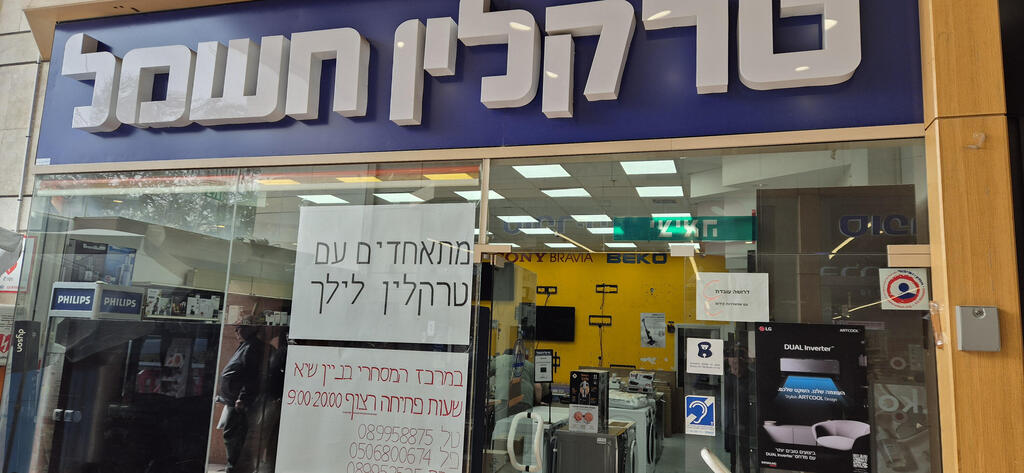
A Traklin Hashmal store at Arad Mall
(Photo: Herzl Yosef)
Earlier this month, Arad’s local Facebook group erupted after Israeli flags were reportedly removed from the mall. The city’s director general responded: “This is a private place. Inside the store, he cannot tell anyone what to put up. In the public area, it is his right, and there is nothing to be done about it.”
Former mayor Nisan Ben Hamo argued that “the mall is a symptom of the ultra-Orthodox coalition the mayor established. He promised the public there would be no change at the mall, that everything would continue as usual. But promises are one thing and reality is another.”
Israel Hofsheet said that if mall owners require tenants to discriminate, that demand itself constitutes discrimination under the Prohibition of Discrimination in Products, Services and Entry into Places of Entertainment and Public Places Law. It would also be unlawful within the contractual relationship between the mall operators and the shop owners.
In addition, the group said, contractual rights — such as the right to raise rent — cannot be used as leverage or a sanction to achieve an improper objective. Doing so for an unlawful purpose could render the contract contrary to public policy and therefore void.
Attorney Yael Weizel of the law firm Kalai, Rosen & Co. said Israeli law prohibits the creation of public spaces that exclude women or erase their presence, including through anti-discrimination provisions that apply to businesses providing services to the public, such as shopping malls.
“Accordingly, mall owners cannot compel tenants to act in violation of the law by deliberately and systematically removing representations of women from stores,” Weizel said. “The use of contractual pressure — such as an explicit or implicit threat to raise rent or not renew a lease — in order to force shop owners to comply with such a directive could be considered an improper exercise of contractual power and expose the mall to legal liability.”