


U.S. officials told American lawmakers in a closed briefing on Capitol Hill that the first six days of the military operation against Iran are estimated to have cost more than $11.3 billion, The New York Times reported Wednesday.
The estimate, presented during the classified briefing, is preliminary and does not include many additional expenses. According to the report, which cited three people familiar with the details, lawmakers understand that the total cost will likely be significantly higher once the Pentagon completes its full accounting.
Gallery
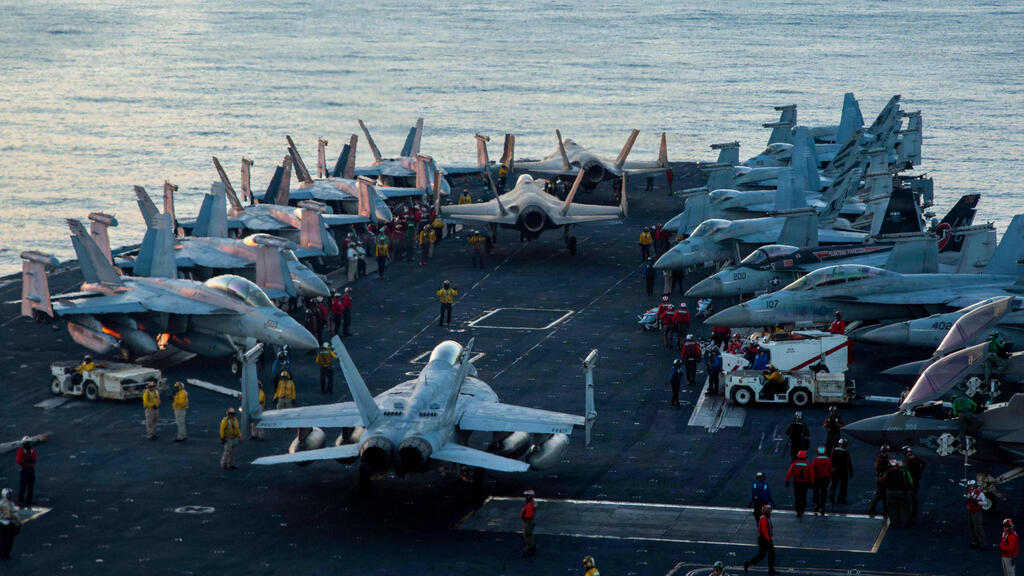
5.6 billion worth of munitions used in the first two days
(Photo: AFP/ US NAVY and US CENTRAL COMMAND)
The figures come as the United States continues striking targets across Iran.
Earlier Wednesday, both The New York Times and The Washington Post reported that officials told members of Congress during recent briefings that the U.S. military used $5.6 billion worth of munitions in the first two days of the war alone. According to the Times, the amount is far larger than previously disclosed publicly.
US warns civilians to avoid Iranian ports
Amid growing questions about the goals, scale and duration of the war, the United States has continued attacks across the Islamic Republic.
Earlier Wednesday, U.S. Central Command issued a warning to Iranian civilians not to approach ports across the country. According to the statement, the Iranian regime is using civilian ports along the Strait of Hormuz for military operations that threaten international shipping.
Footage shows US strikes against Iranian ships
(Video: X)


“This dangerous activity puts innocent lives at risk,” Central Command said.
“Civilian ports used for military purposes lose their protected status and become legitimate military targets under international law.”
CENTCOM urged civilians in Iran to avoid those ports, adding that although the U.S. military cannot guarantee the safety of civilians near facilities used by the Iranian regime for military purposes, forces will continue taking every precaution possible to minimize harm to civilians.
'We are striking harder every day'
CENTCOM commander Adm. Brad Cooper said the U.S. military is intensifying its campaign against Iran.
“We are striking harder every day,” Cooper said in a statement.
According to Cooper, U.S. forces have attacked more than 5,500 targets in Iran since the start of the operation.
“Yesterday we struck targets in Iran nearly every hour, each time from a different direction,” he said.
Cooper said Iran’s launch capabilities have been significantly degraded since the operation began but added that Tehran continues to attack civilian targets in Gulf states.
“Iran continues to attack civilian targets in Gulf countries while hiding behind its own civilians and launching attacks from populated areas,” he said.
The admiral also released footage of strikes on vessels belonging to Iran’s navy, including operations near the Strait of Hormuz.
“We are striking not only missile and drone launchers but also their production complexes,” Cooper said. “Just yesterday our bombers struck a large development and manufacturing facility designed to remove future threats.”
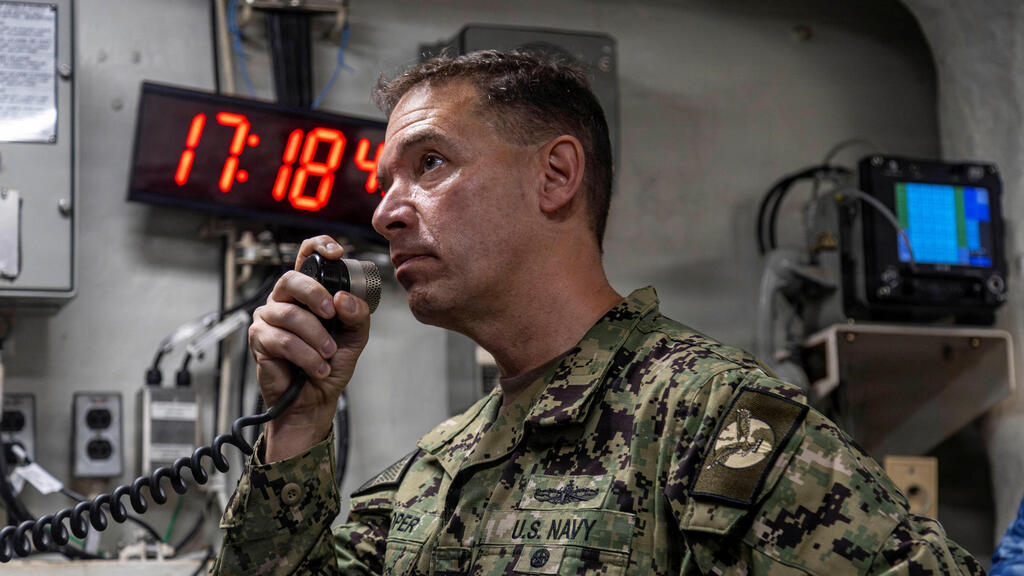
'Iran attacks from populated areas. We are striking harder every day,' Adm. Cooper said
(Photo: US Navy/Reuters)
Massive military deployment
On Tuesday, Central Command released a summary of the first 10 days of the operation, saying strikes targeted command-and-control centers, headquarters of Iran’s Islamic Revolutionary Guard Corps, intelligence facilities, air defense systems, ballistic missile sites, naval vessels and submarines.
Other targets included anti-ship missile sites, military communications infrastructure and industries producing ballistic missiles and drones.
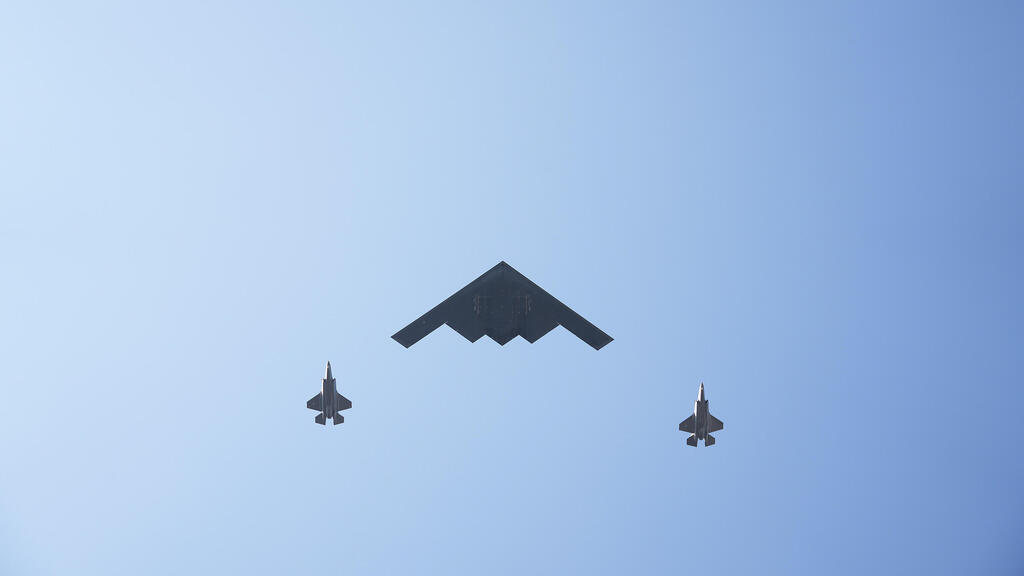
(Photo: Eric Lee/Getty Images)
The campaign involves thousands of U.S. troops operating hundreds of aircraft, dozens of naval vessels and multiple regional bases.
Aircraft participating in the operation include stealth B-2 bombers, B-1 and B-52 bombers and F-35 stealth fighter jets, along with MQ-9 drones, F-18, F-16 and F-22 fighters, A-10 attack aircraft, EA-18G electronic warfare jets, airborne early warning aircraft, P-8 maritime patrol aircraft and RC-135 reconnaissance planes.
The operation also includes C-17 and C-130 transport aircraft and aerial refueling planes.
In addition to the air assets, U.S. Central Command is deploying numerous destroyers, two aircraft carriers — the USS Lincoln and USS Ford — which can launch hundreds of sorties daily, as well as Patriot and THAAD air defense systems across the Middle East, along with what officials described as “additional capabilities that cannot be detailed.”
Since the start of the operation, seven American soldiers have been killed — six in Kuwait and one in Saudi Arabia — and another 140 have been wounded.
According to the Institute for National Security Studies, Iranian attacks on U.S. assets across the Gulf have struck 13 bases and at least one radar system. Satellite imagery has also shown damage to a THAAD air defense battery deployed in the United Arab Emirates.