

Ukrainian military intelligence officers told the newspaper they had evidence of at least five incidents in which Russian infantrymen allegedly ate comrades. The material included photographs and purported audio transmissions between senior Russian army officers.
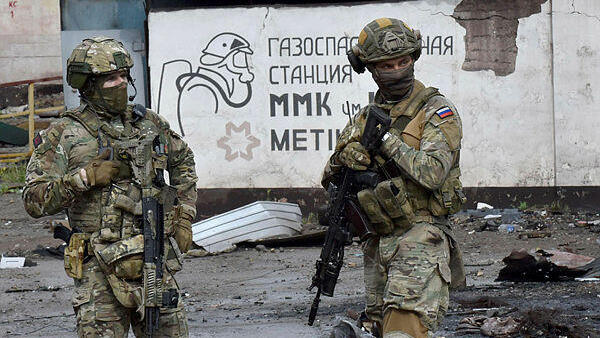
The claims could not be independently verified by The Sunday Times. Russia dismissed the allegations as “fabrications supplied by Ukrainian military intelligence,” calling the agency “an outfit whose function is the production of propaganda, not the gathering of facts.”
The newspaper noted that if the allegations are true, they appear to have been isolated and limited in number, taking place during deep winter, when supply lines were difficult to maintain. It also said questions remained about the mental state of some of the soldiers involved after prolonged combat.
The most detailed case shared with The Sunday Times allegedly occurred near Myrnohrad, in the contested Donetsk region, in November 2025. Ukrainian intelligence said a Russian infantryman known by the call sign Khromoy, roughly translated as “limpy,” was caught after killing two soldiers and trying to eat the leg of one of them.
According to the report, Khromoy belonged to the 95th Regiment of the 5th Separate Guards Motor Rifle Brigade, part of the 51st Guards Combined Arms Army.
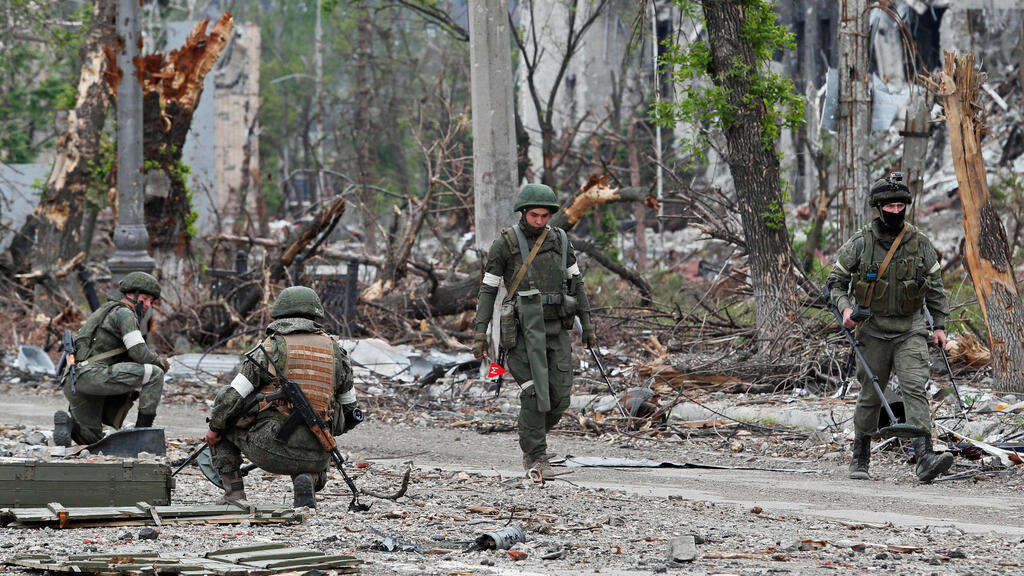
Russian troops
(Photo: Reuters)
In a Telegram exchange, an unnamed officer reported the case to Lieutenant Razikov Vladislav Abdulkhalykovych, deputy commander of the 5th Brigade’s reconnaissance battalion. The officer shared several images, including a graphic photo of a severed leg and pictures of a malnourished soldier. The Sunday Times said it analyzed the images using specialized AI detection software, which found they were not artificially generated or altered.
An independent conflict surgeon who reviewed the image of the leg told the newspaper the injury did not appear to have been caused by an explosion or shrapnel.
“It doesn’t look like a blast or fragment injury,” the surgeon said. “It looks like it has been cut with a sharp knife.”
In audio messages sent via Telegram, the unnamed officer described the incident to Abdulkhalykovych.
“In short, one ally killed two others and he tried … he cut off a leg and was already trying to eat one of them,” the officer said in a voice note, describing how Khromoy was found by two comrades sent to check why he was absent. “In the end, today they went and found the place where he had taken them to the basement, cut off a leg and was already, through a meat grinder or something, sitting there, turning it, trying to eat … He opened fire on them when they came to check on him. They killed him.”
The officer also sent a photo of Khromoy, dead and apparently severely underweight.
“I have no idea where he got that meat grinder. That’s the most interesting part,” he added.
Abdulkhalykovych replied: “Are they not being fed or what? I don’t understand.”
The officer responded: “Ours will also soon start eating each other … All the guys are skinny. Everyone is on starvation rations.”
The Sunday Times reported that two other Telegram conversations included references to separate alleged cases of cannibalism.
In one conversation recovered on April 3 last year, a soldier with the call sign Most, from the 54th Motorized Rifle Regiment, complained to his commander about having to share a dugout near Bakhmut with another soldier.
“If he were a human being, he could stay here as long as he liked, but he ate a corpse, human meat,” he said. “I am a Muslim. I don’t want someone like that coming into my shelter.”
In another exchange, dated October 8, 2025, the commander of the 1437th Motorized Rifle Regiment accused a subordinate stationed in Udachne, near Pokrovsk, of cannibalism.
“If you had said something, I would have given you a direction on where to go, where to get meat,” the commander said, before adding: “Why the f*** are you eating Khokhols [a derogatory term for Ukrainians] … Stop f***ing eating people.”
In another Telegram message found by Ukrainian hackers, the chief of staff of the 55th Motorized Rifle Brigade issued an order to troops on December 11: “No alcohol! No drugs! No moving around without identity documents! No cannibalism!”
Russian President Vladimir Putin
(Photo: Alexander Nemenov/ Reuters)
Last year, Ukraine’s military published a separate expletive-laden phone call in which one Russian soldier accused a comrade with the call sign Brelok, meaning “keychain,” of killing and eating another soldier known as Foma, or Thomas.
“Brelok whacked him and then ate him for f***ing two weeks,” the soldier claimed.
Claims of cannibalism in wartime have long been used as propaganda to dehumanize enemy combatants. But such reports have also emerged during periods of extreme famine, including the Nazi siege of Leningrad during World War II, when police arrested as many as 2,000 people for eating human flesh.
A senior Ukrainian military source told The Sunday Times that much of the fighting is taking place in urban battlefields, where soldiers have few options for foraging or hunting. The harsh winter made conditions worse, the source said, though he added he was “surprised” by the allegations.
“Russia is an agricultural country and they have plenty of food. it is also pretty easy to transport food to the front lines with drones,” the source said.
Russian soldiers have repeatedly complained of expired rations or being abandoned for weeks without basic supplies, forcing them to loot to survive. Early in the war, The New York Times reported that some Russian soldiers had been issued meal rations that expired in 2002. Footage published in 2023 by Ukraine’s SBU security service showed Russian troops looting grocery stores and private homes in search of food.
Captured Russian soldiers increasingly say they are starving, according to Ukraine’s military. A Ukrainian army project called I Want To Live, which encourages Russian troops to surrender, said 10,000 Russians have handed themselves over to Ukrainian custody, most of them last year.
Bradley Martin, a former U.S. Navy captain and senior research fellow at the Rand Corporation, said reports of poor supplies to Russian infantry were credible, though he was not commenting directly on the cannibalism allegations.
“Many of the reports come from Ukraine reports of communications intercept, so we do have to apply some possibility of selective reporting, but the concept that logistics support for the Russian army is poor is wholly credible,” Martin said. “Troop support is not a major priority of the Russian army.”
By the end of 2025, Russia had increased its military presence in Ukraine to about 710,000 troops, up from 600,000 at the start of the year. Oleksandr Syrskyi, commander of Ukraine’s armed forces, has said Moscow aims to recruit 409,000 new troops in 2026.
Vikram Mittal, a U.S. military analyst, said the sharp increase in infantry numbers requires a matching rise in supplies, which became harder during the severe winter.
“Sustained offensive operations like the Russian invasion of Ukraine require a constant flow of supplies to the front line. The extreme weather we saw over the past winter will have placed strain on transportation networks and troop sustainment,” he said.
Ukraine has also targeted Russian supply and logistics networks with kamikaze and bomber drones, including strikes on train depots and storage facilities in Crimea and inside Russia. Mittal said resupply vehicles are “particularly vulnerable because they generally lack armour and are constrained to predictable road networks with little cover or concealment.”