


It is already past midnight. You are making your way home after a grueling workday that dragged on for far too many hours. Or, in the best-case scenario, after a night out that ran late. Your eyes are half-closed, daydreaming about the moment you will dive between the sheets. “Five more minutes and it happens,” you think happily.
Then suddenly, flashing lights appear from the vehicle ahead of you. You brake sharply. A huge traffic jam. You, too, have become part of the new national phenomenon: roadwork carried out at night. And there is so much of it that it feels impossible to avoid. A dead-end road. This is the map of nighttime traffic jams.
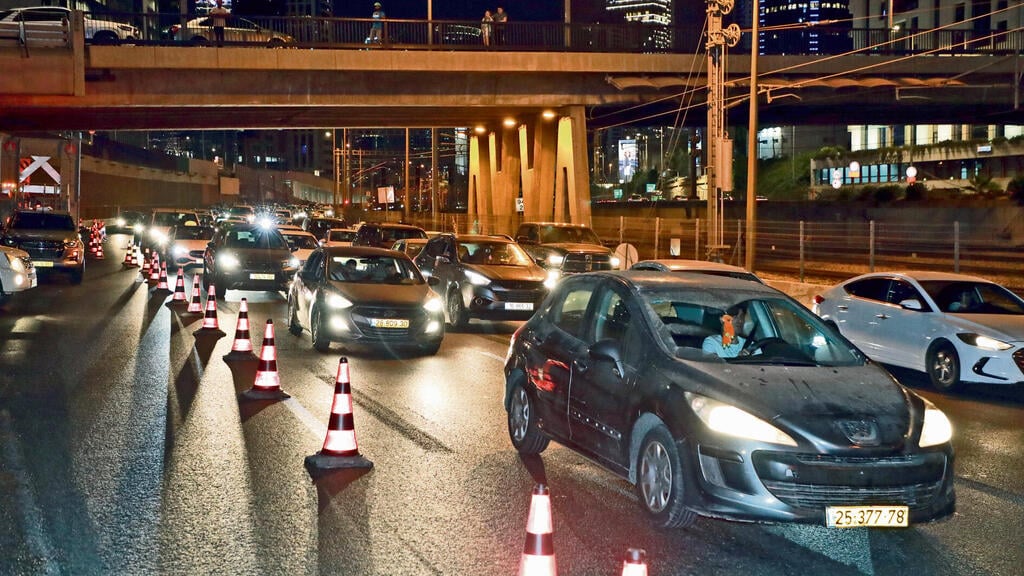
In recent months, there has been a sharp increase in the scope of infrastructure work on roads across Israel. Many drivers find themselves trapped late at night in traffic jams caused by lane closures and sudden changes in traffic arrangements. The feeling is that the freedom to move at night has shrunk. Not that driving here during the day is especially enjoyable.
Infrastructure agencies are doing their best and trying to maneuver between carrying out essential projects, which are important for the transportation future of all of us, and preserving daily life. But because of the almost total ban on work on weekends, their room for maneuver is limited. And the most worrying news: The greatest challenge still lies ahead — the construction of the largest transportation project in Israel’s history, the Tel Aviv metropolitan area metro.
'Less time to sleep'
“I work night shifts at least once a week, and every minute of delay means less time to sleep,” said Mor Shemesh, a resident of Gedera. “After I got burned a few times by traffic jams of more than 40 minutes, I realized that Waze almost never warns in advance about the work, and I stopped relying on it. Today I choose longer bypass routes in advance so I don’t risk getting stuck behind a closure on the way home at night. Instead of driving half an hour via Highway 4, I drive through Highway 42, Rehovot and Highway 40 south. It is frustrating and exhausting.”
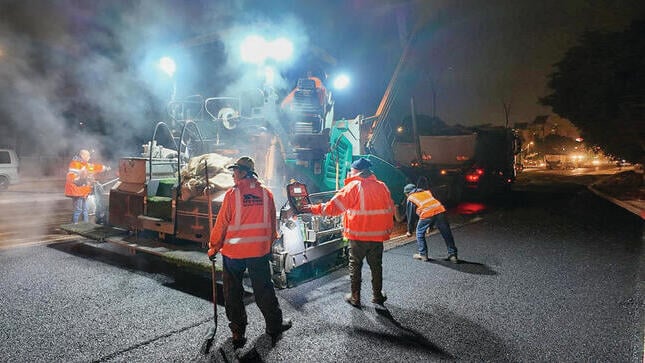
Mor, of course, is not alone. Drivers across the country are dealing with an unusual volume of roadwork, causing lane closures and sometimes full road closures.
For example, Netivei Israel is currently carrying out dozens of infrastructure and upgrade projects on major roads — Highways 1, 2, 4, 5, 6, the Ayalon Highway, 40, 65, 70, 71, 77, 85 and 90. The work includes road widening, construction of interchanges, asphalt resurfacing, bridge rehabilitation and drainage and lighting upgrades.
NTA, which is building the Green Line and Purple Line of the light rail and preparing for the metro project, also is carrying out dozens of infrastructure projects involving lane closures, night closures and traffic diversions along the Ayalon Highway, Highway 4, Route 461, Derech Hashalom, Derech Namir, Ibn Gabirol Street, Aluf Sadeh Road, Ben-Gurion Road in Ramat Gan and Mesubim Junction.
Ayalon Highways is advancing the fast lanes project, the Blue Line bus rapid transit project in Rishon Lezion, Ness Ziona and Rehovot, the start of work on the Brown Line in Be’er Yaakov, Rishon Lezion, Ramla and Lod, the Em Hamoshavot corridor in Petah Tikva, and projects in Beit Shemesh, Or Yehuda and along the Ariel Sharon corridor. Israel Railways is extending platforms along the Ayalon corridor ahead of the new electric trains. Trans-Israel Highway is closing Highway 6 northbound at night between the Iron Interchange and the Ein Tut Interchange.
Behind the nighttime nightmare stands a strict law. Under the Hours of Work and Rest Law, only the official in charge of permits at the Labor Ministry is authorized to approve work on Saturdays in emergencies or when severe economic harm is expected if approval is not granted. In practice, such approvals are almost never given today.
And so, within this system, there is unequal treatment: Israel Railways receives approval for limited work on Saturdays, while the other infrastructure companies are pushed into weekday nights. In the past, complex projects were routinely carried out on weekends. But in recent years, the Transportation Ministry has led the opposite policy, shifting most work to weekdays and turning the lives of millions of drivers, shift workers and truck drivers into a nightmare of traffic jams.
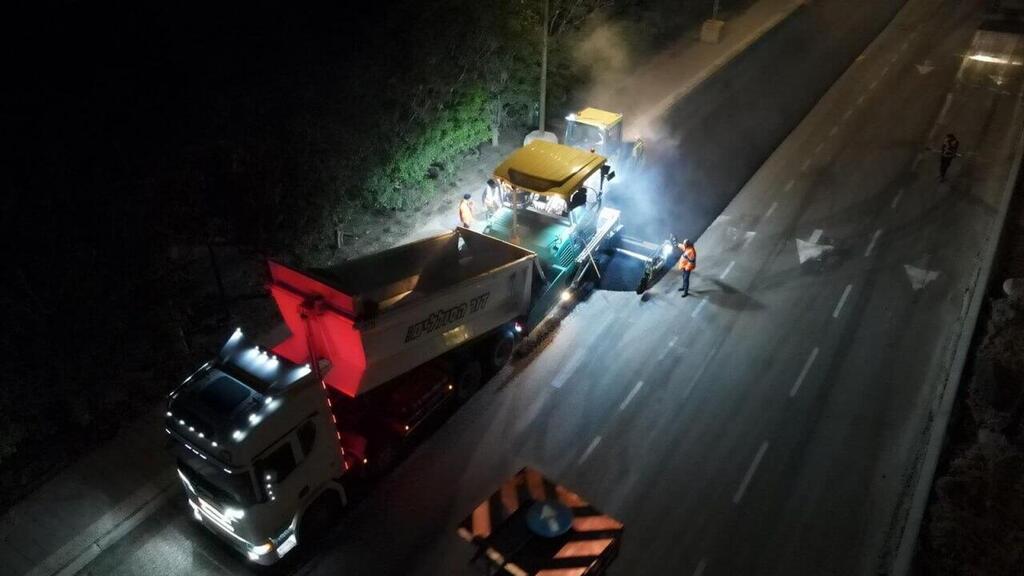
Infrastructure work during weeknights, not on the weekend
The pressure of deadlines means the work does not begin at midnight. Infrastructure companies are forced to start setting up closures as early as 10 p.m. or 11 p.m., when traffic is still active, and drivers are delayed an average of 15 to 20 minutes just for the placement of barriers. By 5 a.m., the work site must be cleared, meaning the net working hours are very limited. A weekend, by contrast, provides about 30 uninterrupted hours, allowing the engineering continuity needed for materials to dry or bridges to be lifted into place.
The result is a domino effect that increases the length and cost of the work: Projects that could have been completed in one weekend are dragged out over months of nighttime closures, and sometimes infrastructure companies are forced to shut down major routes in the middle of the week.
The main burden is in three years
Uri Keidar, CEO of the Israel Hofsheet movement, criticized the weeknight work. “Infrastructure work on roads and railways must be carried out at the time when the transportation damage to the public is minimal — and that is the weekend," he said. "This is the right professional step and the most economically efficient. Shifting the work to weekdays contradicts the position of professionals. The price is severe harm to the daily lives of millions of citizens and unbearable traffic jams every night. Managing infrastructure in a Western country requires substantive decision-making based on efficiency and the public good, not on other dictates.”
The most complicated situation is in the Tel Aviv metropolitan area. Meital Lehavi, deputy mayor of Tel Aviv-Jaffa and the official responsible for transportation, explained: “We are going through development processes that advanced cities went through back in the 19th century, and there is no magic solution. In Tel Aviv-Jaffa alone, about 1,400 construction sites are operating simultaneously, including about 400 local or metropolitan infrastructure projects. We have reached a situation of congestion almost every hour, even on weekends. We try not to approve more than three closures a week in the same area, and that does not always succeed. The real challenge is still ahead of us: The metro work will lead to the construction of 100 stations, including 20 underground stations in Tel Aviv-Jaffa.”
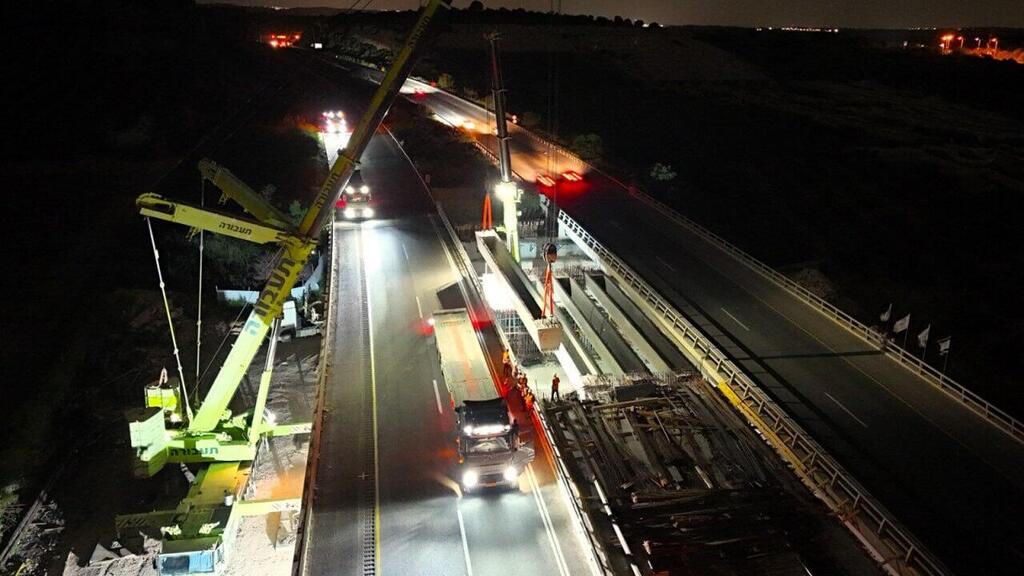
Alona Bridge on Highway 6
(Photo: H.P.T.)
Einat Feldman, NTA’s vice president of traffic, added: “The information we pass on to the authorities is transparent and provided early. We have already presented what will be closed two years from now. We almost never carry out hermetic closures. The metro, like the light rail, will not stop traffic on the main arteries. Without this work, there is no future for the private car.”
According to her, the worst is still ahead. “The main burden will be felt in about three years,” she said.
'This is only the prelude'
Will the price we are paying today solve the traffic jam problem? Dr. Ilit Oppenheim, director of the Shlomo Shmeltzer Institute for Smart Transportation at Tel Aviv University, has bad news on that front as well.
“Expanding roads in and of itself will not solve the congestion problem. Most of the work today is for mass transit — trains, fast lanes, light rail and, in the future, the metro — and that is the right goal. We will not solve traffic jams without moving more people to public transportation,” she said.
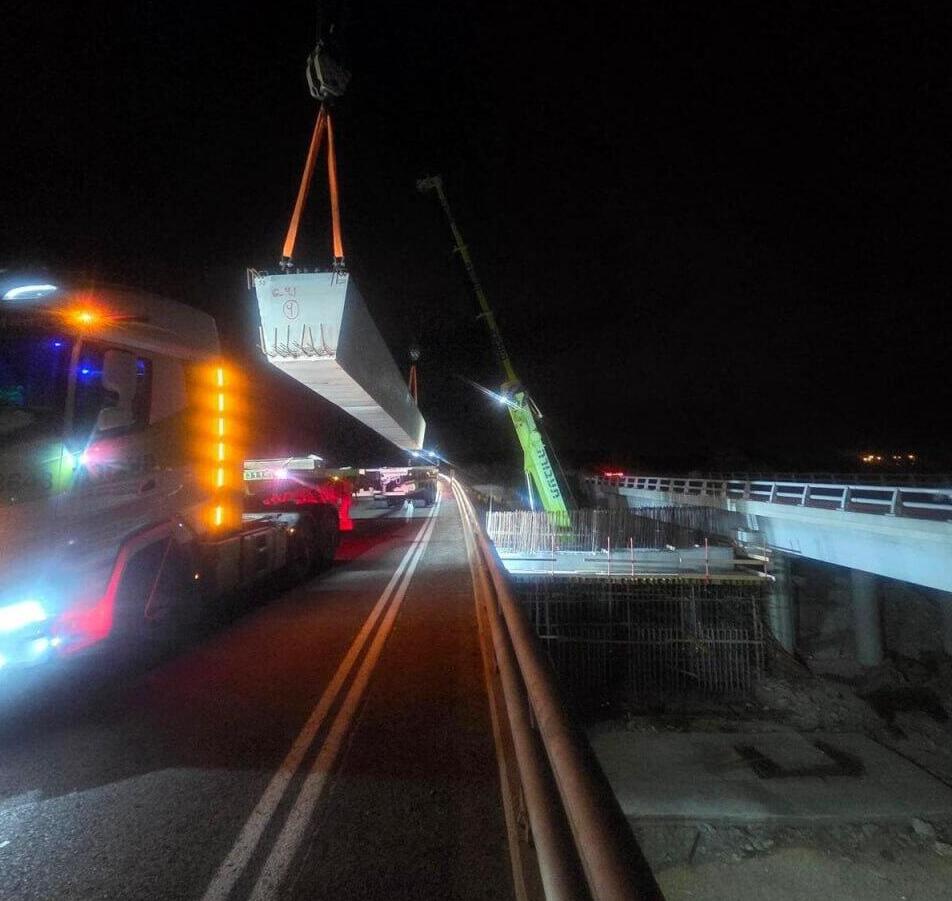
Alona Bridge Extension - Highway 6 Expansion
(Photo: H.P.T.)
According to Oppenheim, the harm to the public is very great mainly because not enough attention is paid to what people are going through.
“The problem is that when projects are measured, the focus is mainly on budget and timelines, but there is not enough examination of the price the public pays during the work, the lost time in traffic jams, the damage to quality of life and the travel experience,” she said. “We need to start thinking about demand management through more work from home, flexible work hours, use of shared transportation and changes in travel patterns in places where congestion is expected. When the metro work begins, we will understand that what we have experienced until now was only the prelude.”
The Transportation Ministry responds: “In recent years, the Transportation Ministry has led an unprecedented infrastructure revolution, including the advancement and implementation of dozens of national projects simultaneously across the country, intended to respond to the significant population growth, reduce traffic congestion and improve road safety. Some of the work is carried out at night, when traffic volume is lower, thereby reducing the impact on the public. Regarding work on Saturday: The work is carried out in accordance with the law, the required permits and professional, safety and operational considerations provided by the Labor Ministry. In cases in which Saturday work is required for safety reasons or operational needs, it is carried out in accordance with all required approvals.”