

British media outlets report that the U.K. government has not granted the United States permission to use its military base on the island of Diego Garcia as part of a possible strike against Iran, in contrast to previous instances in which the U.S. used the base for operations in the Middle East.
According to reports by the BBC, The Times and The Guardian, the issue also explains why President Donald Trump reversed his position on supporting a plan under which Britain would transfer sovereignty over the Chagos Islands, including Diego Garcia, to Mauritius and lease the military facilities there for 100 years. On Tuesday, British Prime Minister Keir Starmer spoke with Trump after London received an official message from Washington backing the arrangement. During the call, the two discussed Trump’s ultimatum to Iran. The following day, the U.S. president publicly criticized the deal.
Sources familiar with the matter said Pentagon preparations for possible strikes on Iran, which could be launched from Diego Garcia, may have altered Trump’s assessment of the island’s strategic importance. Trump later said that if Iran refused to sign an agreement, the United States might need to use Diego Garcia and the airfield at Fairford in England to counter a potential attack by what he described as an unstable and highly dangerous regime. He added that such an attack could also be directed at Britain and other allied nations.
A longstanding agreement between Washington and London requires the United States to obtain British approval before launching military action from bases under British sovereignty. Such bases were recently used by the United States, with Britain’s full support, in the seizure of the tanker Grace 1.
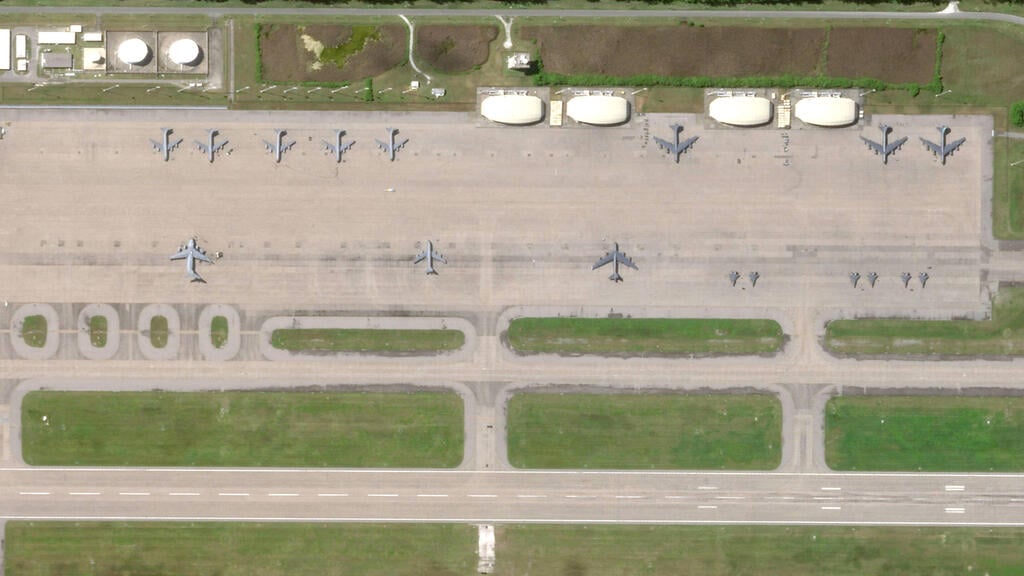
the American base at Diego Garcia
(Photo: AFP PHOTO / PLANET LABS PBC)
However, Britain’s current government is believed to oppose a U.S. military operation launched from its territory, citing international law. Under prevailing legal interpretations, there is no distinction between the state carrying out a strike and a state that supports it if the latter was aware of the circumstances of an unlawful act. The Guardian reported that a strike on Iran would likely not align with Britain’s interpretation of international law.
The dispute over the 'Bomber Island'
Diego Garcia is a small island, covering just 30 square kilometers, but it is the largest of roughly 60 islands that make up the Chagos Archipelago in the central Indian Ocean. Since the 1970s, it has hosted a strategic air base leased by the United States from Britain, with the current agreement set to remain in effect until at least 2036. Amid the dispute between London and Washington, the island’s future remains unclear. Last year, a third of the U.S. B-2 stealth bomber fleet was deployed there.
Trump wrote last month on his Truth Social platform that Britain was planning to hand over Diego Garcia without justification, calling it a display of weakness that China and Russia would notice. He described the move as a grave mistake. British reports said Washington had since accepted the framework of the deal, although Trump has now again reversed his position.
About 2,500 personnel are stationed at the Diego Garcia base, most of them American and a minority British. The base holds significant strategic value for U.S. operations in the region and played a key role in the wars in Afghanistan and Iraq. It has also been reported that the CIA operated secret detention facilities there, part of a network of so-called black sites established outside U.S. territory where terrorism suspects were held and subjected to harsh interrogation methods.
In April of last year, Trump sent a third of the B-2 fleet, capable of carrying the massive bunker-buster bomb known as the “Mother of All Bunker Busters,” to the island in what was widely seen as a warning to Iran. Ultimately, U.S. forces struck Iranian nuclear facilities before the end of the war known in Israel as Operation Rising Lion, but the bombers used in that attack flew from the United States