


For the first time in two decades, the Board of Governors of the International Atomic Energy Agency (IAEA), comprised of representatives from 35 member states, has formally determined that Iran is violating its nuclear inspection obligations. The decision cites Iran's repeated failures to cooperate with the agency and to provide answers regarding undeclared nuclear material—constituting a breach of its commitments under existing agreements.
Iran is currently subject to two IAEA oversight frameworks. The first stems from its membership in the Non-Proliferation Treaty (NPT), which outlines basic nuclear inspection obligations. The second, referred to as Resolution 2231, is the UN Security Council resolution that endorses the 2015 nuclear deal between Iran and world powers.

In its latest decision, the IAEA Board declared that Iran is violating the basic NPT-related safeguards agreement—a statement not made since the early 2000s, when the Iranian file was last referred to the UN Security Council. That move at the time led to six Security Council resolutions and launched a major international pressure campaign against Tehran.
US pressure without triggering UN action—for now
The IAEA resolution did not refer Iran's case directly to the Security Council, but it left the door open. According to diplomatic sources, this ambiguity is intentional: Washington is using the agency's decision as leverage, signaling to Iran that it has two or three weeks to show progress in nuclear negotiations—or face further action, potentially including Security Council referral.
Get the Ynetnews app on your smartphone: Google Play: https://bit.ly/4eJ37pE | Apple App Store: https://bit.ly/3ZL7iNv
A comprehensive IAEA report published in May detailed numerous violations by Iran, including uranium enrichment far beyond agreed limits, undeclared nuclear sites and obstruction of IAEA inspections. The report concluded that Iran now possesses enough 60% enriched uranium to produce 9 to 10 nuclear warheads. While weapons-grade enrichment is defined at 90%, the technical leap from 60% to 90% is relatively quick—possibly taking just days—raising serious concerns among Western officials.

IAEA Director General Rafael Grossi
(Photo: Joe Klamar / AFP)
Although the IAEA is a technical, not political, body, its findings set the stage for diplomatic decisions - although there is no established procedure for what happens once the IAEA declares "non-compliance" by one of the member states.
There are several possible scenarios:
A new nuclear agreement between the U.S. and Iran
If the Americans and Iranians reach a new agreement in the coming days, the U.S. may freeze everything and choose not to act on Iran’s “non-compliance” with the IAEA. The Americans would try to ease tensions via the UN Security Council, but would not activate the "snapback" mechanism (the reimposition of all international sanctions that were lifted from Iran in the event of a violation).
The 2015 nuclear deal was adopted by the UN Security Council in Resolution 2231. The resolution stipulated that the agreement would remain in effect for 10 years, during which sanctions would be suspended. If Iran complied, all sanctions would be permanently lifted and the Iranian file at the Security Council would be closed. If Iran failed to comply, sanctions could be reinstated. The deadline to trigger the snapback mechanism is October 18, 2025.
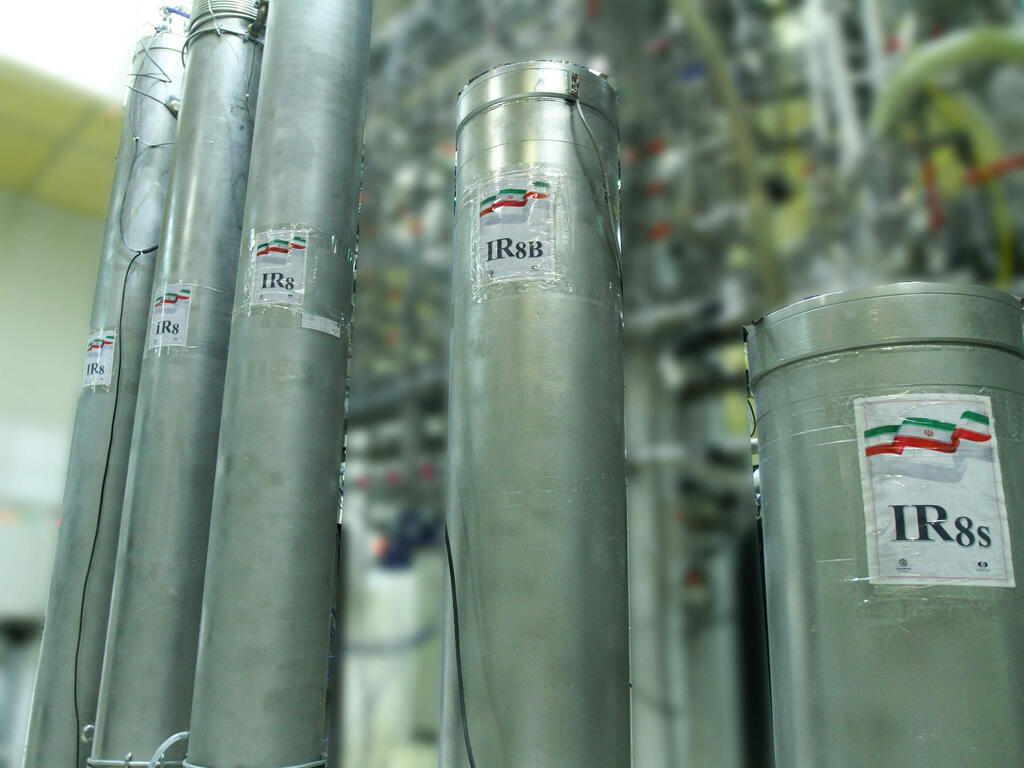
Inside Iran's Natanz nuclear facility
(Photo: AFP )
The snapback mechanism bypasses the possibility of a veto by China or Russia. The countries that can activate it are the European powers party to the nuclear deal—the UK, France and Germany (the E3). The U.S. has not been a party to the deal since President Donald Trump’s 2018 withdrawal. If any of the three European powers decides to reinstate sanctions, it must refer the issue to the Security Council. Such a move would deal a major diplomatic blow to Iran.
Extending the snapback deadline
As the October 18 deadline approaches, if negotiations show progress, the E3 may decide either to trigger the snapback mechanism or to forgo it. There is a possible scenario in which the international community—particularly the five permanent members of the Security Council—may choose to grant an extension of the deadline by several months.
Escalation
If the U.S. fails to reach an agreement with Iran and opts to continue applying diplomatic pressure, there are two parallel avenues at the Security Council that could reinforce each other: formal debates at the Council and a theoretical move to impose sanctions (which would likely be blocked by Russia and China).
The military option – a strike by Israel, the U.S., or both
In response to the IAEA announcement, Iran declared the opening of a new enrichment site and an upgrade of first-generation centrifuges at the Fordow facility to advanced sixth-generation centrifuges. The Iranian response was expected and reversible. This is typically how Iran operates—it has an interest in avoiding a total breakdown in order to prevent the snapback mechanism from being reactivated.
In effect, Iran is responding to the IAEA's threat with a threat of its own. Instead of backing down, it’s raising the stakes and advancing its nuclear program. Iran is warning the West that if it pushes further, Tehran will intensify its actions. While the move was anticipated, it signals an escalation.
Over time, it appears to be a calculated strategy. The international community is gradually and cautiously increasing pressure on Iran in three domains: military deterrence, economic sanctions, and diplomatic pressure—at levels not seen in recent years. It seems the international community is more serious than ever about avoiding the threat through diplomacy, rather than gimmicks and stalling—unless an agreement is reached.