

A Bar-Ilan University mathematics professor accused of planning mass terrorist attacks against Arabs insisted Sunday that he was mentally sound and did not need psychiatric treatment, as a district court in central Israel declined to order a psychiatric evaluation against his wishes.
"I was normal and I am normal. I'm certain I don't need a psychiatrist," Professor Shahar Nevo told the Central District Court in Lod. Nevo faces charges of preparation to commit an act of terrorism, extortion by threats and obstruction of justice over an alleged plot to carry out coordinated attacks against Arab civilians.
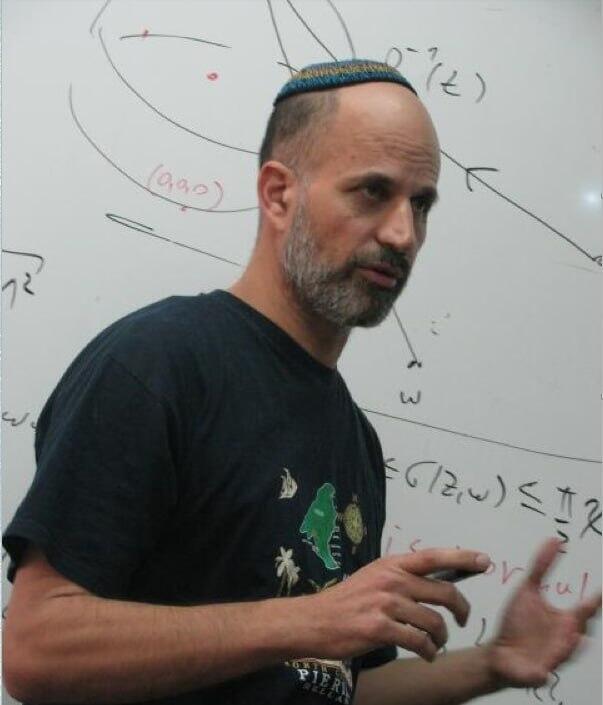
According to the indictment, Nevo devised a plan involving 72 attackers divided into 12 cells, with the aim of killing hundreds of Arab Israelis and Palestinians. Prosecutors allege that he intended to recruit participants and secure support from elements within the military. Nevo has not been convicted of the charges.
During Sunday's hearing, Nevo asked to address the court and complained that the public had been given an incomplete picture of his plan. He said only the first page of a 20-page document had been published, creating what he described as a misleading impression of his intentions.
"At the previous hearing, I was told that the public nature of the proceedings was important. I understand that only the first page of my plan, out of 20 pages, was published," he said. "The first page makes me appear to be someone unleashing a war on the people of Israel all at once. In fact, the main part is on pages two through 20, and I would ask that those pages be published."
Nevo also named two public figures whom he claimed should face prosecution before him: Moshe Feiglin, chairman of the right-wing Zehut party, and podcast host Ori Melamed.
"I don't really see myself as sitting in the defendant's seat. I understand that I'm in legal proceedings," Nevo said. "There are two people who should be here before me: Moshe Feiglin and Ori Melamed. These two people are among the most extreme on the right."
Feiglin was mentioned in Nevo's alleged plan as a political figure he hoped to enlist, but he did not comply with any of Nevo's demands. Melamed's name has not otherwise appeared in the case. Neither was accused of involvement in the alleged plot.
Nevo also complained about his detention conditions at Ayalon Prison, asking to be transferred to the religious wing. "The conditions in the transit facility at Ayalon are very bad for me," he told the court. "I was told this wasn't the time, but I'm asking to move to the religious wing of Ayalon Prison. It would help me greatly."
A central issue during the hearing was whether Nevo should undergo psychiatric evaluation. He strongly opposed the possibility, saying he had never previously received such an assessment and saw no reason to undergo one now.
"I've never been examined psychiatrically. I've never gone anywhere near those areas, and I don't want to," he said. "I think I'm perfectly fine."
Nevo pointed to his academic career as evidence that he had been functioning normally throughout the period in which he allegedly developed the plan. "I held a position as a university professor while preparing the plan and working on it," he said. "I ask the court not to push in that direction. I was normal and I am normal. I'm certain I don't need a psychiatrist."

Bar-Ilan University, where Nevo continued teaching while allegedly preparing his plan
(Photo: Dana Kopel)
His attorneys, Hadar Sharir and Alon Porat of the Public Defender's Office, told the court that after reviewing the investigative materials, they accepted the existence of prima facie evidence against their client. However, they argued that the evidence presented a more complicated legal picture than the indictment suggested.
"We will reserve our arguments for the main proceedings," the defense attorneys said. "A considerably more moderate picture emerges than the one reflected in the facts of the indictment." Their position did not amount to an admission of guilt.
At the conclusion of the hearing, Judge Eliana Danieli accepted the parties' positions and ruled that there was no justification for ordering a psychiatric evaluation against Nevo's wishes. She noted that neither the prosecution nor the defense had requested such an assessment and that Nevo had expressly opposed one at both the previous hearing and Sunday's proceedings.
The judge emphasized that compelling someone to undergo psychiatric evaluation, particularly under hospitalization conditions, was a serious and intrusive measure. She also noted the prosecution's position that Nevo had behaved rationally and logically during questioning.
"Considering the positions of the parties' attorneys and the respondent himself, and the prosecution's argument that the respondent behaved logically and rationally during his interrogation, I do not find grounds to order an examination against his will," Danieli ruled.