

Saif al-Islam Gadhafi, son of former Libyan ruler Muammar Gadhafi, has been murdered, nearly 15 years after his father was killed in a lynching in 2011, Arab media outlets reported Tuesday night. Qatar-based Al Jazeera reported that people close to Saif al-Islam confirmed his death under what they described as ‘mysterious circumstances’. His political representative, Abdullah Othman, said they were mourning him and that it was still unknown who was responsible for the killing.
According to Saudi-owned Al-Hadath TV, a source from the Gadhafi family confirmed his death. Additional sources from his political team told the channel that four gunmen broke into his home after disabling surveillance cameras, and that he was killed after confronting them. A close associate said the assailants fled quickly after he was wounded in the courtyard of his house. Reports said Saif al-Islam was killed in the city of Zintan, and that Libya’s public prosecutor has opened an investigation.
Saif al-Islam was educated in London and spoke fluent English. During his father’s rule, many governments did not view him as a serious threat and often regarded him as a ‘Western-friendly’ figure. During the 2011 uprising, however, he chose to stand by his father and inner circle, abandoning ties he had cultivated with Western figures. ‘We are fighting here in Libya, and we will die here in Libya,’ he said at the time in an interview with Reuters.
Muammar Gadhafi was captured in October 2011 by opposition forces near his hometown of Sirte and killed shortly afterward. Days later, Saif al-Islam was captured by fighters in the mountainous Zintan region while attempting to cross the border into Niger. In 2015, he was put on trial in Tripoli, appearing by video link from detention in Zintan. A court in Tripoli sentenced him to death for war crimes, including the killing of protesters during the 2011 uprising. Saif al-Islam is also wanted by the International Criminal Court and was expected to be arrested if he entered Tripoli.
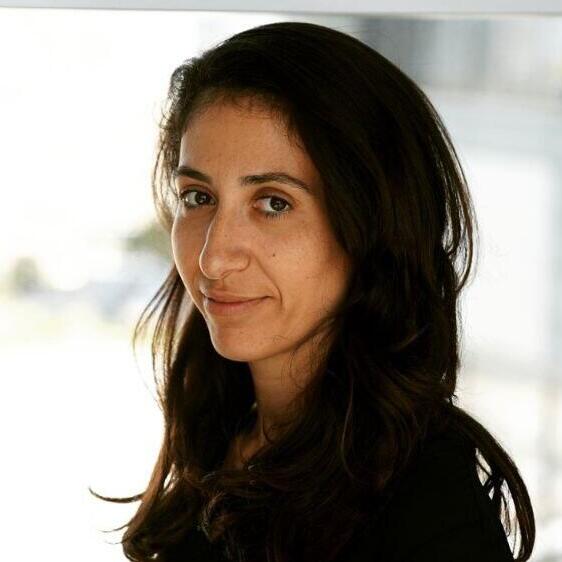
He was also known for a past relationship with Israeli actress Orly Weinerman, a star of the TV series ‘Shemesh’. After his trial in Libya, Britain’s Daily Mail reported that Weinerman appealed to then-Prime Minister Tony Blair to save his life. ‘They are longtime friends. It is time for Blair to show loyalty in return,’ she was quoted as saying. ‘His death will achieve nothing except punishment for being his father’s son. Everything must be done to save him.’

(Photo: Anat Mosberg)
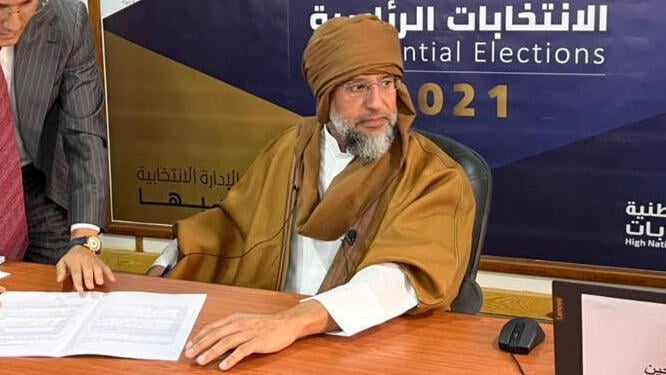
Despite the death sentence handed down in Tripoli, Saif al-Islam was released from prison in Zintan in 2017. In 2021, about a decade after his father’s lynching, he registered as a candidate in Libya’s presidential election. Wearing traditional attire, he submitted his candidacy at the election commission offices in the southern city of Sabha, saying that ‘Allah will determine the country’s path’.
Earlier that year, after several years in which his whereabouts were unclear, Saif al-Islam gave a rare interview to The New York Times, saying he was planning a political comeback and wanted to restore the ‘unity’ Libya had lost.
Muammar Gadhafi had eight children, most of whom played significant roles during his rule. One son, Mutassim Gadhafi, was killed during his father’s lynching. Two other sons, Saif al-Arab and Khamis, were also killed during the uprising. Another son, al-Saadi, was released in September after more than seven years in prison in the Libyan capital, following his extradition from neighboring Niger.