


Despite a proposed bill by Knesset Foreign Affairs and Defense Committee Chairman Boaz Bismuth that would exempt yeshiva students from military service, and despite objections from the government and police, personal sanctions imposed on ultra-Orthodox draft evaders appear to be helping boost Haredi enlistment in the Israel Defense Forces.
Over the past year, and especially since personal sanctions were imposed on those avoiding service, officials have identified a modest upward trend in ultra-Orthodox enlistment, alongside significant penalties imposed on those who evade the draft. This was the conclusion reached by professional officials who convened last week for a follow-up discussion on Haredi enlistment, chaired by Attorney General Gali Baharav-Miara and attended by representatives of the IDF, the Finance Ministry and the Population Authority.
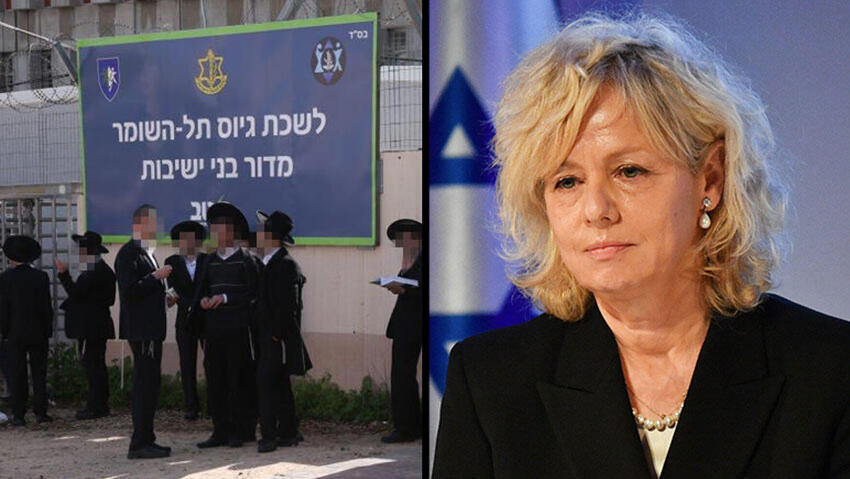
The meeting was held against the backdrop of a deadline set by the High Court of Justice requiring the government to present an effective conscription plan. At the end of the discussion, officials assessed that the policy of imposing personal sanctions is working.
IDF representatives said the military plans to step up enforcement in the near future, including pushing for harsher detention penalties and filing more criminal indictments. As part of the campaign against draft evasion, the army also plans intelligence-based, proactive operations that do not necessarily require entering ultra-Orthodox residential areas.
According to participants, the data presented showed that sanctions should be expanded and strengthened, not suspended or delayed as proposed in Bismuth’s bill. They argued that expectations within the ultra-Orthodox community of a future exemption law that would cancel sanctions are undermining enlistment efforts. In their assessment, maintaining and expanding sanctions would lead to further improvements in enlistment numbers.
The discussion also revealed that police are failing to fully enforce actions against draft evaders and, in some cases, release evaders who are caught randomly, creating uneven enforcement. For example, participants said, there tend to be more arrests and indictments in secular areas than in ultra-Orthodox ones.
Haredi anti-draft protest in Jerusalem
(Video: Moti Peretz)


The meeting followed a November ruling by an expanded panel of High Court justices ordering the government to take effective personal enforcement measures against individuals who received draft orders but failed to report, both criminally and through civil-economic sanctions. In a decision issued in late January, the court said the state must update it on progress regarding the draft law.
IDF officials estimated that in the first third of the current draft year, about 1,100 ultra-Orthodox men will enlist, an increase of roughly 20 percent compared with the same period last year.
At the same time, there has been a dramatic rise in the number of draft candidates issued arrest warrants or formally classified as draft evaders. In July 2025, the number of evaders stood at 2,257, with 3,732 candidates issued so-called Order 12 notices, the final step before being declared deserters. By early January 2026, the number of evaders had climbed to 15,085, and those issued Order 12 notices reached 17,220.
Officials said the total number of draft candidates nationwide who have received Order 12 notices or been classified as evaders now stands at about 71,000. According to IDF estimates, roughly 80 percent of them are ultra-Orthodox. Officials also expect a further significant increase in the number of Haredi draft evaders in the near future.
Beyond the widespread issuance of draft orders, officials cited additional factors contributing to increased Haredi enlistment, including the suspension of direct and indirect state funding for yeshiva students, heightened enforcement through random arrests and airport detentions, the creation of dedicated military service tracks for ultra-Orthodox recruits, and the impact of the October 7 attack and the ensuing war.
A significant portion of the discussion focused on the proposed draft exemption law currently being advanced. Officials warned that legislation encouraging evasion and restoring state funding for yeshiva students would create a negative incentive for enlistment. They said that absent expectations of such a law, enlistment figures would likely be higher.
During the meeting, Military Advocate General Maj. Gen. Itai Ofir and Military Police commander Col. Moshe “Shiko” Gavso stressed that uniform and effective enforcement of conscription obligations is a clear security necessity and a duty toward both active-duty soldiers and reservists.
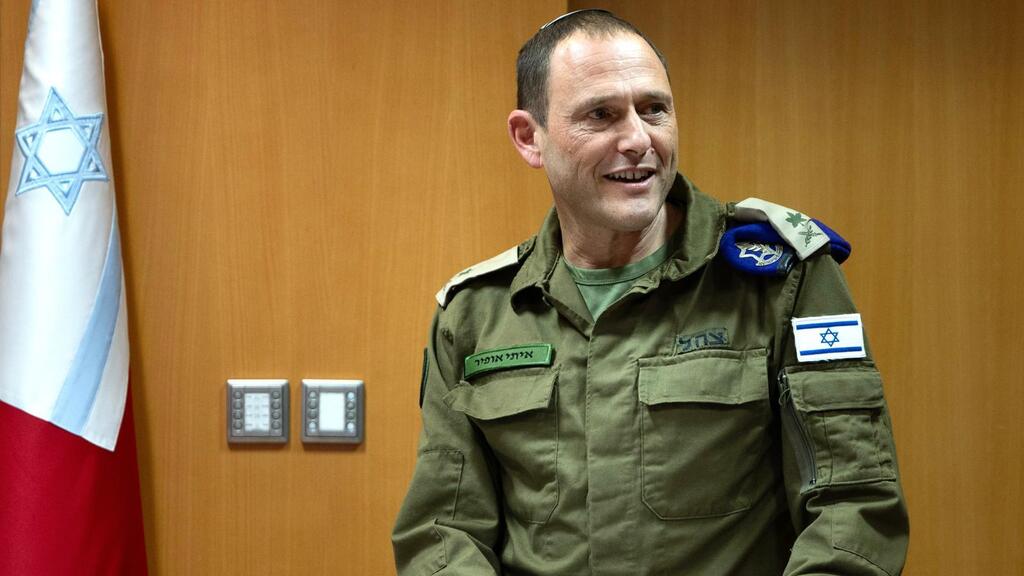
Military Advocate General Maj. Gen. Itai Ofir
(Photo: IDF)
Among the measures the army plans to implement soon are lowering the threshold for moving from disciplinary to criminal proceedings for draft evasion, from 540 days to 365 days, and amending disciplinary regulations to increase the maximum sentence military judges may impose from 20 to 35 days in detention.
Officials also described significant coordination problems between the Israel Police and the Military Police. Under current police policy, a deserter randomly detained by police is released with a summons to report to a military police facility, contrary to a previous agreement under which police would hold the individual briefly until military police arrived.
Criticism was voiced over police conduct, noting that proactive arrest operations by the Military Police require advance coordination and approval from local police. At present, unlike in the past, approvals are not granted for such operations in ultra-Orthodox neighborhoods, including adjacent areas.
A police representative responded that due to the force’s heavy workload maintaining public order and combating crime and terrorism, police cannot assist proactive military police operations or hold detained evaders. Staffing shortages, the representative said, are among the reasons.