


Israel and Britain have reached a diplomatic compromise that will allow seven British diplomats to continue operating in East Jerusalem, averting an immediate British threat to expel Israeli diplomats from London. However, the two governments offered conflicting accounts of the agreement, with Israel declaring the British consulate closed and London insisting that it remains open.
"We have authorized the British government to operate a task force of seven diplomats in the consulate building, with a very limited scope of activity," Foreign Minister Gideon Sa'ar announced Thursday, following weeks of tensions between the two countries.
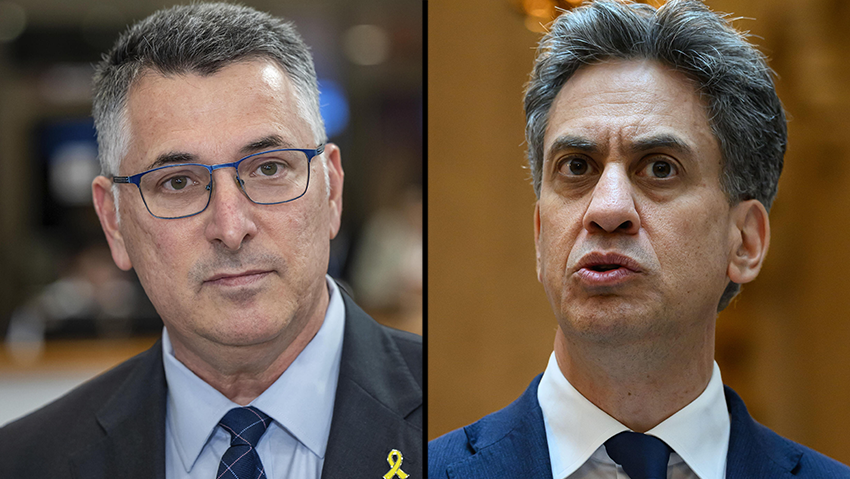
British Foreign Secretary Ed Miliband and Israeli Foreign Minister Gideon Sa'ar
(Photo: Leon Neal/Getty Images, AP Photo/Geert Vanden Wijngaert)
According to Sa'ar, the building that housed the British consulate remains the property of the British government, but its diplomatic status has changed.
"The building that served as the consulate is the property of the British government," a statement issued on Sa'ar's behalf said. "We have authorized the British government to operate a task force of just seven diplomats in the building, which ceased functioning as a consulate today, with a very limited scope of activity."
The statement added that the two governments had agreed to continue discussions, allowing both sides to raise issues of importance to them. The compromise means Britain will not, for now, carry out its threatened expulsion of Israeli diplomats from its territory.
British Foreign Secretary Ed Miliband, however, presented a different interpretation of the agreement, insisting that Israel had no legal authority to close the diplomatic mission.
"We have been clear that we do not accept that the Israeli government has any legal right to close the consulate in Jerusalem, which has been there for almost 200 years," Miliband wrote in a statement published on social media. "The British government has long maintained that East Jerusalem is occupied territory," he added.
Miliband said that following discussions with Israel, the consulate building would remain open, although it would operate under a new name.
"Following discussions with the Israeli government, the consulate building will not close, but will instead be known as the 'British Task Force' from today and will continue to provide essential services and work with Palestinians," he said.
The agreement represents a significant reduction in Britain's diplomatic presence in East Jerusalem, even as London rejects Israel's assertion that the consulate has formally ceased operations.
Miliband explained that Britain had temporarily reduced its diplomatic staff and their families because of concerns about their safety.
"Without an understanding, we would not have the necessary assurances for the safety and security of our staff," he said. "Accordingly, the UK has temporarily reduced consular staff and their families to ensure their safety."
Other Israeli measures against Britain remain in place Despite the compromise over the consulate, Israel announced that the other retaliatory measures against Britain, first declared a month earlier, had been implemented.
According to Sa'ar's office, British representatives have been removed from the International Gaza Support Center in Kiryat Gat, and British activities involving the training of Palestinian Authority security forces in the West Bank have been terminated.
Israel has also barred 12 British elected officials and other nationals from entering the country, accusing them of involvement in antisemitic or anti-Israel activities or of denying Israel's right to exist.
Sa'ar's office further confirmed that the British consulate's sign had been removed from the building in Jerusalem. The diplomatic dispute followed British sanctions targeting Israeli settlements in the West Bank, which prompted Israel to announce a series of retaliatory measures.
While the latest agreement appears to have prevented an immediate escalation involving the expulsion of diplomats, it leaves the central disagreement unresolved: Israel maintains that the consulate has been closed, while Britain insists that the building remains an operational diplomatic presence under a different name. Both governments have agreed to continue their dialogue.