


Two and a half years after the outbreak of the war that devastated northern border communities, the government is expected to complete work on the rehabilitation plans led by the Tkuma Directorate and approve a budget of about 5 billion shekels Sunday.
But local authority heads are criticizing the government’s plans, after it had pledged to allocate a total of 12 billion shekels to rehabilitate the region, whose condition has continued to deteriorate and which remains under wartime conditions.
Gallery

From top right: Metula, Shfaram, Kiryat Shmona and Shlomi
(Photo: Gil Nehushtan, Nachum Segal, Avihu Shapira, Leo Correa/AP)
Northern border community leaders intend to fight to the last minute for the needs and demands they say are necessary to bring growth and prosperity to the region and close decades-old gaps. They hope to secure additional funding beyond what the government estimated the north would need more than a year and a half ago.
On Thursday, the local leaders sent an angry letter to Prime Minister Benjamin Netanyahu demanding his intervention over what they called “the disgraceful decision to cut half a billion shekels from the government resolution’s budget,” following a dispute between the government and KKL-JNF over funds that had been expected to supplement the state rehabilitation budget.
Agreements with KKL-JNF are expected to be signed, but Kiryat Shmona and communities along the border fence are also demanding the same benefits granted over the years to Sderot and Gaza border communities: discounts on municipal taxes for businesses and residents, expanded income tax benefits and “security” grants to local authorities for routine management under constant threat — measures the government has so far refused to extend to northern border communities.
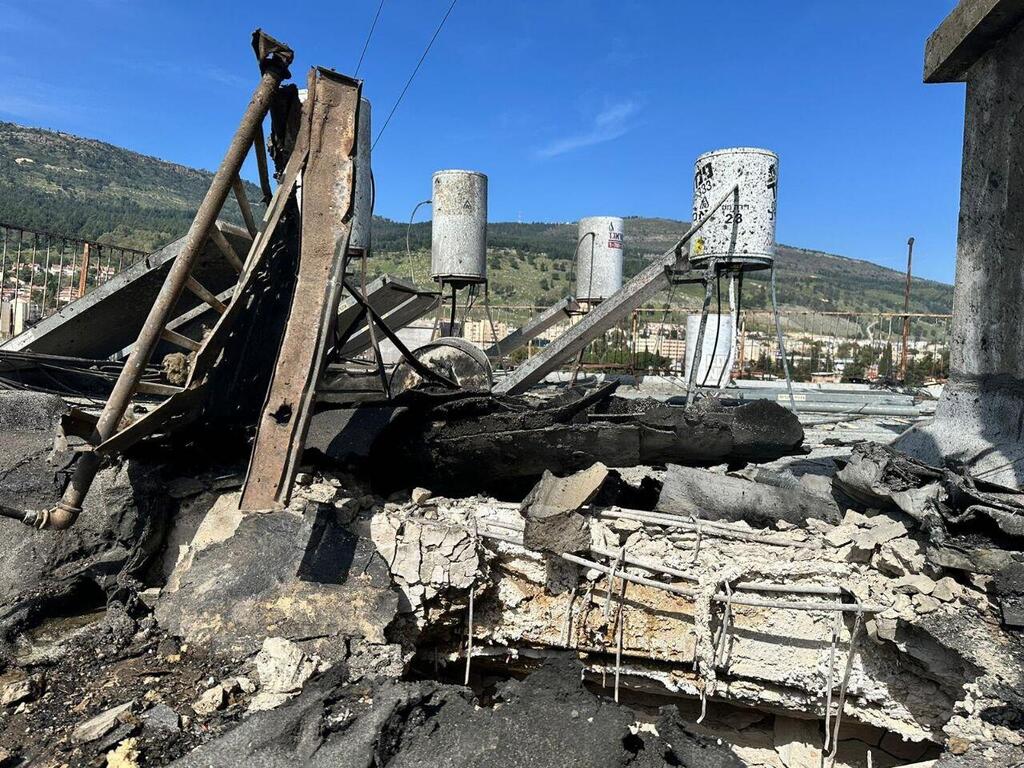
The building damaged by a rocket in Kiryat Shmona
(Photo: Kiryat Shmona Municipality)
An analysis of the government resolution expected to be brought to Sunday’s meeting, obtained by ynet and Yedioth Ahronoth, shows a series of decisions led by Ministers Bezalel Smotrich and Ze’ev Elkin, with what the government describes as unprecedented investments aimed at demographic growth and significantly reducing gaps in the north.
The main measures include 600 million shekels for rehabilitating and upgrading transportation infrastructure, including repairs for war damage and junction upgrades; 305 million shekels to renew Kiryat Shmona’s city center and establish a dedicated administration to transform the old downtown area; and about 250 million shekels for the Galilee Medical Center in Nahariya.
Moshe Davidovich, chairman of the Confrontation Line Forum and head of the Mateh Asher Regional Council, criticized the plan. “There cannot be such an incomplete decision, one that does not reflect the situation as it is in the north — not in the economy, not in education, not in employment and not in the community,” he said.
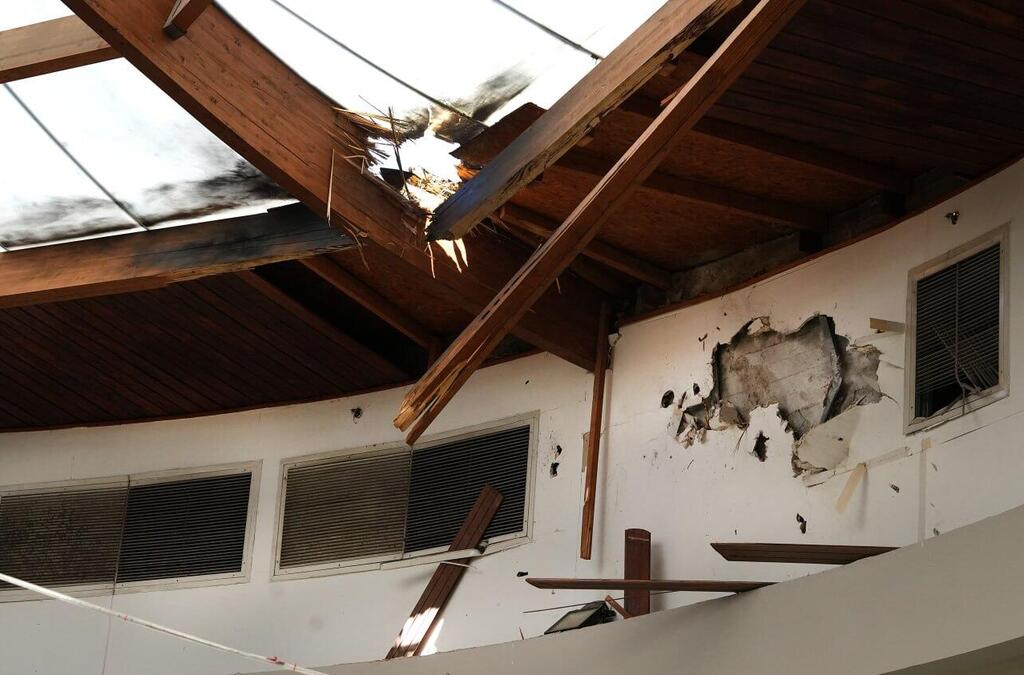
The direct hit on the Nehemiah Mall in Kiryat Shmona
(Photo: Efi Sharir)
“The gaps in the north are growing deeper as a result of Operation Roaring Lion, and the decision must be reinforced with the 300 million shekels that were already promised to us and disappeared at the finish line,” he said. “If the Israeli government and its leader see the north as part of the State of Israel, they must step up and provide answers for the current war, not the one that ended in November 2024.”
Meanwhile, alongside KKL-JNF funds to be transferred to local authorities through the government, the national organization is not waiting for the government. This week, it decided to allocate 145 million shekels in urgent immediate funding for rehabilitating northern border communities, building a new tourist route along the western Galilee coast, constructing security roads near communities and upgrading the Ghetto Fighters’ amphitheater.
Since taking office, KKL-JNF’s new chairman, Eyal Ostrinsky, has devoted most of his time to rehabilitation issues and has seen the extent of the severe damage in the north. Under a decision he advanced through KKL-JNF’s leadership, 115 million shekels will be allocated to infrastructure rehabilitation and development in 11 communities along the Lebanese border where the rate of residents returning is lowest and the damage to infrastructure and community life is most severe.
“The north has long ceased to be a local story and has become a national issue of the highest order,” Osterinsky said. “In these border communities, I saw the depth of the destruction and the prolonged erosion endured by the residents there. Without a comprehensive and dramatic national response, it could pose an almost existential threat to settlement along the northern confrontation line.”