


Egypt's parliament continued deliberations Monday over whether to send military forces to Saudi Arabia to help Riyadh defend itself against attacks by Yemen's Houthi rebels, as the Iran-backed group warned Cairo against intervening and invoked the disastrous Egyptian military campaign in Yemen during the 1960s.
The discussions follow a request by Egyptian President Abdel-Fattah el-Sissi on Saturday to convene parliament and authorize military assistance to the Saudis. In a speech, el-Sissi declared his country's full support for defending the territory of its Gulf allies and pledged to take whatever steps Saudi Arabia requested to protect its security and sovereignty. The statement was seen as an unusual signal of Egypt's willingness to become involved in the conflict.
Gallery
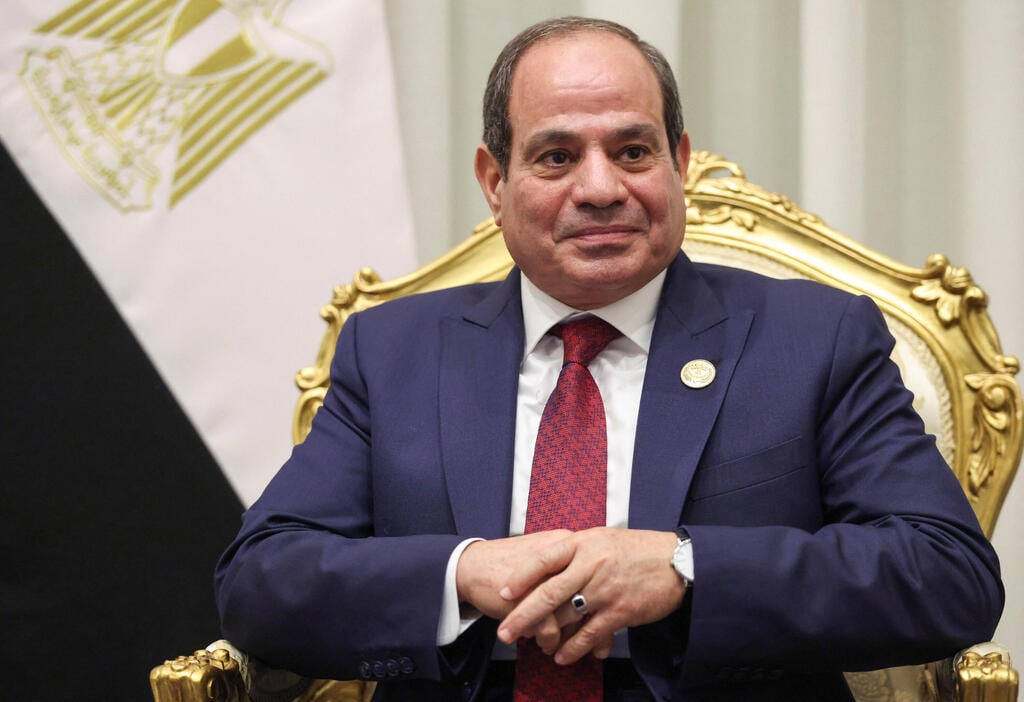
Egyptian President Abdel-Fattah el-Sissi. Cairo is considering a defensive military deployment to Saudi Arabia
(Photo: REUTERS/Evelyn Hockstein)
El-Sissi's initial declaration left the exact nature of the proposed assistance somewhat unclear. However, Egyptian lawmaker Mostafa Bakry offered more details in a statement Sunday, explaining that parliament would discuss the president's decision, in his capacity as commander-in-chief of the armed forces, to send military forces to Saudi Arabia on a defensive mission.
Bakry said Egypt's National Defense Council, chaired by el-Sissi, had already approved the proposed deployment and its assigned mission before parliamentary deliberations began. The council's public statement pledged support for Saudi Arabia but did not specify the deployment of troops.
"Egypt has never abandoned its pan-Arab role or its responsibility to safeguard Arab national security," Bakry said. "For us, Saudi Arabia is an integral part of Egypt's own national security, and any threat to its security and stability is also a threat to us."
The parliamentary discussions were extended after additional lawmakers requested an opportunity to speak. Bakry subsequently indicated that a vote could take place Tuesday.
Meanwhile, Lebanon's Al-Akhbar newspaper, which is affiliated with Hezbollah and the Iranian-led axis, claimed Monday that Egypt already has military personnel in Saudi Arabia, although their presence has not been publicly acknowledged.
"Cairo is preparing to officially send forces to the kingdom after weeks of undeclared military presence, while refusing to participate in operations inside Yemen," the newspaper reported.
The Houthi missile strike on Riyadh's international airport killed 13 people and injured more than 300
(Video: Reuters)



(Photo: AP Photo/Osamah Abdulrahman, רויטרס)
According to Al-Akhbar, several Egyptian military personnel arrived in Saudi Arabia weeks ago. Egyptian military sources cited by the newspaper claimed that the decision to publicly announce the move and seek parliamentary approval was prompted by rapid developments on the ground requiring additional forces, alongside consideration of supplying Riyadh with defensive weapons.
The sources said the priority in coordination with Saudi Arabia was deploying air defense batteries and providing logistical support to secure several vital facilities in the kingdom.
According to the report, the Egyptian forces would undertake defensive missions, including protecting civilians and helping reduce damage from surprise attacks. The sources insisted that Egyptian troops were not expected to participate in offensive operations inside Yemen and claimed that additional forces could begin arriving in Saudi Arabia within days.
Saudi Arabia's request for Egyptian assistance comes after weeks of significant casualties and damage caused by Houthi missile and drone attacks. The rebels say the attacks are retaliation for the Saudi air blockade of Houthi-controlled areas in Yemen and for military operations against them by forces loyal to Yemen's internationally recognized government, which Riyadh supports.
The deadliest recent attack on Saudi Arabia occurred when a Houthi missile struck Riyadh's international airport, killing 13 people and injuring more than 300.
The continuing attacks are also damaging Saudi Arabia's economy and threatening Crown Prince Mohammed bin Salman's Vision 2030, an ambitious program aimed at diversifying the kingdom's economy and reducing its dependence on traditional sources of revenue.
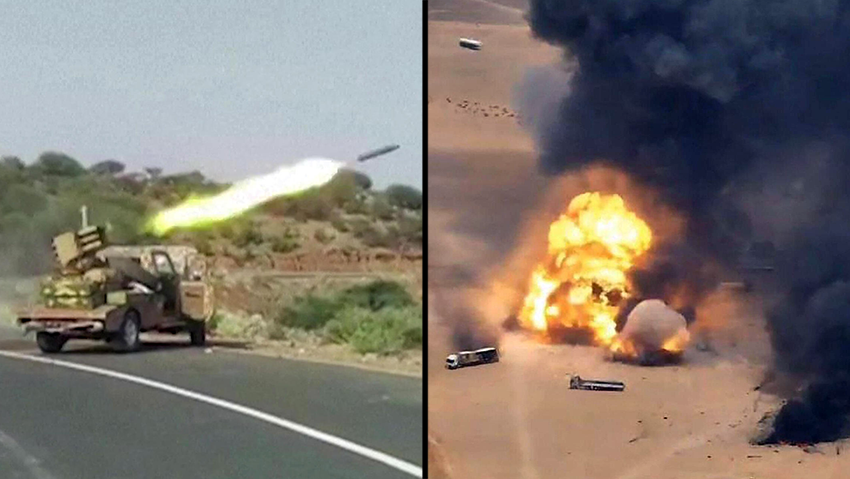
Fighting in Yemen in September
(Photo: AFP PHOTO / ANSARULLAH MEDIA CENTRE, AFP PHOTO / NATIONAL RESISTANCE FORCES IN YEMEN / HANDOUT)
Egypt's parliamentary discussions come just over a month after Mohammed bin Salman visited Cairo on September 15 and met with el-Sissi.
Following that meeting, the Egyptian presidency said the two leaders had reaffirmed their commitment to ensuring freedom of navigation and maritime security in the Strait of Hormuz and the Bab el-Mandeb Strait, where the Houthis have recently tightened their control over nearby areas and shipping routes.
El-Sissi stressed Egypt's opposition to any attack targeting Saudi Arabia or threatening freedom of navigation along international shipping routes. The statement said both leaders agreed that the current circumstances required greater solidarity and coordination between their countries.
Egypt is among the countries most vulnerable to security developments around the Bab el-Mandeb Strait. Although the Houthis are currently concentrating their attacks on Saudi Arabia, Egypt, farther north, depends heavily on revenue from the Suez Canal, which is reached through the strait and the Red Sea.
Any escalation in the area can therefore cause substantial economic damage to Cairo.
For that reason, although Egypt is generally reluctant to enter military alliances and prefers to maintain a neutral position as a regional mediator, it has a clear interest in ending the confrontation between Saudi Arabia and the Houthis as quickly as possible.
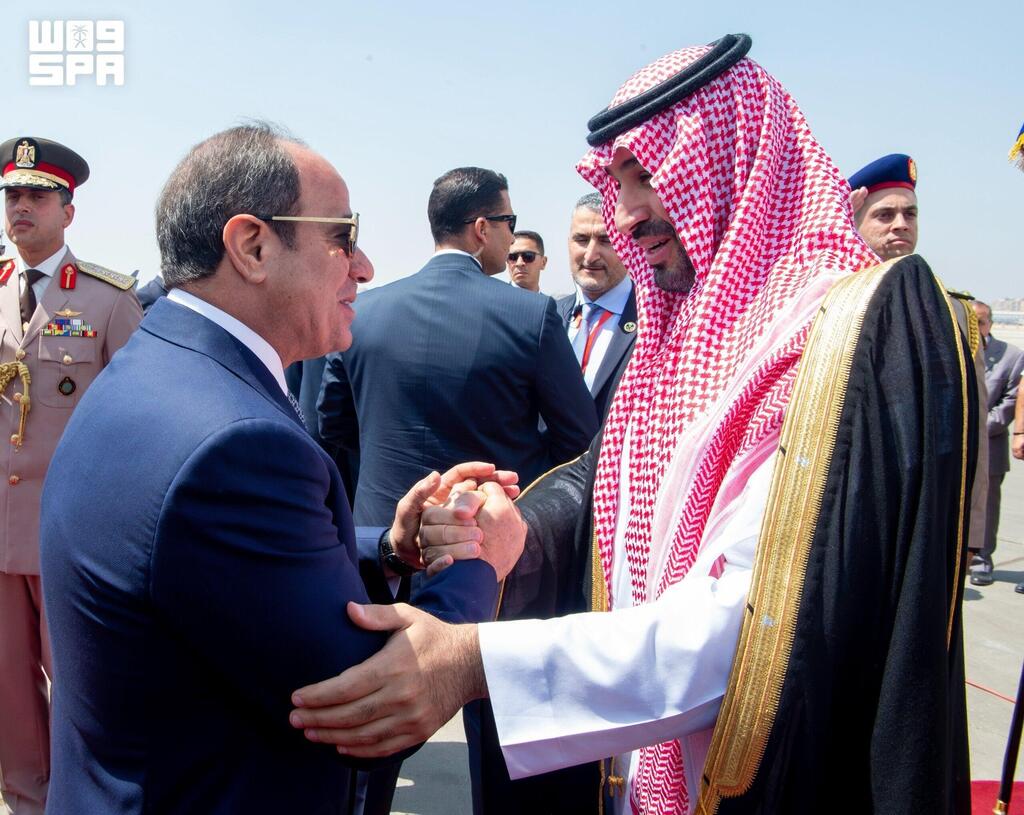
Saudi Crown Prince Mohammed bin Salman meets Egyptian President Abdel-Fattah el-Sissi in September
The Houthis, who are closely following developments in Egypt, have already begun issuing warnings to Cairo.
Mohammed al-Bukhaiti, a member of the Houthi political bureau, told Qatar's Al-Araby television that the Egyptian military carries bitter memories of its involvement in Yemen between 1962 and 1968, and said he could not imagine it repeating that experience.
Al-Bukhaiti was referring to the events following a military coup in Yemen in September 1962, when Egyptian President Gamal Abdel Nasser decided to support the republicans fighting royalist forces and sent some of Egypt's most elite military units into the country.
Egypt paid a heavy price for that intervention. Over the course of the conflict, it deployed approximately 70,000 soldiers to defend the new government and became trapped in a prolonged war fought under difficult conditions, with mountainous terrain and few roads.
The campaign, which ultimately forced Egyptian troops to withdraw, is still sometimes referred to as "Egypt's Vietnam."
In his interview with Al-Araby, al-Bukhaiti also mocked Saudi Arabia's leadership, claiming that el-Sissi's remarks exposed the depth of the kingdom's humiliation.
The Saudi leadership, he said, had reached a point where it was begging other countries to defend and protect it, even though, in the Houthis' view, Saudi Arabia itself was the aggressor. "We do not expect Egypt to become involved in aggression against Yemen. Egypt is bigger than that," he said. He added that such an intervention would place Egypt in the same camp as the United States and Israel.
Meanwhile, Al-Akhbar reported Monday that Houthi intelligence was monitoring movements by foreign forces that had allegedly arrived in Jizan, in southwestern Saudi Arabia, near the Yemeni border. According to the newspaper, the area has become a staging ground for planning attacks against Yemen.
The report claimed that Pakistani forces were also present, following a defense alliance recently signed by Pakistan and Turkey with Saudi Arabia. It further alleged that Ukrainian personnel had arrived in the area several days earlier aboard a military transport aircraft. Those reports have not been independently verified.
The Houthis have threatened to target foreign forces involved in military operations against them, raising the possibility that Egyptian, Pakistani or Ukrainian personnel could come under attack if they participate in the campaign.
Fighting inside Yemen is also continuing between the Houthis and forces loyal to the internationally recognized Yemeni government, which is backed by Saudi Arabia.
On Monday, reports from Yemen described a major Houthi attack on the al-Alam military base in Shabwa province, allegedly carried out during a training exercise. Dozens of Yemeni government troops were reportedly killed or wounded.
Houthi missile and drone launches toward Saudi Arabia have also continued. Early Monday morning, an alert was issued in Jizan following reports of another launch.