

Changing the names of Palestinian cities, removing the names of terrorists and erasing maps are just some of the sweeping changes expected in the Palestinian education system in the 2026-2027 school year, according to Palestinian sources. But the decision to align the education system with UNESCO standards, those of the U.N. Educational, Scientific and Cultural Organization, has not been met quietly by the Palestinian public.
The sources said the changes are expected due to pressure exerted by Europe and the United States on the Palestinian Authority, which receives European funding directly for the education system. Among other demands, they said, was the removal from textbooks for grades one through 10 of maps bearing the inscription “Jerusalem, capital of Palestine,” changing the names of “Palestinian cities” such as Jaffa, and replacing a long list of Palestinian national terms with neutral wording.
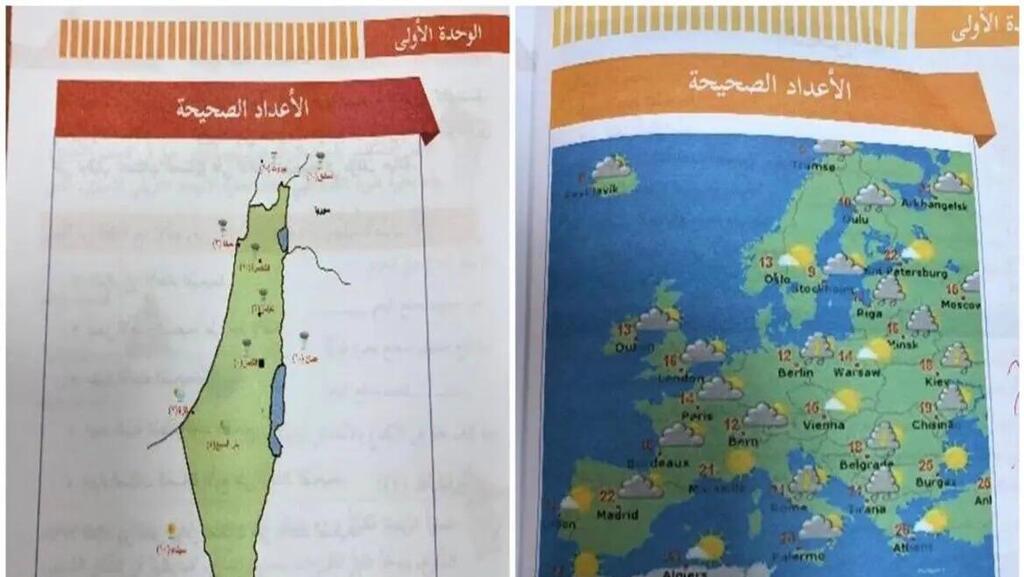
The Palestinian national anthem would also be removed from textbooks if the changes go into effect, as would the names of controversial historical figures and events that until now have been an integral part of Palestinian education. These include Dalal Mughrabi, who took part in a 1978 Coastal Road attack in which 38 people, including 13 children, were killed, and references to the “Deir Yassin massacre” during Israel’s 1948 War of Independence. The Palestinian song “I Will Sacrifice Myself for You, My Homeland” has also been added to the list of prohibited content.
‘Israelization of education’
Sharp criticism of the move was voiced in Palestinian political and academic circles. Commentators warned of a “reshaping of the consciousness of the younger generation” and accused the plan of “damaging the collective memory.” They argued that the content changes would erase the national struggle on core issues such as the status of prisoners and Jerusalem.
By contrast, the Ministry of Education and Higher Education in Ramallah denied the claims about the expected changes. In an official statement, the ministry said the information was incorrect and that the examples circulating on social media and sparking public uproar actually referred to changes carried out by Israel in schools in east Jerusalem. Officials described that process as an “Israelization of education.”
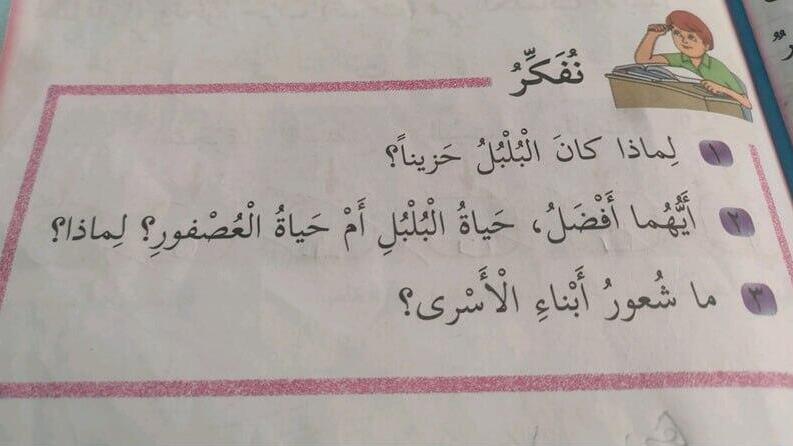
Question 3: 'How do prisoners’ children feel?'
The ministry added that “there is no erasure of national identity. The adjustments being made are intended to improve the quality of education in accordance with UNESCO’s international standards, while preserving Palestinian values and the narrative. A broad reform is underway in the education system, including professional development for teachers, expansion of interactive schools and reform of the matriculation exams.”
Despite this, official Palestinian sources acknowledged anonymously that “a reassessment of some content is underway following European demands to promote principles of ‘non-incitement and nonviolence.’” Palestinian Authority President Mahmoud Abbas, also known as Abu Mazen, told the United Nations that he has already instructed that the process of updating the curricula be completed within two years.
In the meantime, the debate continues. The Palestinian Authority will not forgo European funding, and it is therefore likely that the content will indeed be changed, but in a manner acceptable to the countries guaranteeing the process, which will have a say in the Palestinian narrative instilled in the younger generation.