

Jordan, a close U.S. ally, is now paying the price for its ties with Washington, which stations American forces on its territory as well as at other locations across the Middle East. In recent months — and again this week — the kingdom has come under Iranian missile and drone attacks, yet unlike some other countries, it has generally chosen to remain silent. It certainly has not responded militarily on its own.
Iran’s repeated attacks have compounded Jordan’s other, more familiar problems, chief among them a weakening economy. Despite the risk of further strikes, Jordanian officials have made clear that they remain committed to preserving close ties with Washington after decades of seeking deeper security relations with U.S. officials and positioning the kingdom as a reliable Western partner in a conflict-ridden region.
Gallery
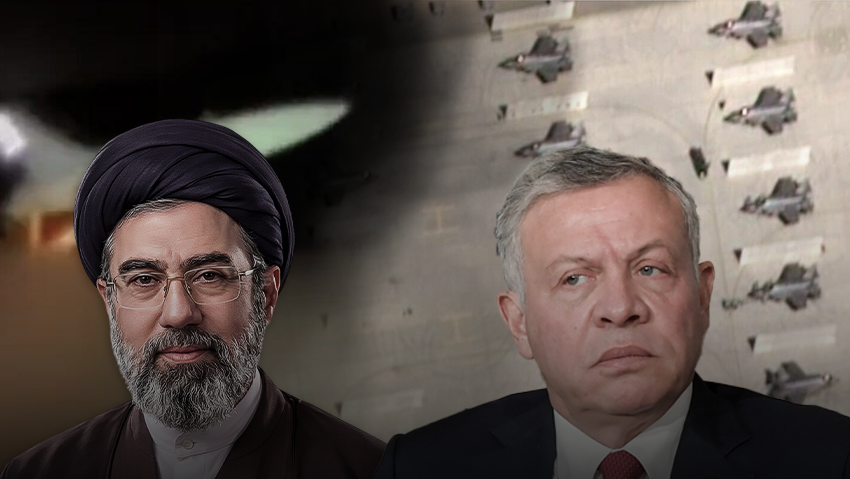
King Abdullah and Mojtaba; Jordan is weighing its words and actions carefully
(Photo: AP, Airbus, AP Photo/Alex Brandon, Shutterstock)
That alliance, it appears, gives Jordan a way to defend itself against Iranian efforts to destabilize neighboring countries. King Abdullah II acknowledged the need for such alliances last year, warning that global instability — beginning with the coronavirus pandemic, continuing with Russia’s invasion of Ukraine and then reaching the region on the morning of October 7 — could unleash chaos far beyond the Middle East.
He told European lawmakers that the world was facing one disruption after another with no respite, warning that no one could know how far the conflict would spread and that the uncertainty posed a threat to people everywhere.
Since succeeding his father, King Hussein, in 1999, Abdullah has steadily strengthened Jordan’s ties with Washington.
He speaks fluent English and enjoys broad support among world leaders and both Democratic and Republican members of Congress. President Donald Trump has called him “one of the truly great leaders of the world,” while his predecessor, Joe Biden, also praised Abdullah’s leadership on numerous occasions.
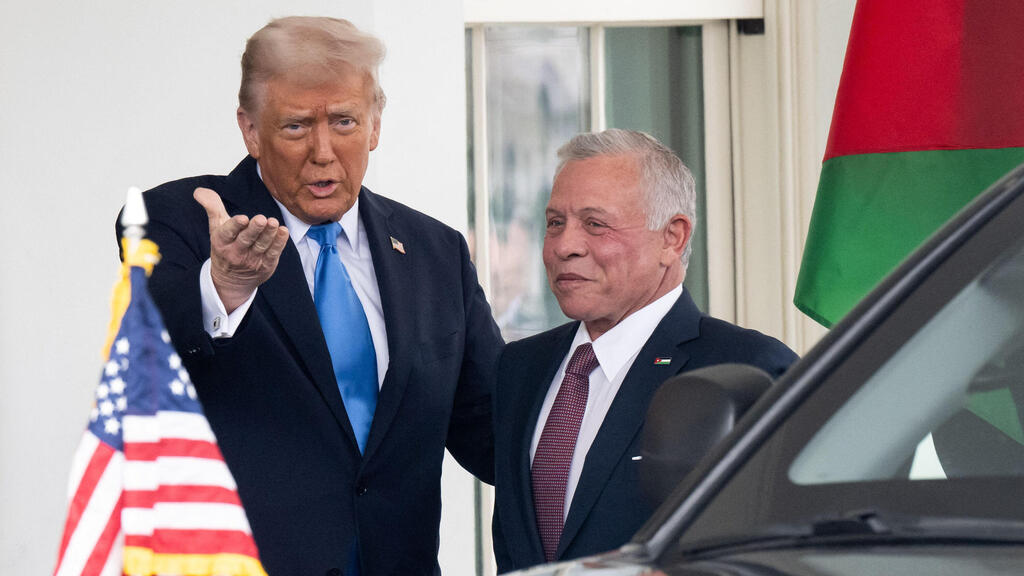
Abdullah and Trump
(Photo: Saul Loeb/AFP)
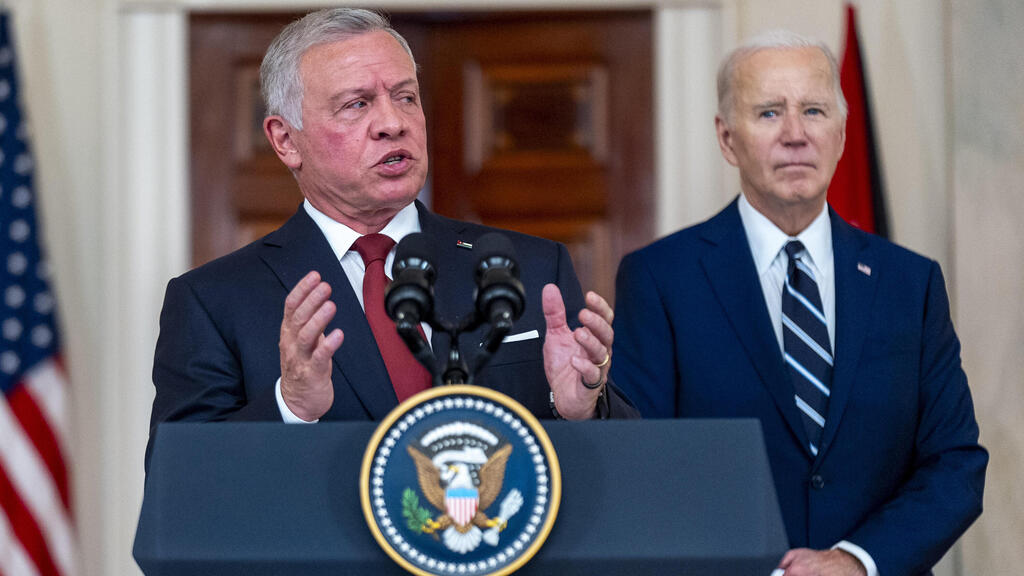
Abdullah also won praise from Biden
(Photo: AP)
As part of its partnership with the West, Jordan provided logistical and intelligence support for the 2003 invasion of Iraq and contributed to the fight against Islamic State militants in Syria and Iraq.
Amer Sabaileh, a Jordanian political analyst, told The Associated Press that Jordan’s alliance with the United States is Abdullah’s way of ensuring the kingdom’s security, including against threats from Iran.
Sean Yom, a professor at Temple University and author of “Jordan: Politics in an Accidental Crucible,” said Jordanian elites see Iran’s support for Shiite militias in Iraq, armed Palestinian groups and Syrian drug smugglers as a direct threat to the royal court.
“Very few people in Jordan think Iran is good for the Middle East,” he said.
12 facilities in the crosshairs
Washington and Amman signed a defense cooperation agreement in 2021 granting U.S. forces access to 12 military facilities across the kingdom.
According to David Schenker, a fellow at the Washington Institute for Near East Policy, in the period leading up to the war with Iran, Jordan’s Muwaffaq Salti Air Base became a “major logistics hub” for U.S. C-17 transport aircraft and about 60 fighter jets.
Schenker, who handled Middle East affairs at the State Department during Trump’s first administration, said Jordan provides substantial strategic depth and is crucial to operations against Iran, but that its location also makes it a target, putting both U.S. forces and King Abdullah in the crosshairs.
About 50,000 U.S. troops are currently deployed across the Middle East, though the number stationed in Jordan is not known.
Schenker estimates that at least 8% of the kingdom’s annual budget, or $1.47 billion, comes directly from U.S. grants.
Adm. Charles Bradford, commander of the Pentagon office responsible for the Middle East, said in May that the U.S. military had moved personnel and equipment from its anti-ISIS mission in Iraq to Jordan. The move was part of a broader, long-term strategy aimed at moving U.S. forces farther from Iranian missiles.
Those troops were enough to draw Iranian fire toward Jordan.
Most of the missiles and drones launched at the kingdom were intercepted by U.S. air defense systems. That may be another reason Jordan has chosen to grit its teeth. It absorbs the attacks and remains silent.
Exchanges of fire — and the condemnation that finally came
In recent days, however, there has been a shift.
After Jordan responded to Iranian attacks on other countries in the region, Amman also issued a response to an attack on Jordan itself.
Following a string of attacks that had largely gone unanswered publicly, Amman stopped avoiding outright condemnation, even as it continued to use cautious rhetoric out of concern that escalating its language alone could carry security consequences.
Jordanian Foreign Minister Ayman Safadi said Thursday that Iran had been attacking Jordan and several other countries in the region well before the current war began.
He said the latest attacks started within hours of the war’s outbreak in February, even though Jordan and other Arab states were not parties to the conflict and had worked to prevent it.
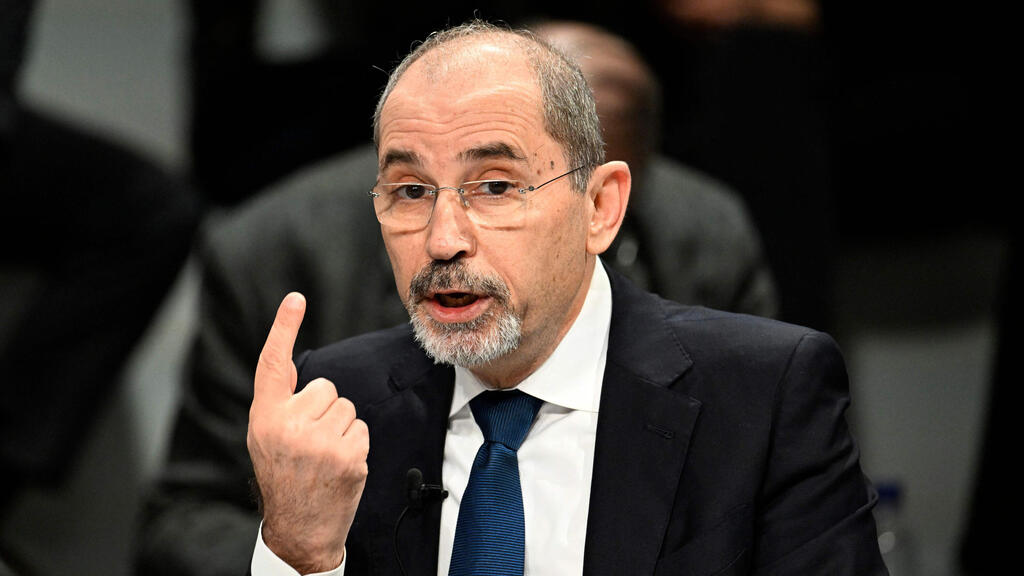
No longer able to remain silent; Ayman Safadi
(Photo: Thomas Kienzle/AFP)
At the same news conference, Safadi said the United States and Jordan have a defense cooperation agreement and that the presence of U.S. forces in Jordan is governed by that accord. He said the troops are stationed at Jordanian military bases and cooperate with Jordanian forces in several areas.
He added that similar arrangements exist with other countries that maintain forces in Jordan as part of security cooperation.
Safadi stressed that Jordan seeks good relations with Iran, but said that requires addressing the causes of tension, including support for weapons and drug smuggling into Jordan and attempts to undermine the kingdom’s stability and security.
He said Jordan would continue to exercise its sovereign and legal right to take whatever measures were necessary to protect its security, stability, sovereignty and citizens.
That same day, Jordan’s Foreign Ministry also condemned Iranian attacks on Kuwait.
Iranian Foreign Minister Abbas Araghchi responded with a jab at Safadi.
He questioned how long Safadi believed Iran should wait before responding to an aggressor that, he said, did not respect Arab or Iranian sovereignty, and asked whether the Jordanian foreign minister was unaware that airspace, maritime routes and land territory had been used in the initial U.S. attacks that killed innocent Iranians.
The exchange came after Iran again launched missiles and drones toward Jordan this week.
On Sept. 2, for example, the Jordanian military said Amman had confronted a missile attack from Iran. Air defenses, it said, engaged 13 ballistic missiles that entered Jordanian airspace. Ten were intercepted, while three fell in remote areas away from population centers.
On Aug. 31, the Jordanian military also said its air defense systems intercepted eight missiles that entered the country’s airspace. The forces, it said, destroyed them “before they posed any threat to civilians or property.”
On Friday, people spending time at the Sea of Galilee filmed interceptions in the sky. The IDF said they were Jordanian interceptions that appeared to be taking place over northern Israel.
Iranian media reported a “powerful explosion in Jordan” and later, Iran’s Fars news agency and the Saudi outlet Al-Hadath said missiles had been fired at a U.S. base in the kingdom.
The reports of Iranian strikes in Jordan had not been independently confirmed.
First published: 15:13, 09.05.26