



The emerging election results threaten to upend the political landscape and reshape the political blocs. With neither bloc holding a majority and growing expectations that Likud and Yashar! will have to form a unity government, the ultra-Orthodox parties fear being left in the opposition. Shas has plunged from 11 seats in the previous election to just seven, according to official results with 86.5% of the votes counted, while United Torah Judaism remains at seven seats for now.
Both parties could suffer another setback once the double-envelope ballots are counted. In the previous election, those ballots cost United Torah Judaism one seat.
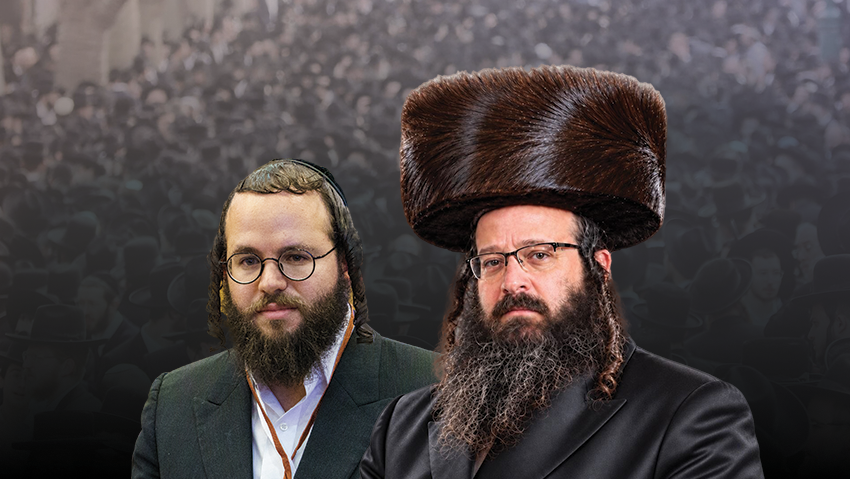
United Torah Judaism issued a statement saying: "In response to inquiries from journalists, we wish to clarify that we have not been approached by any party leaders, apart from a message conveyed by sources close to Prime Minister Netanyahu indicating that he intends to keep the coalition parties together."
A Shas source told ynet: "Anyone who thinks Deri will leave the bloc he built the day after the election and start courting Eisenkot is sorely mistaken."
On Tuesday night, the ultra-Orthodox parties had expected to emerge as kingmakers and force whichever coalition they joined to pass legislation exempting yeshiva students from military service before the government was formed. But as the election results began to take shape, the tone from Shas and United Torah Judaism shifted somewhat. Knesset member Yitzhak Goldknopf, for example, said he would not rule out talks with other parties and that any decision would be referred to the rabbis, leaving the door open to negotiations with both political blocs.
Yet despite the focus on the possible makeup of the next coalition, discussions within the ultra-Orthodox community on Wednesday centered largely on another set of figures, which in some circles attracted even more attention than the seat totals of Shas and United Torah Judaism. Two new parties had challenged the established ultra-Orthodox factions: "Black Color," a party representing draft evaders, and "The Haredi Public," representing working ultra-Orthodox Jews and those interested in military service and greater integration into state institutions. Both managed to challenge the established parties in the public debate, but all eyes were on Election Day, when they faced their real test. It is difficult to say they succeeded.
The questions they raised for veteran lawmakers did, however, pose a significant challenge. At the time of writing, "Black Color" had received 9,500 votes, while "The Haredi Public" had received 9,029.
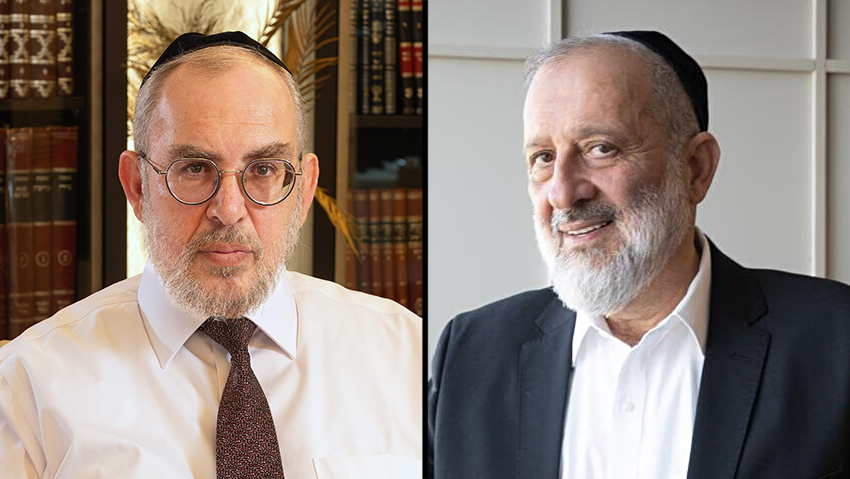
Concerned about being left in the opposition; Deri and Asher
(Photo: Alex Kolomoisky, Yuval Chen)
Both parties' campaign headquarters reported harassment, intimidation, vandalism of signs and equipment, and ballot slips disappearing from polling stations. In numerical terms, the results were deeply disappointing, particularly for Moti Leitner, chairman of "The Haredi Public," who had sought to protest the established ultra-Orthodox parties' failure to address the needs of Haredim interested in state-run education, pre-military preparatory programs and other options.
Indeed, this has become a major topic of conversation in Bnei Brak. Yeshiva students have been constantly checking the vote counts of the two new parties. Officials from "Black Color," headed by Yaakov Chaim Miller, insisted after the election that the outcome did not constitute a crushing defeat.
"'Black Color' is not measured solely by the number of votes it received, but by its impact on the public and the message it brought to the forefront," the party said. "We spoke of three to four seats' worth of voters who would not vote for the ultra-Orthodox parties, and that is exactly what happened. Hundreds of thousands of votes did not come home, and the demand to formally settle the status of yeshiva students has become an issue that can no longer be pushed aside."
"We are proud to have given this community a voice and placed the need to enshrine the 'Torato Umanuto' status, under which Torah study is recognized as a full-time occupation, at the top of the agenda once and for all. (And if you had only allowed them to vote for 'Black Color,' we would be in the Knesset today, but you preferred that they stay home.) As long as there is no comprehensive arrangement and clear decision, we will continue to lead the struggle boldly and without fear until we achieve our goal. The ultra-Orthodox public demands a genuine, comprehensive and unequivocal arrangement," the party concluded.
The extremely low vote totals also came as a bitter surprise to supporters of "The Haredi Public." On Tuesday night, before the final results were known, Leitner said: "The barrier of fear has been broken. A spark of hope has been ignited. Tonight marks the beginning of a long journey. Tonight is our victory in the face of threats, fraud, curses and insults. We stood our ground and did not break. This election campaign will be remembered as historic for us, the ultra-Orthodox. We stand like a fortified wall, defending what is ours for the sake of our children. The eternal nation does not fear a long road."
It appears that even ultra-Orthodox society, where changes are taking place on the margins in state-run Haredi education, employment opportunities and even military enlistment, is not yet ready for a political movement that challenges its established representation.