

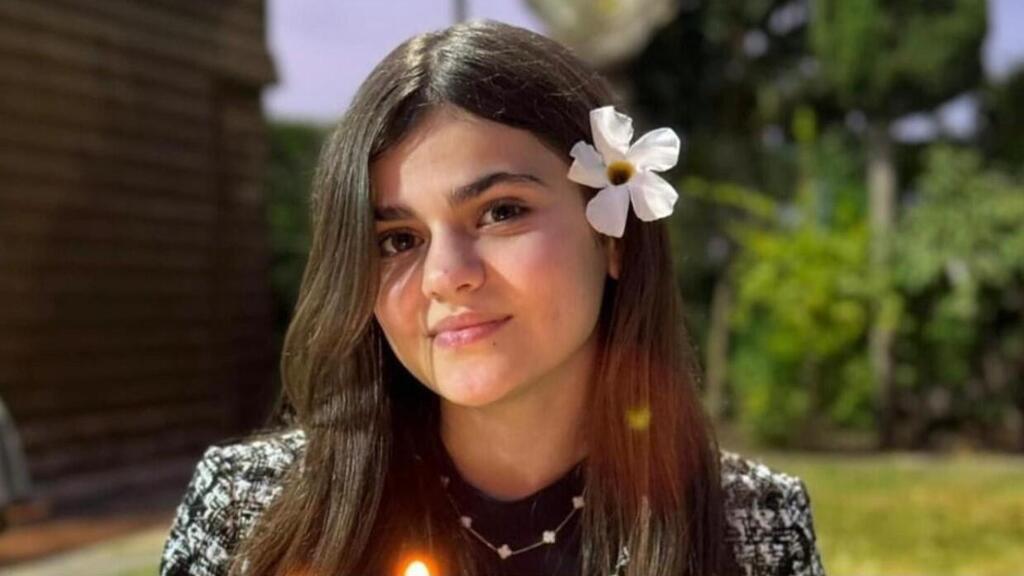
Hala Raja Khatib, a student at Al-Hekma Middle School in the northern city of Tamra, was meant to attend an alumni conference this week for the Shavit program—an academic excellence track for middle school students led by the Davidson Institute of Science Education, the educational arm of the Weizmann Institute of Science.
But in June, Hala was killed when an Iranian missile struck her family home. Her older sister Shada, their mother Manar, and their aunt Manar, was also killed in the attack. Hala’s father, Raja, and her sister Razan, who is now in 12th grade, survived the tragic incident.
As part of the Shavit program’s closing conference, the Davidson Institute of Science Education hosts a Rube Goldberg machine competition, featuring ninth-grade students from 14 schools across the country—both Jewish and Arab. Participants come from Ashkelon, Rishon Lezion, Taybeh, Ein Mahil, Lod, Nazareth, Holon, Mevaseret Zion, Ness Ziona, Reineh, Be’er Ya’akov, Tamra, and Rehovot.
But the emotional gathering felt incomplete without the student who was no longer there. “Hala was supposed to celebrate her 14th birthday about a month ago. Every year, the whole family would plan together to make the day special,” said her father, Raja. “She was quiet, well-groomed, and full of life. Two days before the tragedy, we had just returned from a vacation at Lake Garda in Italy. Shada wanted to come home, but Razan and Hala wanted to stay. Who knows what might have happened if we had stayed,” he added. Raja, who lost his home in the attack, is now living with his brother.
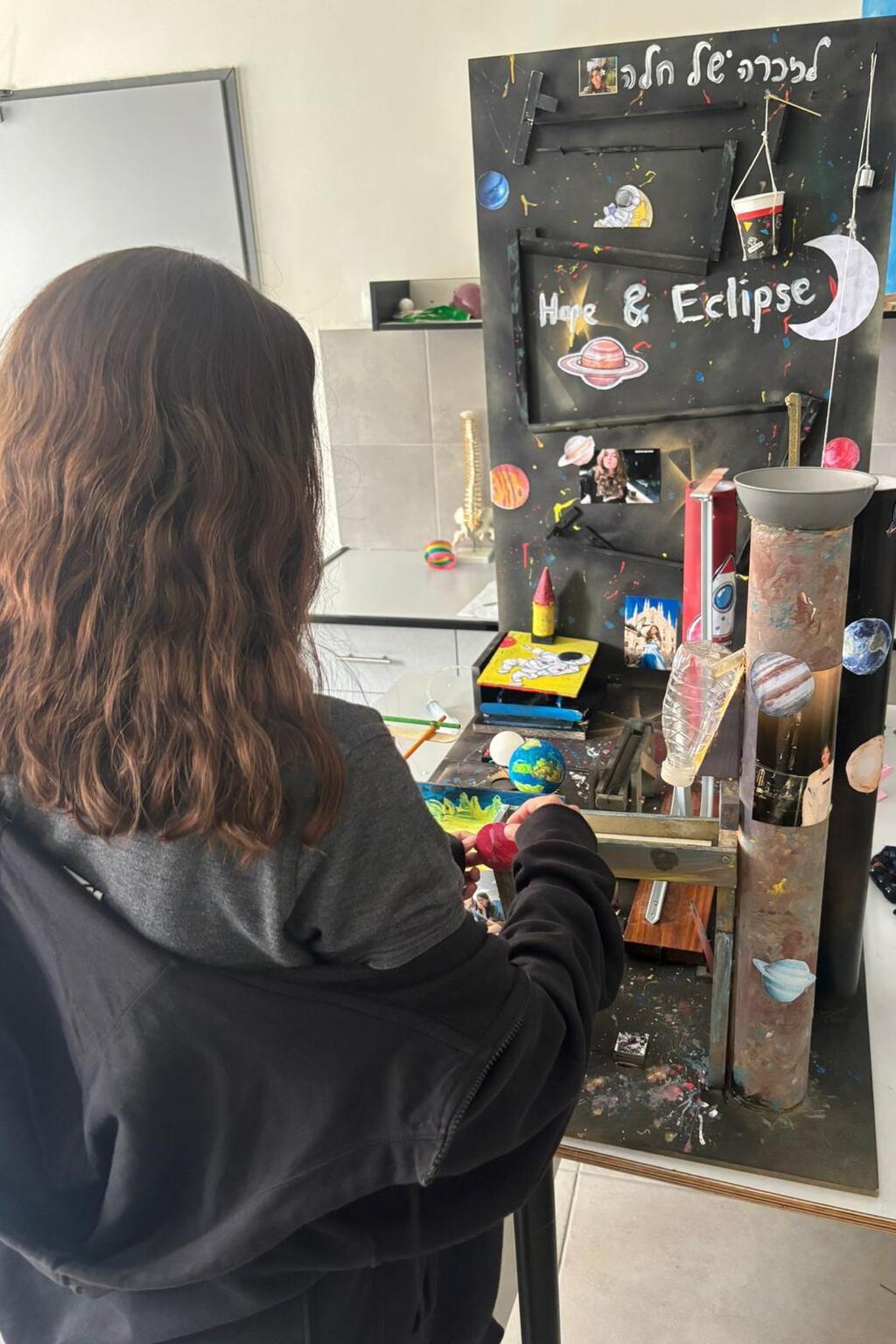
Rube Goldberg machine in memory of Hala Khatib
(Photo: Rama Yassin)
The students worked with determination and a deep sense of purpose. They designed the machine in mourning colors, as if Hala herself had helped build it. Everyone at the school believes that their classmate is watching them from above, proud of what they have done. It was the power of community, memory, and commemorating through scientific creativity that motivated the students to carry out this moving tribute. This is not only a story about students learning science; it is also about students embracing values of remembrance, friendship, and resilience in the face of loss.
Fida Asadi, Hala’s teacher, recalls her as one of those children you simply can't forget—an outstanding student, kind and sensitive, with a smile that opened doors and hearts. “At school, we used to call her ‘our butterfly,’” Asadi said. “Wherever she went, she brought a sense of lightness, beauty, and quiet strength that touched everyone around her. The students loved her, the teachers admired her, and she had a rare ability to connect with people.”
Hala joined the science program in seventh grade. She was curious, hardworking, and dedicated, but like any student her age, it wasn’t always easy. The program took place at the end of the school day, and she often felt tired and even considered dropping out. But then came a moment that changed everything.
At one session, she saw the Rube Goldberg machine built by students the previous year, and she was captivated. The mechanisms, the creative concept, the humor and precision—all of it rekindled her passion for learning and scientific exploration. She told her teacher she wanted to take part and join the conference. Instead of giving up, she stayed, becoming a standout student driven by a genuine passion for building, innovation, and discovery.
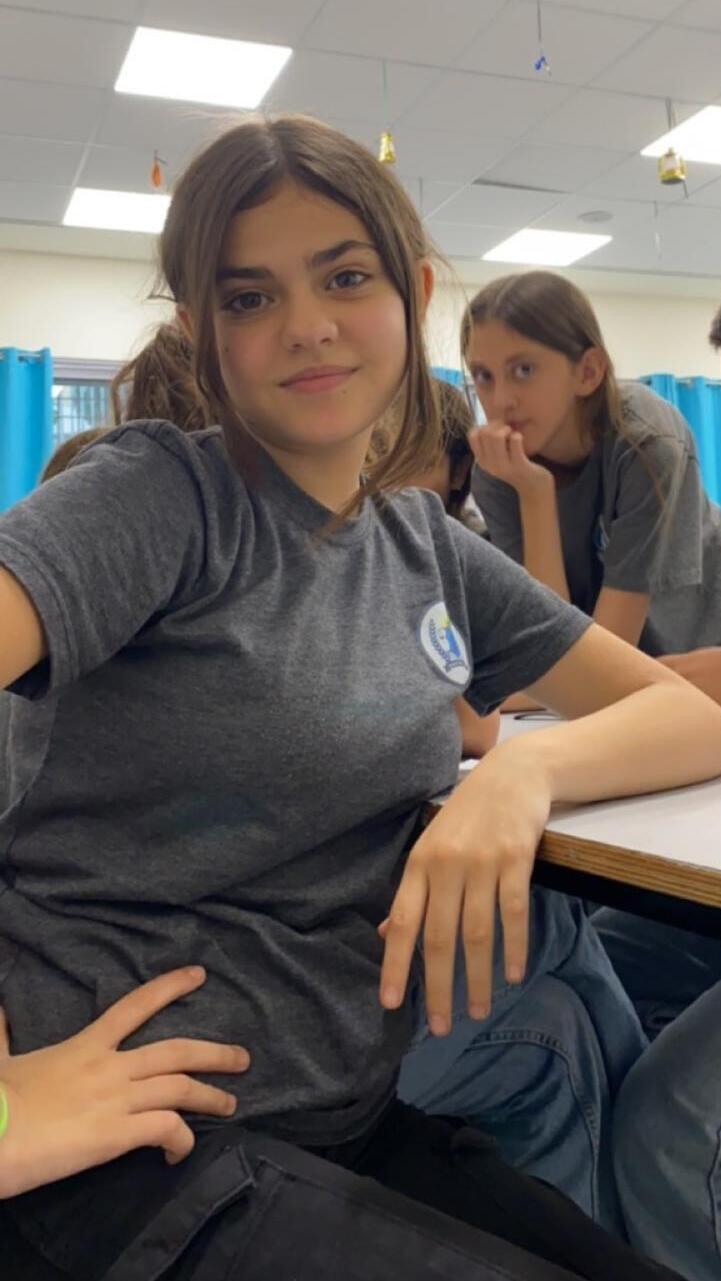
Hala Raja Khatib
(Photo: Courtesy)
Hala’s close friends went through intense emotional turmoil, with some students witnessing the attack firsthand and struggling to cope with its aftermath. The school’s educational staff—teachers and counselors—provided close support for weeks, recognizing that such pain does not fade in a day.
Fida Asadi explains that the entire school was deeply affected, particularly because it is located next to Hala’s home. “Our classroom is directly across from her house. When we returned to school, we would look at it every day, filled with thoughts,” she said. “Out of that fracture, this project was born—as a way to create meaning, a sense of grounding, and the strength to move forward. The students aren’t just building a machine; they’re creating a space for healing. They’re transforming trauma into energy, and loss into a living memory.
“Today, the students continue the scientific project with a sense of mission: to tell her story and carry on her dream. To raise the flag she once held with pride. Every step in the machine holds a piece of her. Every part of the program is dedicated to her.”
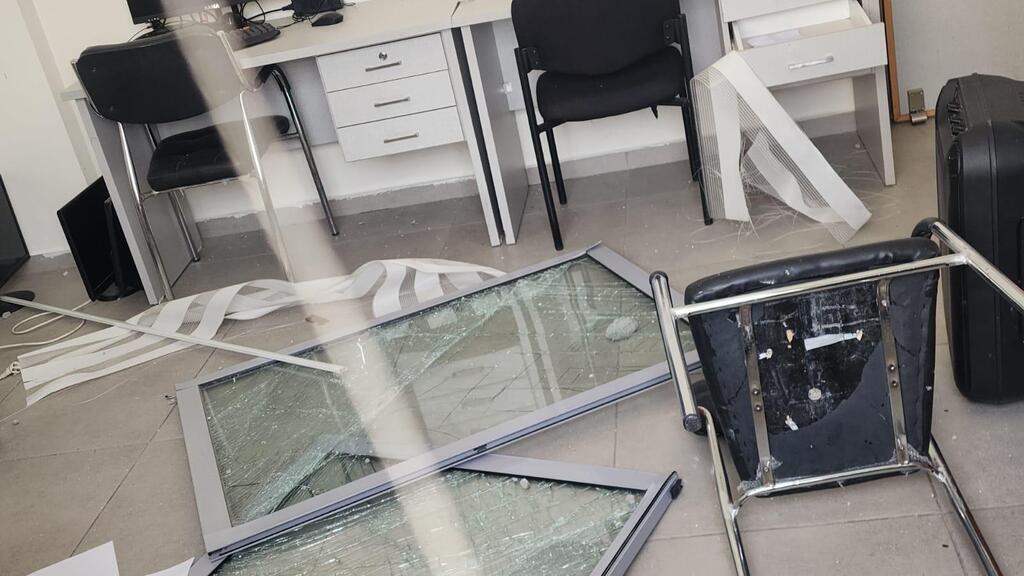
The destruction at Al-Hekma School in Tamra
(Photo: PR)
According to her teacher, Hala was a child of light. And that light, though no longer present in the physical sense, continues to accompany her classmates every day. “The pain of losing Hala will never fully disappear, but seeing children and teens continue in her path brings us a glimmer of light in the darkness,” Asadi added.
“As the fighting spread, we lost Hala—a brilliant, beloved, and exceptional student who never had the chance to complete her final project in the Shavit program,” said Rama Yassin. “Her heart was in science, in action, and above all, in the dream of turning learning into a creative and inspiring experience.”
“Out of deep sorrow, the grief was transformed into the creation of the machine—built in dark colors to reflect the loss, and incorporating photos of Hala with her friends, which above all highlight the love and longing,” added Samia Said Yassin, principal of the Al-Hekma Middle School.
Alongside the school’s support, Hala’s grandparents were deeply involved. Her grandfather, Kasem Abu Al-Hija, a well-known businessman, announced his intention to donate a significant sum toward the establishment of a science innovation center in her memory. His request was clear: that the center be named after her: The Hala Center for Innovation.
According to Principal Samia Said Yassin, the center will become a hub for creative education, scientific research, project development, and hands-on experience with advanced technologies such as robotics, 3D printing, and coding. It will serve not only as a learning space but also as a symbol of hope, continuity, and the belief that every student can dream, and achieve their dreams.
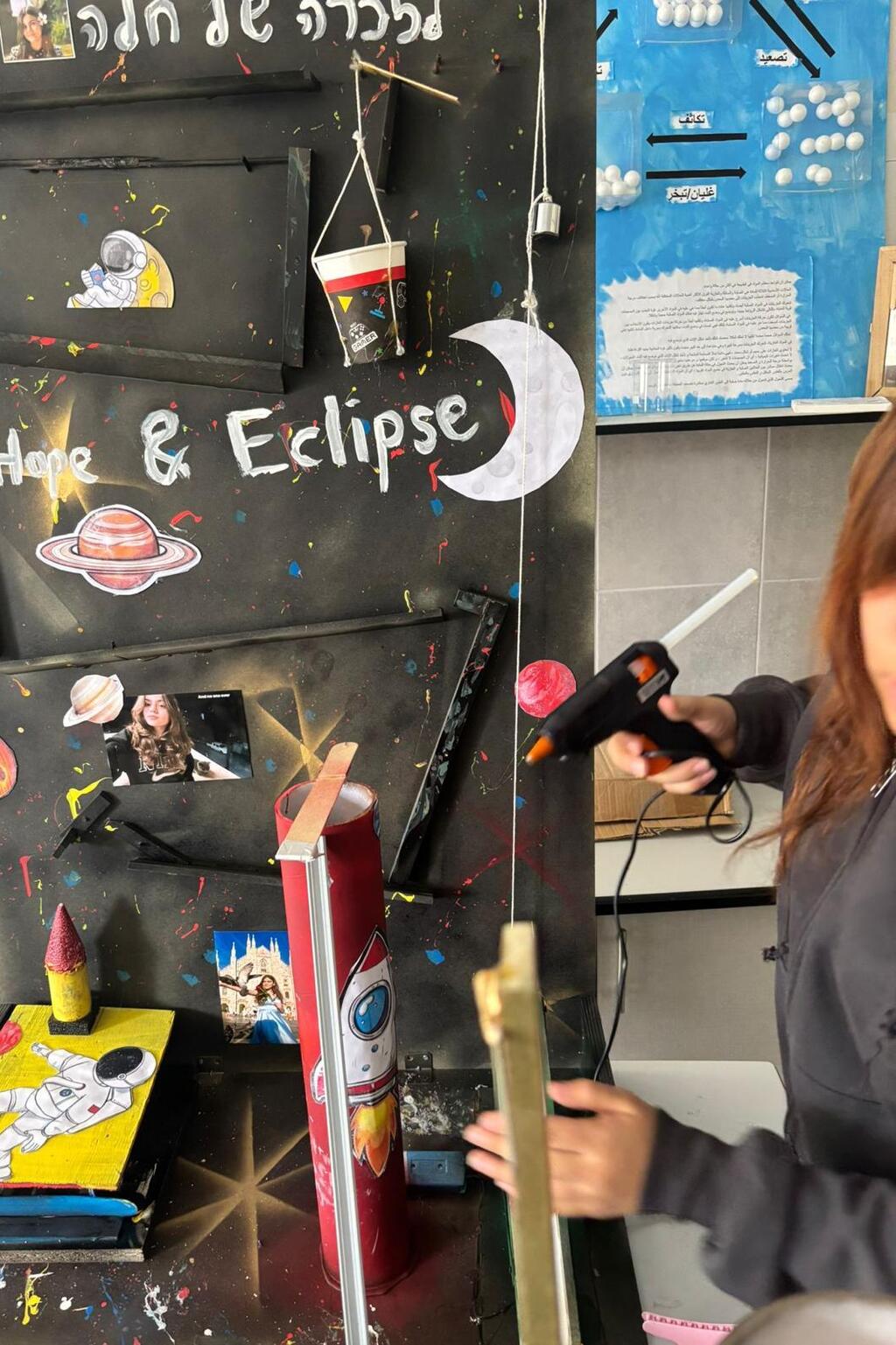
Rube Goldberg machine in memory
(Photo: Rama Yassin)
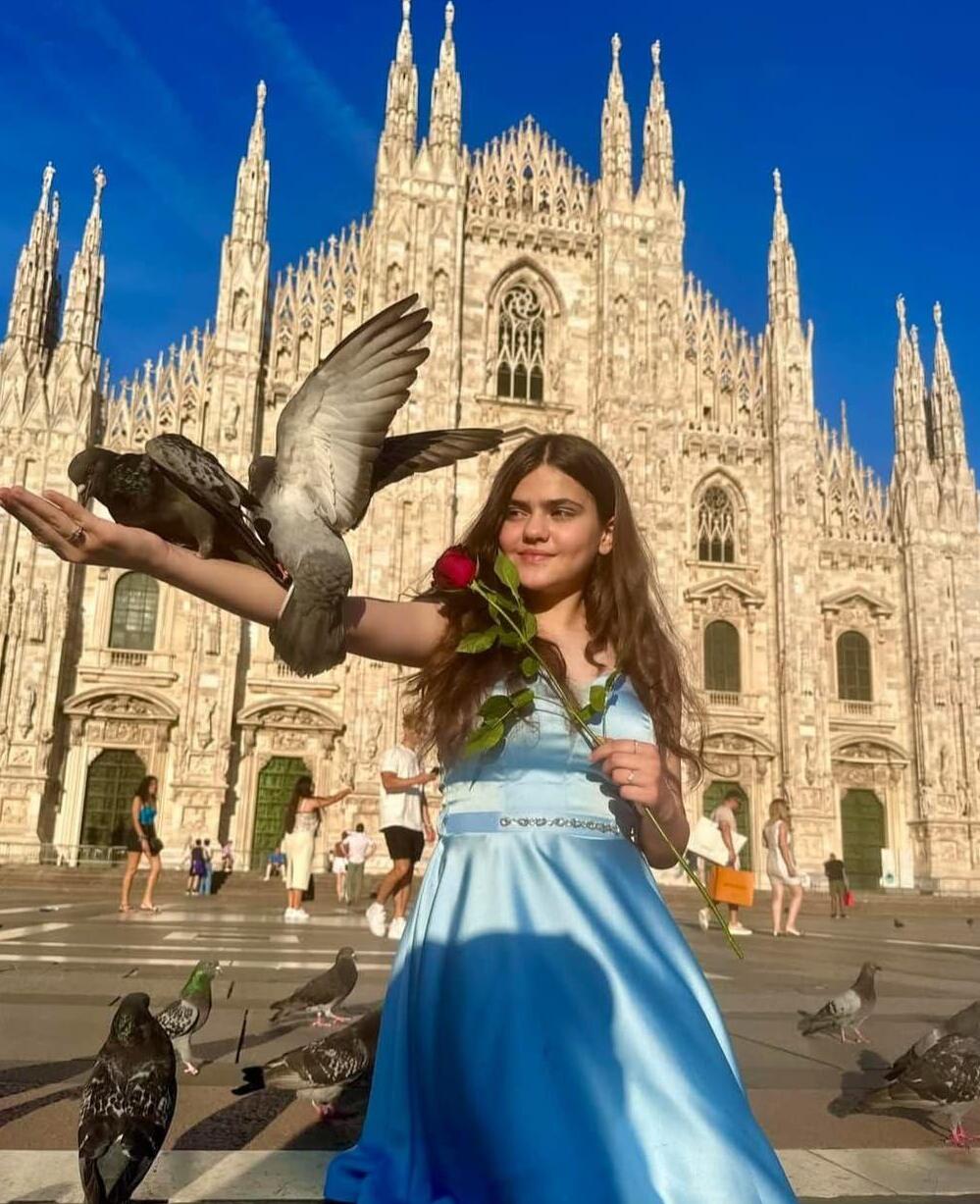
Hala Raja Khatib
(Photo: Courtesy)
Samia Said Yassin shared that the bond between her, Hala and her family, went far beyond that of a principal and student. “We’ve been friends for years. Our families are very close. We spent time together, went on trips, and our daughters grew up side by side from the very first day,” she said. “Hala wasn’t just a student to me; she was part of my heart. Her sudden death was a devastating and incomprehensible blow. For me as well, the process of coping was painful. It took a long time to process the grief and find the strength to stand tall again in front of students looking for stability. I stood before them with a broken heart, but with determination to lift them up and continue the journey, even with a wounded heart.”
Maya Shidlovsky, director of the Shavit program at the Davidson Institute of Science Education, said she and her colleagues believe the program is a shared journey between teachers and students. “When we empower teachers, we enable them to lead their students toward scientific excellence fueled by curiosity and experiential inquiry. The Rube Goldberg competition is much more than a showcase of scientific knowledge. It’s a platform to develop skills like determination, overcoming challenges, and teamwork—skills that guide both teachers and students on the path to excellence,” Shidlovsky said.
“Hala’s story, as shared by the school staff, shows just how powerful exposure to scientific excellence can be. It fosters meaningful learning, strengthens motivation, encourages perseverance, and creates space for personal growth as part of a community of excellence.”