

A late-night Haredi riot in Ramat Gan late Tuesday was not a spontaneous outburst. It was the result of a well-oiled alert system. Shortly after Military Police troops arrived at the home of a draft-dodging yeshiva student in the city, extremist ultra-Orthodox protestors began pouring into the street. Within minutes, dozens became hundreds.
They shouted, blocked the soldiers, rioted and overturned a Military Police patrol vehicle. Police were forced to extract the troops from the scene. The arrest attempt failed. The draft dodger was not at home but at his yeshiva, Rabeinu Chaim Ozer. Three rioters were arrested.
Gallery
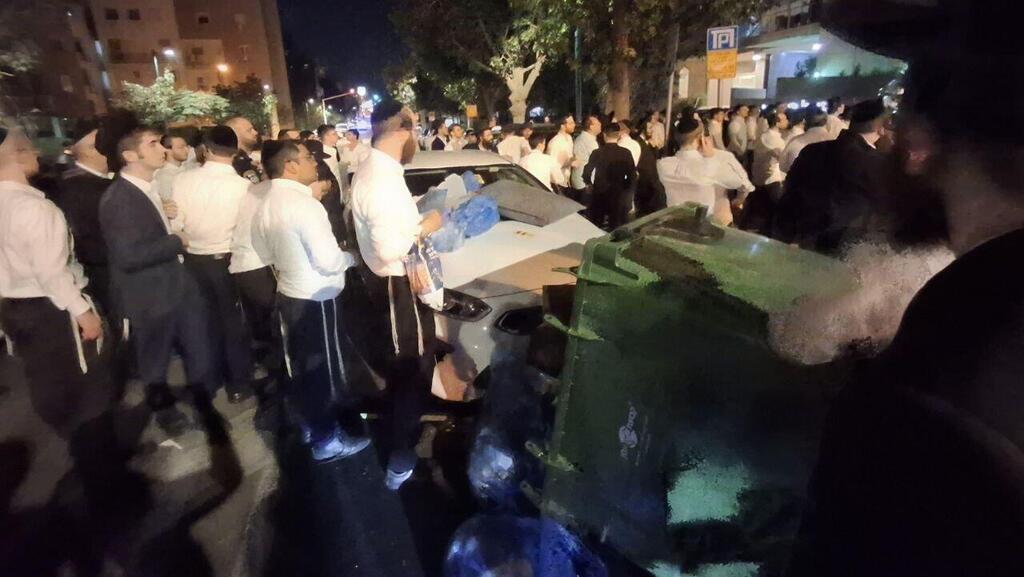
Extremist ultra-Orthodox protestors arrive to block a draft dodger arrest
(Photo: Kobi Israel)
The speed of the response is tied to a dedicated mobilization hotline operated by anti-draft groups. Activists call it "Code Black." The number has been circulated quietly in ultra-Orthodox neighborhoods since the IDF began stepped-up enforcement against men who received draft orders but did not report for service.
Because many in these circles do not use WhatsApp or text messaging and rely on kosher phones, the hotline is built for voice only. When Military Police are spotted, a recorded alert goes out to a ready list of supporters. Those who answer hear a brief, urgent message naming the location and calling on them to arrive immediately.
The scene at Ramat Gan
(Video: David Keshet, Kobi Israel)


Activists present the service as a shield for draft dodgers. They say the goal is simple: flood the scene fast enough to make enforcement impossible. In practice, the tactic has repeatedly delayed or derailed arrests, while giving the protesters a sense of momentum and power.
The Ramat Gan incident is the latest in a string of confrontations that illustrate how the hotline fits into a wider campaign of intimidation around the draft law.
Two days earlier, a group of extremist ultra-Orthodox men targeted Jerusalem Mayor Moshe Lion while he drove through Mea She’arim. They pelted his car with stones and bags of garbage after learning he had visited the Karlin Hasidic court in nearby Beit Yisrael. The Karlin community has been attacked before because its rebbe has suggested that some followers enlist in the IDF.
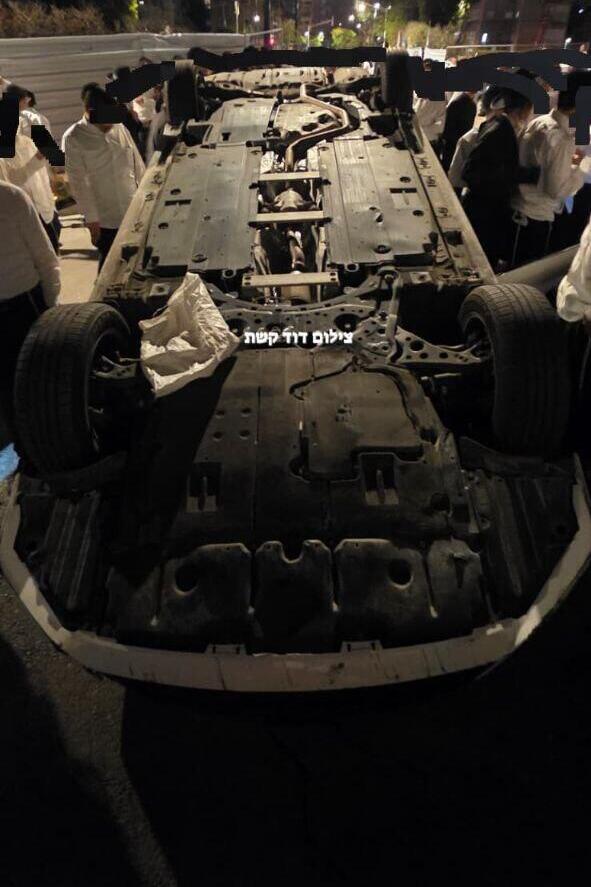
Overturned Military Police car in Ramat Gan
(Photo: David Keshet)
About a week and a half ago, ultra-Orthodox youths in Jerusalem swarmed the car of Shas lawmaker Yoav Ben-Tzur as the coalition advanced legislation to draft yeshiva students. Protesters smashed windows, threw garbage bags and shouted threats. Ben-Tzur’s office described the episode as an attempted lynching. Police later arrested a 14-year-old suspect.
After that attack, protesters also demonstrated outside the home of United Torah Judaism lawmaker Yaakov Asher in Bnei Brak, and later showed up at the apartment of Shas MK Yinon Azoulay, shouting “Traitor” and sticking protest labels on his car.
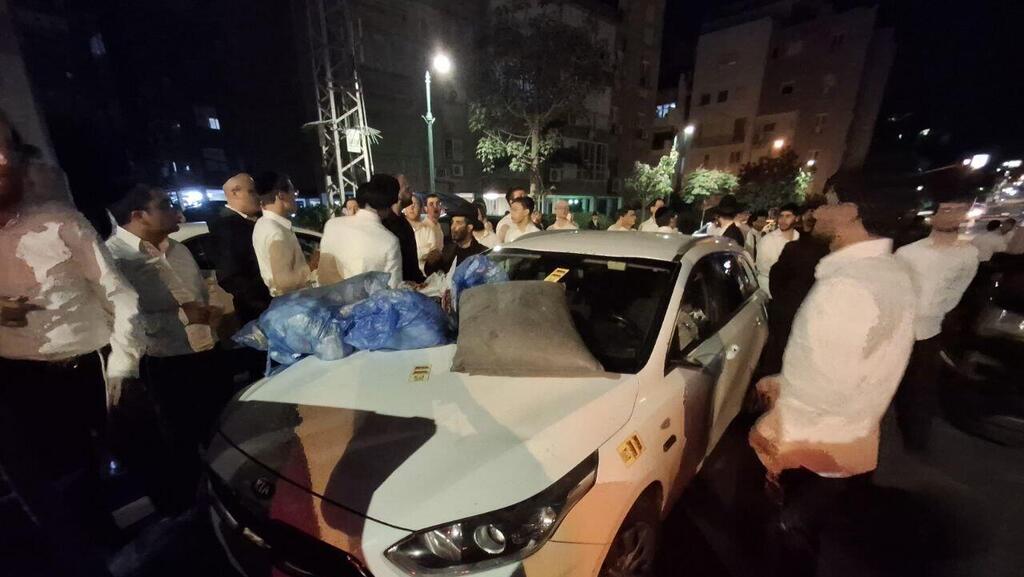
(Photo: Kobi Israel)
Seen together, the incidents suggest a clearer pattern. The enforcement push against draft evasion has been met by a parallel push on the street, powered by rapid-call organizing and a readiness to confront officials and security forces alike.
For the Military Police, the challenge is not only manpower. It is also political. Each high-profile riot ends with a similar picture: troops retreating, arrests failing, and only a handful of suspects detained. The hotline has become a symbol of that imbalance, a small, low-tech tool that is proving highly effective at turning a knock on a door into a street confrontation.