

The Security Cabinet held a closed-door meeting Tuesday to assess possible military responses to Hezbollah’s repeated violations of the ceasefire agreement along the Lebanese border, amid growing concerns over the terrorist group’s renewed activity and the Lebanese army’s inability to disarm it.
The meeting, attended by Prime Minister Benjamin Netanyahu, coalition party leaders and senior defense officials, focused on Hezbollah’s efforts to rebuild its capabilities, particularly in areas south of the Litani River, in violation of UN Resolution 1701.
Israeli drone strike on Hezbollah operative in southern Lebanon
(Video: IDF)


IDF officials presented several operational options, including intensified strikes on Hezbollah targets. These proposals are expected to be submitted for Cabinet approval soon, though their implementation will depend on multiple factors, including diplomatic discussions with the United States and the Lebanese government, as well as broader regional developments.
Since the ceasefire with Hamas came into effect last month, defense officials say Hezbollah has grown bolder, increasing the movement of operatives and commanders near the border. The group is reportedly working to restore damaged infrastructure, rebuild rocket launchers and reestablish weapons production capabilities, including drones.
While Israel has conducted near-daily strikes to prevent Hezbollah’s buildup, military officials acknowledge the trend has not been reversed. The group is believed to still possess tens of thousands of rockets, missiles and drones, along with a large number of armed operatives.
Smuggling routes into Lebanon have been disrupted—by sea, air and land through Syria—following the fall of the Assad regime and the rise of Ahmad al-Sharaa, who is said to oppose both Hezbollah and Iran. However, Iranian funding to Hezbollah has not been fully curtailed, and Israeli defense sources say ceasefire violations have only worsened in recent weeks.
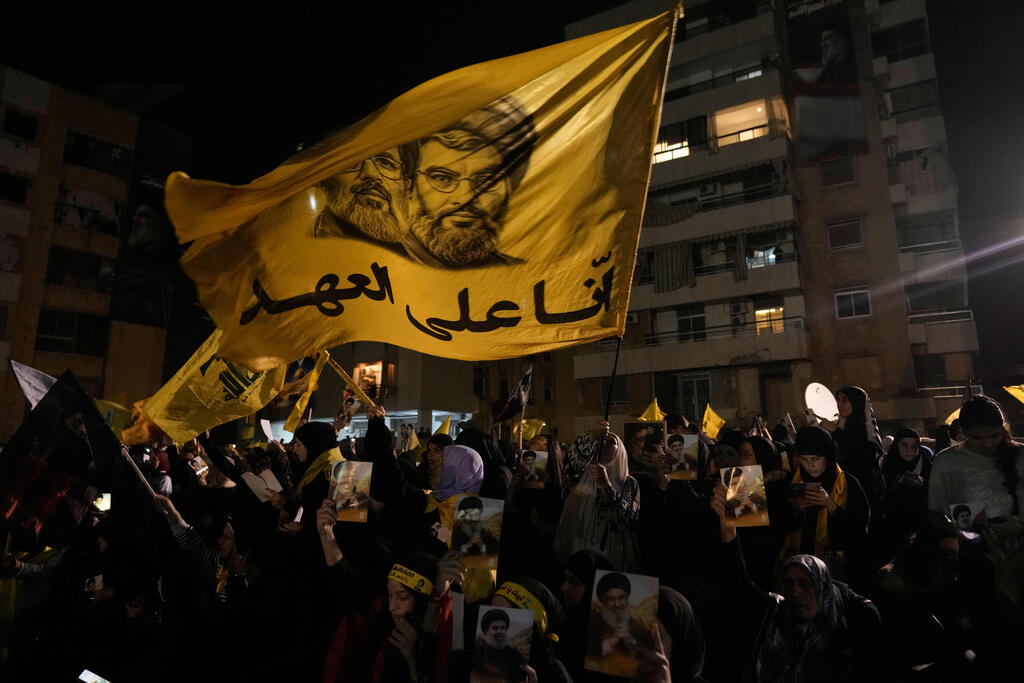
Hezbollah supporters in Beirut
(Photo: AP Photo/Hassan Ammar)
The pace of Hezbollah’s force buildup now surpasses the rate at which the Lebanese Armed Forces are disarming the group, despite previous commitments from the Beirut government. Israeli officials note that while the Lebanese army launched Operation Southern Shield to counter Hezbollah, there is reported cooperation between some of its officers and the group, which is currently focused on internal rivalries rather than launching attacks on Israel.
“If nothing changes, we won’t be able to stand by,” one defense official said, despite the success of U.S.-led ceasefire enforcement mechanisms operating in the area.
The IDF continues to prepare for potential escalation, including refining target intelligence and strengthening air defenses, in anticipation of further developments.