



When sirens sound and seconds matter, your safe room must function exactly as intended. Although built to strict state standards, a residential safe room only provides full protection if it is properly prepared. In many homes, however, safe rooms have become bedrooms, offices or storage areas.
In times of active attacks, that can pose a serious risk. Now, while under threat, families should ensure the protected space contains essential emergency supplies and is cleared of items that could become dangerous during a blast.
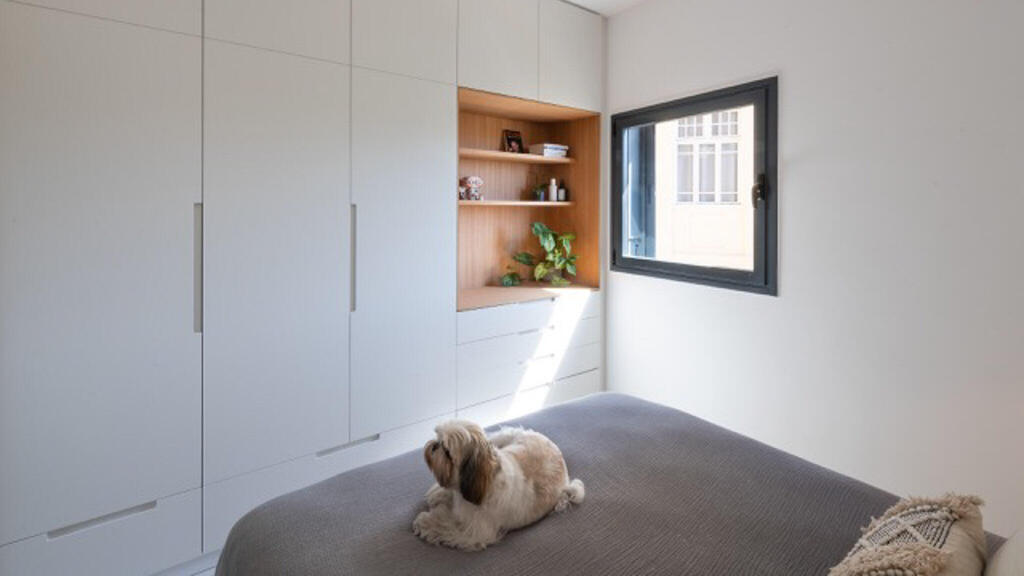
What must be inside your safe room
According to Home Front Command guidelines and established safety recommendations, every safe room should include:
Water: At least 3 to 4 liters per person per day for several days.
Nonperishable food: Canned goods and dry items such as crackers, dried fruit and snacks.
Flashlight and extra batteries, along with emergency lighting.
Battery-operated radio or another reliable way to receive real-time official updates.
First aid kit with bandages, disinfectants and personal medications.
Blankets, mattresses or beds, warm clothing and pillows in case of prolonged sheltering.
Important documents including identification and medical records.
Cellphone chargers and power banks.
Activities or games for children to reduce stress during extended stays.
A foam fire extinguisher suitable for solid materials, flammable liquids and electrical fires. It should be placed near the door in an accessible location, not blocked by furniture or stored on the floor among other objects.
Powder ABC extinguishers are less suitable in enclosed spaces because they release a dense cloud that can impair breathing and linger in the air.
Experts also advise keeping backup batteries for medical devices, essential supplies for pets and personal items needed during prolonged sheltering.
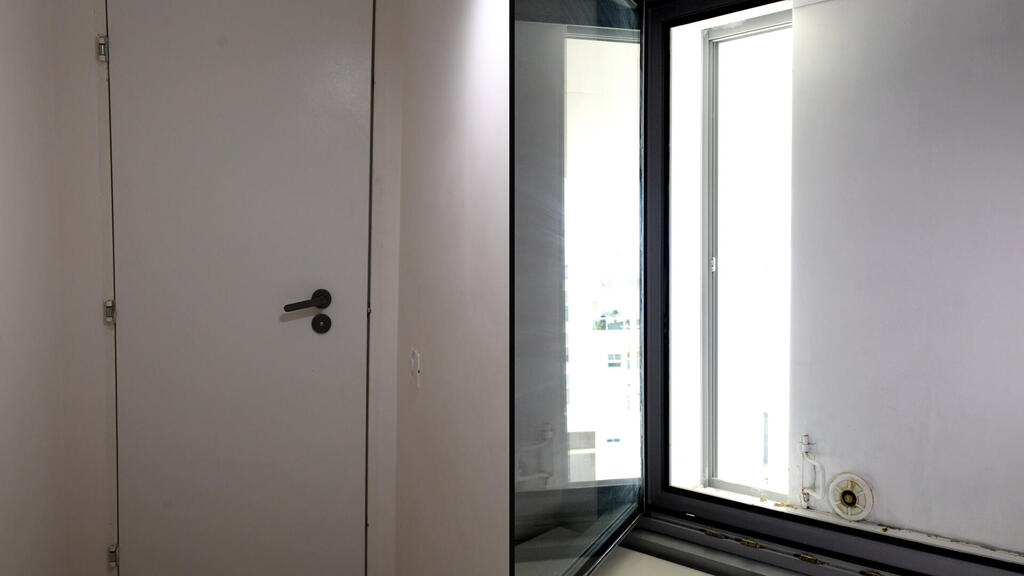
Safe room
(Photo: Yair Sagi, Kobi Kuenkas)
What must be removed immediately
Safety professionals, in line with Home Front Command guidance, warn that the following items should not be inside a safe room during attacks:
Breakable objects such as mirrors, glass cabinets, fragile decorations and unsecured televisions. These can shatter or fall during a blast wave.
Flammable materials including gas cylinders, fuel, turpentine, concentrated cleaning agents, spray paint, chemicals and loose electrical cables.
Portable gas stoves, which contain flammable gas that can ignite or explode.
Large lithium batteries, such as those used in electric bicycles, due to fire risk under impact or heat.
Hanging light fixtures or chandeliers that are not securely fastened.
Shelving units or storage systems not firmly anchored to walls or floors.
Heavy furniture, storage boxes or large unnecessary items that could shift or block access to the door.
Daniel Biratz, an architect and CEO of the BK-BR Group specializing in construction management and engineering supervision, said the residential safe room is designed to protect occupants from blast waves, shrapnel and hazardous materials during nearby explosions. “In a real attack scenario, even small deviations from Home Front Command guidelines can have serious consequences,” he said. “The safe room must meet stricter standards than routine living spaces. Any item that is not essential or not properly secured should be removed.”
Final checks before the next siren
Ensure the safe room door and window seal and lock properly. Turn the handle to a 90-degree angle to secure it correctly. Check the ventilation system and filters if relevant. A simple rule applies during an attack: If an object can fall, shatter, ignite or prevent the door from sealing tightly, it does not belong in your safe room.
First published: 10:36, 02.28.26