

“There is a sense of relief that he is no longer in this world, but I do not feel revenge,” Prof. Abraham Katzir said following the death of Japanese terrorist Kozo Okamoto, who took part in the 1972 massacre at Lod Airport, now Ben Gurion Airport.
Katzir’s father, Prof. Aharon Katzir, was among the 24 people murdered in the attack. Another 71 were wounded.
Gallery
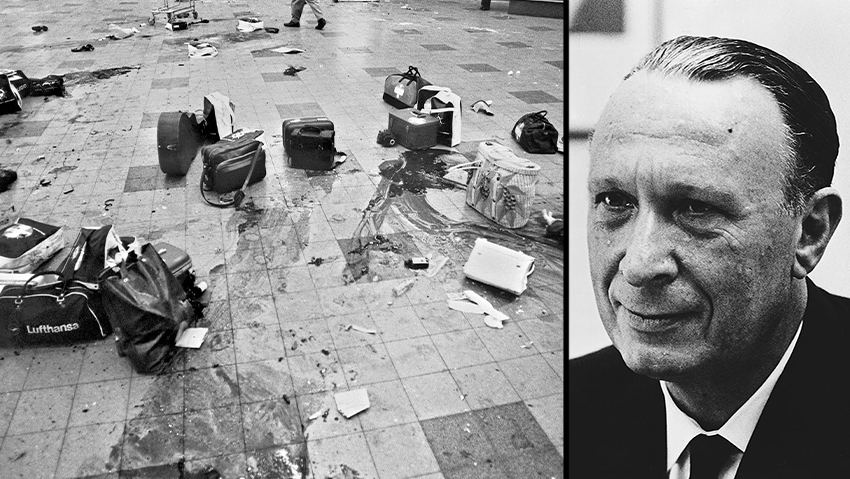
Aharon Katzir; archive footage from the 1972 airport terror attack
(Photo: Weizmann Institute, AFP)
Okamoto, a member of the Japanese Red Army, died in Beirut at the age of 78. On May 30, 1972, he arrived at the airport aboard an Air France flight with two other terrorists and opened fire on passengers.
He was wounded, captured and sentenced to life imprisonment, but Israel released him in 1985 as part of the Jibril prisoner exchange. He later settled in Lebanon.
“Over the years, I did not think about him and I did not hate him,” Abraham Katzir said. “He was simply a fanatic from a cult of fanatics. Such a cult can exist in any culture. He did not know whom he was murdering.”
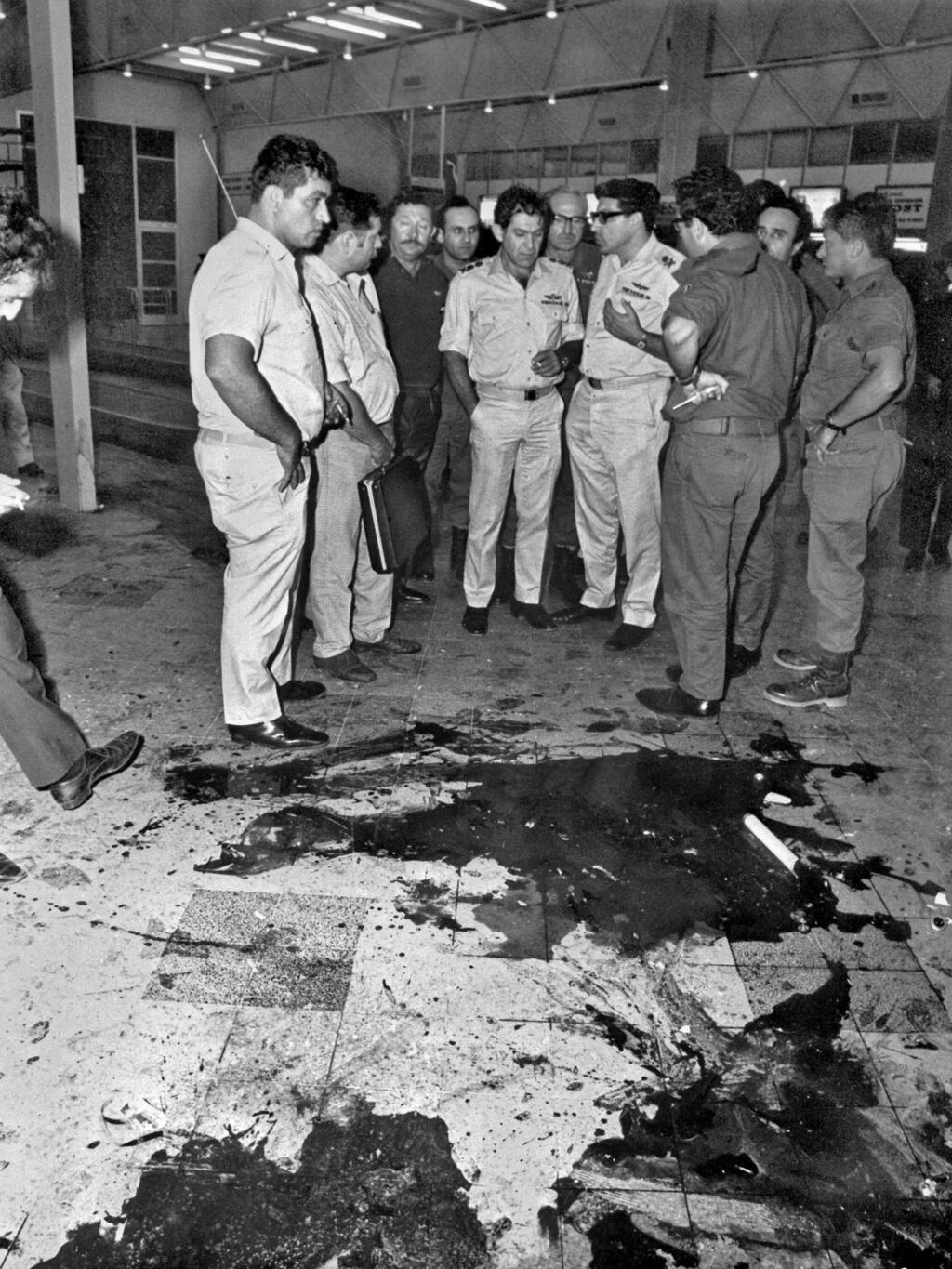
Blood on the floor at Ben Gurion Airport after the May 30, 1972 terror attack
(Photo: AFP)
Katzir recalled that during the shiva mourning period, Japan’s ambassador arrived with his wife, both wearing traditional Japanese clothing.
“He apologized on behalf of the Japanese people for the murder,” Katzir said. “He said the Japanese people felt shame that one of their own had murdered such a famous and important man. It was impressive.”
Katzir said neither he nor his mother bore resentment toward the Japanese people.
On the day of the massacre, he and his mother had come to the airport to meet his father, who was returning on an El Al flight after a lecture tour in Europe.
“We were behind the glass window outside, and suddenly there were ‘fireworks’ and gunshots,” he recalled. “The window shattered. I was a major in the army at the time, and it took me a second to understand that someone was shooting at me.”
“I threw my mother to the floor so she would not raise her head and see what was happening,” he said. “I remember someone running toward us, but I do not know who it was. We survived the shooting, and when it stopped, I ran inside. I was not afraid.”
Katzir said the area was empty.
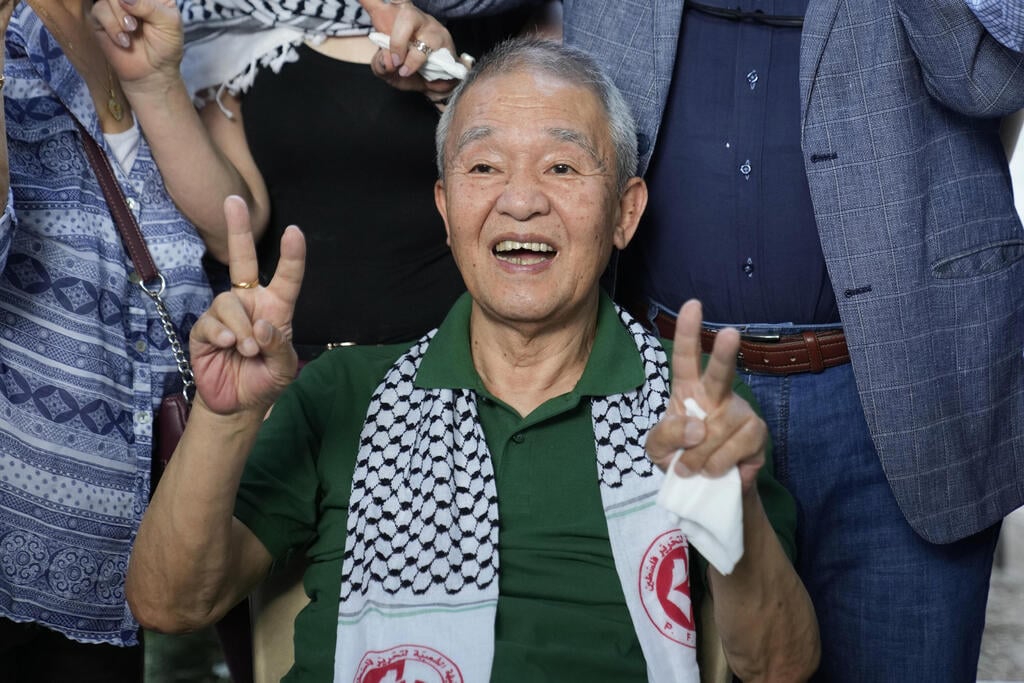
Okamoto during a rare public appearance in May 2022
(Photo: AP )
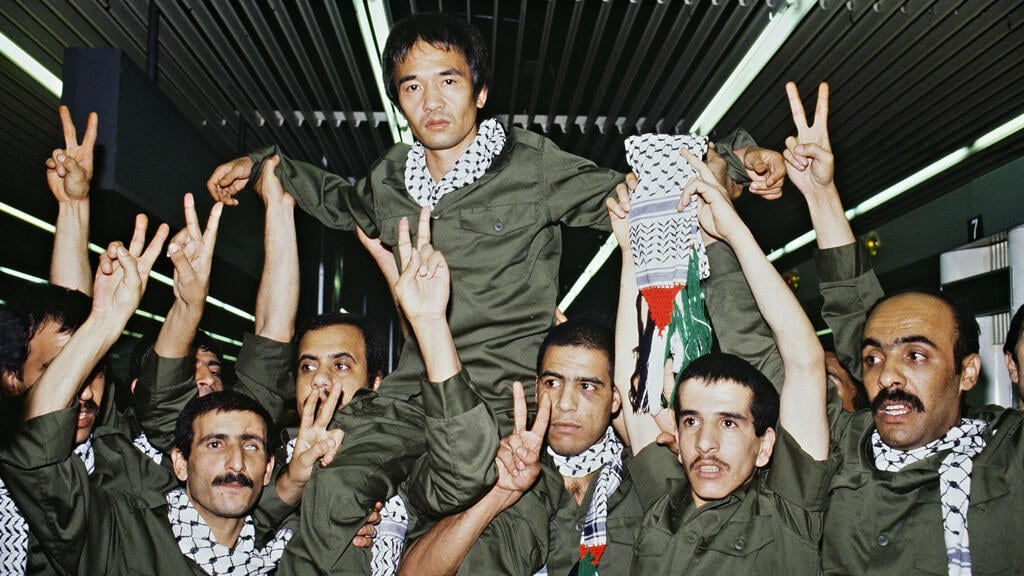
Okamoto following his release in the Jibril prisoner exchange in 1985
(Photo: AFP)
“There was no police officer and no soldier,” he said. “I understand that Kozo Okamoto ran as far as the baggage carousel, toward the planes. Later, they caught him, and then we learned who he was.”
Before the shooting began, Katzir believed he had seen his father near the baggage carousel.
“There was a flight attendant named Rachel who saw my father and told him, ‘Professor, do not stand in line,’” he said. “She moved him past the line, and he waited near the luggage. By terrible chance, he was murdered.”
“I do not know whether Kozo killed him or one of the other two terrorists,” Katzir added. “But it does not matter, because he cannot be brought back.”
Eti Ringel was only 4 years old when she survived the attack. She had also come to meet her father, who was returning from a visit to his parents in Romania. Her mother was murdered at the airport.
“He was not supposed to return that day, but about two weeks later,” Ringel recalled. “He decided to move his flight forward. We came with my mother’s cousin, my grandmother and her sister. I was 4, and my sister was 1.”
“I remember that we were standing behind a glass wall,” she said. “There was happy music, and suddenly we heard explosions and noise. There were fragments, smoke and blood. I remember the fear.”
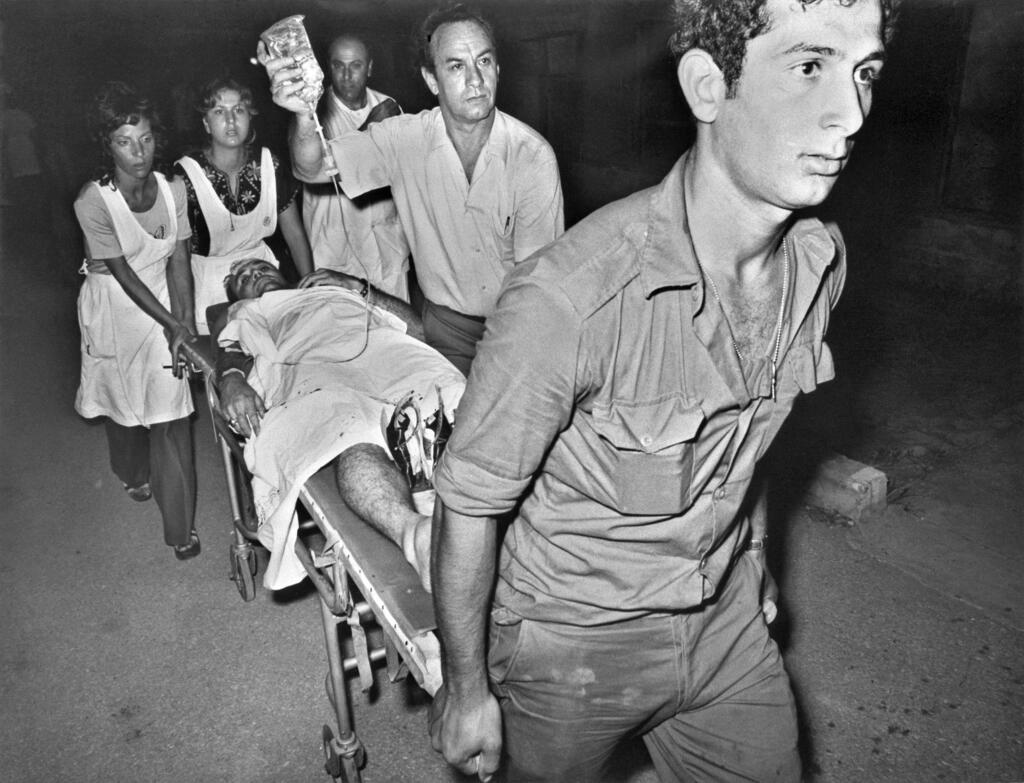
(Photo: AFP)
“My grandmother lay on top of me and was wounded,” she continued. “For many years, she still had shrapnel in her body. I was covered in blood, and the entire floor was covered in blood.”
Ringel said she remembers everything except seeing her mother.
“I told everyone that my mother was dead, but they told me she had been wounded,” she said. “My father did not even get to see her.”
Since hearing of Okamoto’s death, Ringel said she has been overwhelmed by emotion.
“My heart is still pounding,” she said. “It is unsettling. I remember the day I saw him released in the prisoner exchange. They gave me a sedative.”
“It was frightening to know he was free and that nobody knew where he was,” she said. “And now I have lived to see the day they announced his death.”
The news immediately brought her back to the attack.
“I will never forget the fear,” Ringel said. “Even though 54 years have passed, it was one of the most horrific and cruel attacks there ever was.”
Because Okamoto was the only member of the terrorist squad to survive the massacre, she said his death brought a measure of closure.
“He is where he should have been from the beginning,” she said. “He destroyed entire lives and took my mother from me. I lost everything.”