


Hamas and Palestinian Authority delegations met Thursday in Cairo for the first time as part of ongoing talks over the second phase of President Trump’s Gaza plan, aimed at outlining political and security arrangements for the territory following the ceasefire.
“The meeting also included coordination with Egypt on managing the Rafah crossing to ensure the ceasefire is implemented smoothly and that humanitarian aid continues to flow,” Palestinian Authority officials said.
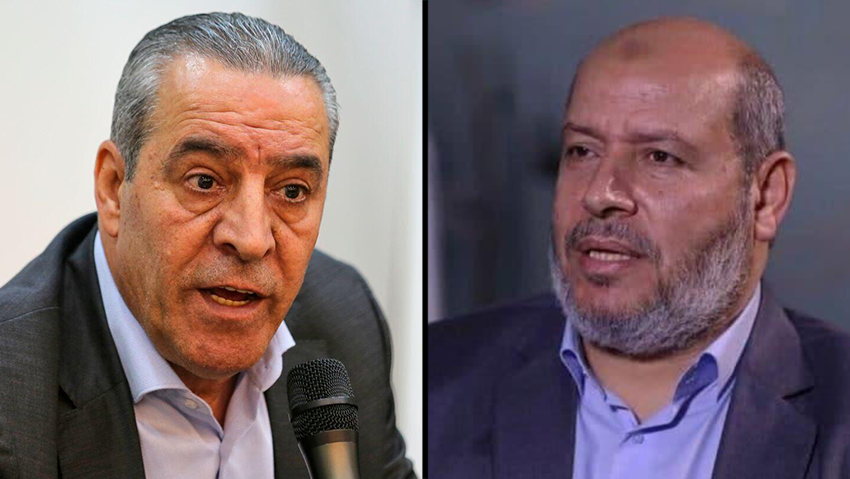
The Hamas delegation was led by Khalil al-Hayya, while the Palestinian Authority team was headed by Deputy President Hussein al-Sheikh and intelligence chief Majed Faraj. A Palestinian Authority official criticized Israel’s rejection of the PA as the governing authority in Gaza, saying, “All Palestinians fall into two main camps, with a few minor factions — it’s either Fatah or Hamas. What does Israel think, that it can import technocrats from China? That’s not how it works.”
He added, “We hope that with international pressure, the Palestinian Authority will be the one to govern the Gaza Strip. It’s the natural outcome.” Al-Sheikh and Faraj also met with Egyptian officials Wednesday to discuss developments in the Palestinian arena after the war. Al-Sheikh held talks with Egyptian intelligence chief Maj. Gen. Hassan Rashad, and the two agreed to continue supporting implementation of the ceasefire agreement in Gaza.
Earlier this week, a Hamas delegation arrived in Cairo to monitor the implementation of the ceasefire agreement with mediators and other Palestinian factions. During their visit, delegations also met with Egyptian representatives ahead of planned unity talks between the Palestinian factions, which Egypt intends to host to help determine Gaza’s future after the war.

Rafah crossing
(Photo: Reuters/Stringer)
According to the White House plan, the Israel-Hamas agreement includes not only a ceasefire but also political and security reconstruction of Gaza in coordination with Palestinian entities and the U.S. administration. Egypt is expected to host an international reconstruction conference for Gaza in the second half of November as part of these broader efforts, which include returning secure administrative control of the Strip to the Palestinian Authority.
Meanwhile, Ali Baraka, head of Hamas’s Department of National Relations Abroad, said the group told mediators that Israel must be compelled to fully honor the first phase of the ceasefire agreement before moving to the next stage. “The mediators expressed their commitment to the agreement’s success and acknowledged that Israel has not fully complied,” he said, adding that “they are in contact with the U.S. administration to apply effective pressure on Israel to ensure it respects the deal.”
Islamic Jihad also commented on the recent developments, saying its delegation — led by Secretary-General Ziad Nakhaleh and his deputy, Dr. Mohammed al-Hindi — met with Egyptian intelligence chief Hassan Rashad in Cairo. “The meeting reviewed the latest situation in Gaza, emphasizing the need to ensure the rapid entry of vital humanitarian aid,” the group said.
According to the statement, “The secretary-general reaffirmed the movement’s commitment to the ceasefire and the need to hold Israel accountable for its violations and ensure that all terms of the agreement are met, including the delivery of humanitarian assistance to the Strip.”