

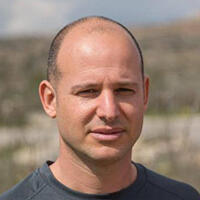
It was a combination of deception and surgical combat that led to the takeover of Bint Jbeil. The southern Lebanese town, once considered Hezbollah’s “capital” and the place where Hassan Nasrallah delivered his famous “spiderwebs” speech after the IDF withdrew from Lebanon in 2000, became a symbol of terror after the heroic battle fought there during the Second Lebanon War, in which eight soldiers from Golani’s 51st Battalion were killed.
In the current war as well, Bint Jbeil was full of Hezbollah terrorists. Among the forces of the 98th Division that encircled the town and eliminated the last terrorists inside it were fighters from the elite Egoz commando unit.
IDF destroys Hezbollah infrastructures in Bint Jbeil
(Video: IDF)


“We did three main things,” Egoz commander Lt. Col. M. said in a special interview with ynet. “The first action was a raid on terrorists who were in Randour Hospital in the town, which was a Hezbollah center of gravity. The second step was to isolate the northern area of Bint Jbeil, to make sure there would be no reinforcement or escape by terrorists. The third was to move on to another very significant center of gravity, in the village of Ainata, where we encountered many terrorists.”
In effect, Egoz fighters isolated the terrorists in the Bint Jbeil area and made it difficult for them to escape or receive any assistance from nearby concentrations of terrorists.
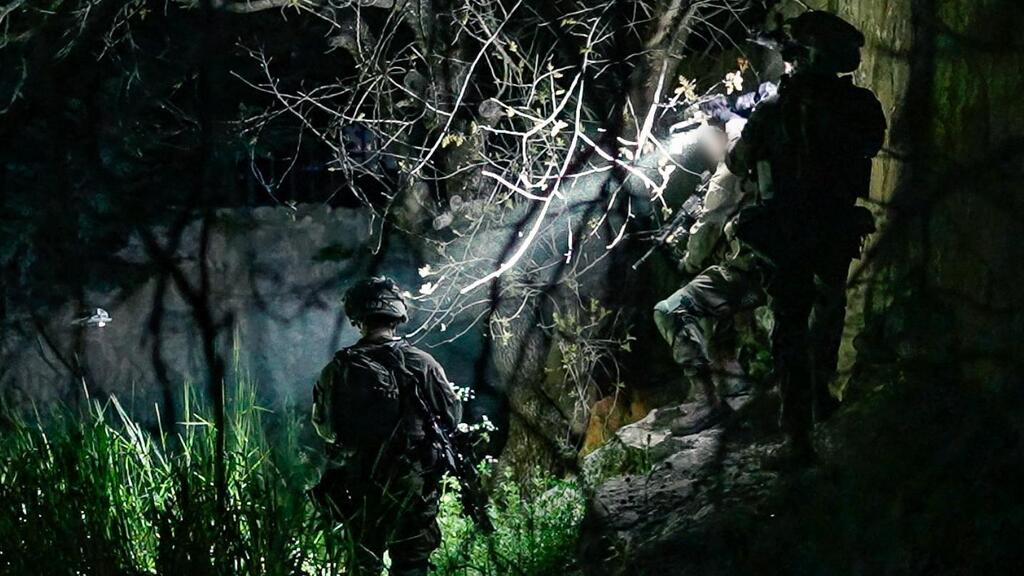
“The main mission in the places we went to was to destroy terror infrastructure and significantly neutralize those areas,” said Maj. M., a company commander in Egoz. “To turn the villages Hezbollah used into places they cannot return to. What we call the ‘ceiling-floor’ procedure.”
The activity includes the systematic destruction of buildings, shafts and underground areas, essentially flattening the ground. “Hezbollah turned the villages into forward posts and, under the cover of the civilians there, established command centers, weapons depots and staging areas for an invasion of northern communities,” Maj. M. said.
From the outside, it looked like an ordinary house
Even before the battle in which division troops entered Bint Jbeil and killed more than 100 Hezbollah terrorists, Egoz fighters had carried out commando operations deep inside enemy territory.
“Until the start of the maneuver with all the divisions, the unit entered the villages deep inside the area in order to break Hezbollah’s defensive lines,” Lt. Col. M. said. “We operated through raids and deep ambushes. We entered the area of the villages of Beit Lif and Yater for a 90-hour stay in the thicket. That was a dramatic element in preparing the conditions for the forces to enter.”
One such unique operation took place in the village of Deir Seryan, in the Marjayoun area.
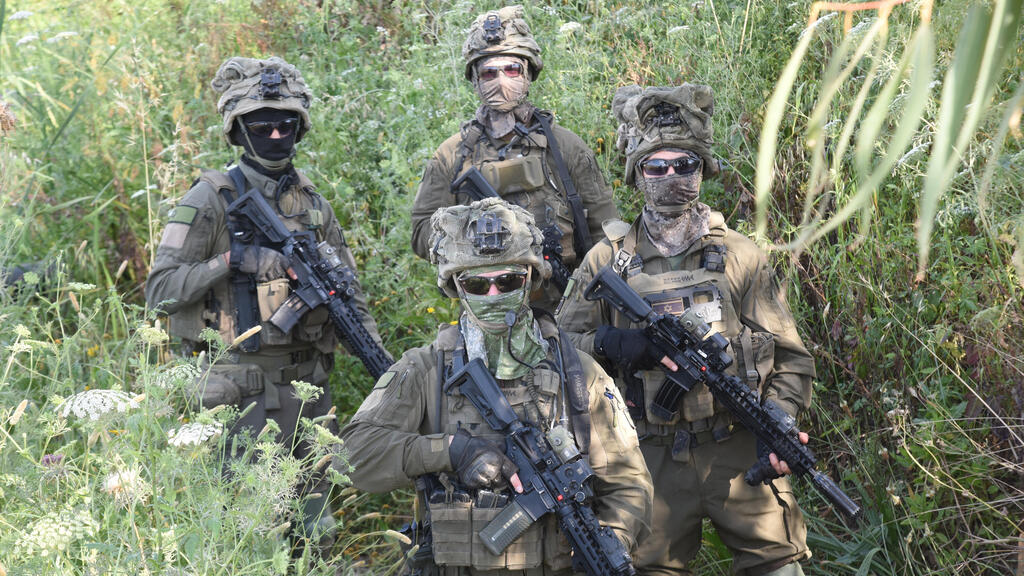
Egoz commandos
(Photo: Avihu Shapira)
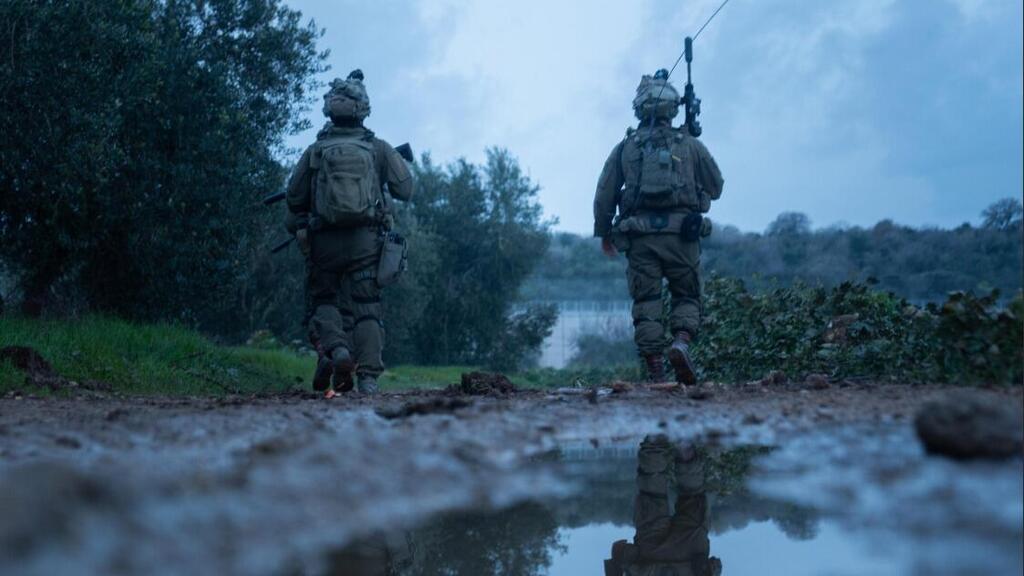
“We identified an increased deployment of Hezbollah terrorists who were reinforcing the Taybeh area from there, a main artery in managing the fighting that we intended to capture,” the unit commander said. “We decided to go and strike them there, in the village, to create a feeling among them that they could be penetrated. A small special force from the unit moved there at night, through the terrain. They moved on foot between orchards and houses, went down terraces and wadis, crossed about three kilometers and reached the terrorists from a direction they did not expect.”
“The terrorists were surprised by the move itself, when we suddenly met them face-to-face, in combat from just a few meters away,” he said. “They were in the courtyards of the houses and did not understand where we had come from. They did not hear tanks or planes. They felt very comfortable in the courtyards. We killed five terrorists in that operation. They were hit before they understood where it came from.”
As part of the tightening siege around Bint Jbeil, Egoz fighters identified a critical supply route, a path used by the terrorists to move operatives, explosives, missiles and motorcycles in order to reinforce and strengthen the fighting inside the town. In Egoz, they decided to turn that path into a “quiet cemetery.”
“We studied the area with drones and identified movement along the route,” Maj. M. recalled. “We set up a sniper ambush inside a house overlooking the path. We made sure to camouflage the house so that from the outside, no one could see there were barrels inside ready to fire. From the outside, it looked like an ordinary house, but inside sat a five-man sniper team of ours, locked onto the route from a distance of 650 meters.”
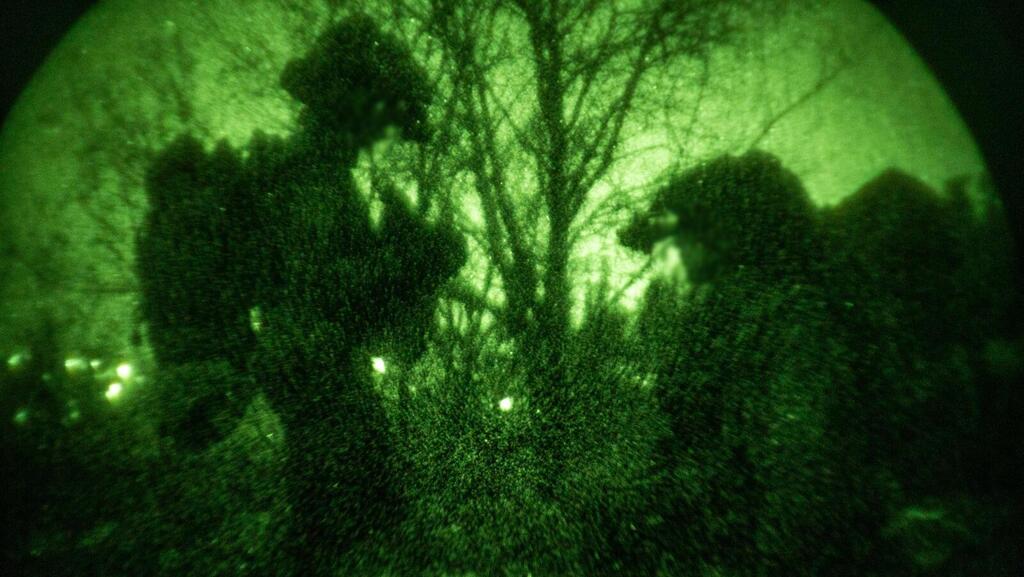
IDF commandos in Lebanon
(Photo: IDF)
On the second night in the house, the first identification came: a motorcycle carrying a terrorist wearing a vest and armed with a Kalashnikov.
Inside the room, one of the snipers could be heard counting: “600 meters and closing.” When the terrorist was within range, the sniper fired and scored a precise hit.
The next morning, two more terrorists emerged from the thicket and tried to cross the route on foot. “The snipers were alert and divided the targets,” Maj. M. said. “There were two snipers on each target. We counted down and fired simultaneously. Both terrorists fell. When we saw how many were trying to get there, we understood there was an entire terror ‘base’ in the area that had to be neutralized.”
(Photo: IDF)
The unit commander, Lt. Col. M., decided to raid the area. That was where Maj. N.’s company, known as “exposure-strike” and equipped with attack and reconnaissance drones, came in.
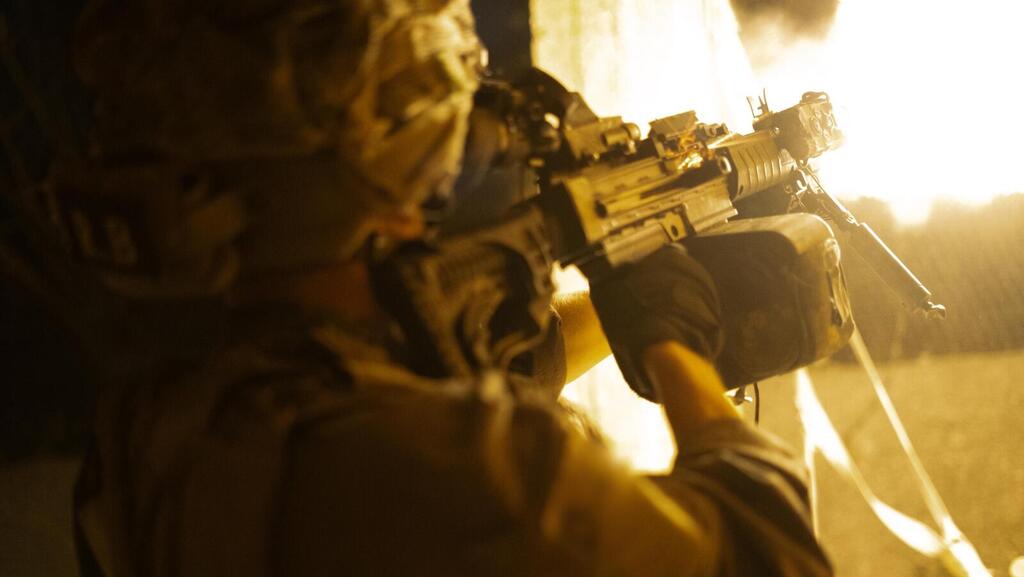
“We built a precise picture of the situation,” Maj. N. said. “Before entering, we created a ‘softening’ with tanks that fired in order to enable a smoother entry. The tanks identified movement at a distance of 400 meters, and I sent in two drones that dropped fragmentation grenades. When the terrorists did not move, we sent suicide drones into the houses. When we went inside to search, we found five dead terrorists.”
The terrorists asked for help
Maj. Y., another company commander in the unit, explained the significance of the move.
“This is a battle over the terrain. The question is how you use the wadis and forests against the terrorists,” he said. “At that point in time, control of the terrain was decisive. The terrorists were under siege, in a poor state of mind and with low motivation. Unlike in Gaza, where Hamas terrorists initiated fighting, here the terrorist is better equipped but waits. Unless you force contact, he won’t necessarily open fire.”
The pressure applied by Egoz fighters had an effect.
(Photo: IDF)
“At this stage, the terrorists barricaded themselves and asked their headquarters deep in Lebanon for help, but we controlled the access routes,” Maj. N. said. “That was the idea in order to defeat them. Bint Jbeil is a Hezbollah stronghold. You walk there and everywhere there are pictures of shahids and terrorists. This place fell because of deception.”
Looking ahead, the commanders understand the weight of the moment.
“In any situation, we will know how to provide solutions so the residents can live in quiet,” Maj. Y. said. “What we did here, using the ‘ceiling-floor’ method, will make it very difficult to return here.”
“Our goal,” Maj. N. added, “is to create a reality that pushes the next war farther away and allows the residents of the north to live without fear.”
The unit commander, Lt. Col. M., was even more emphatic.
“There will be no reality in which a threat develops against the residents of the north, not a small one and not a large one,” he said. “We will be there with full force, and I am confident that will also be the case in the future, under any conditions set by the political echelon.”