

U.S. President Donald Trump is unhappy with Iran’s three-stage proposal, which is supposed to begin with the opening of the Strait of Hormuz and the lifting of the American blockade, several U.S. media outlets reported overnight Monday into Tuesday. According to CNN, citing sources, Trump expressed his view during a meeting Monday with senior national security officials and is not expected to agree to the proposal.
“Reopening the strait without resolving questions over Iran’s nuclear enrichment or stockpile of near-bomb-grade uranium could remove a key piece of American leverage in the talks,” U.S. officials told CNN. Still, it is unclear what the president’s next steps will be. The officials said they were concerned about what they described as disagreements within the administration and said it was unclear who was making decisions. The New York Times reported that the issue has led Iran’s leadership to avoid giving its negotiators a real mandate to agree to nuclear concessions.
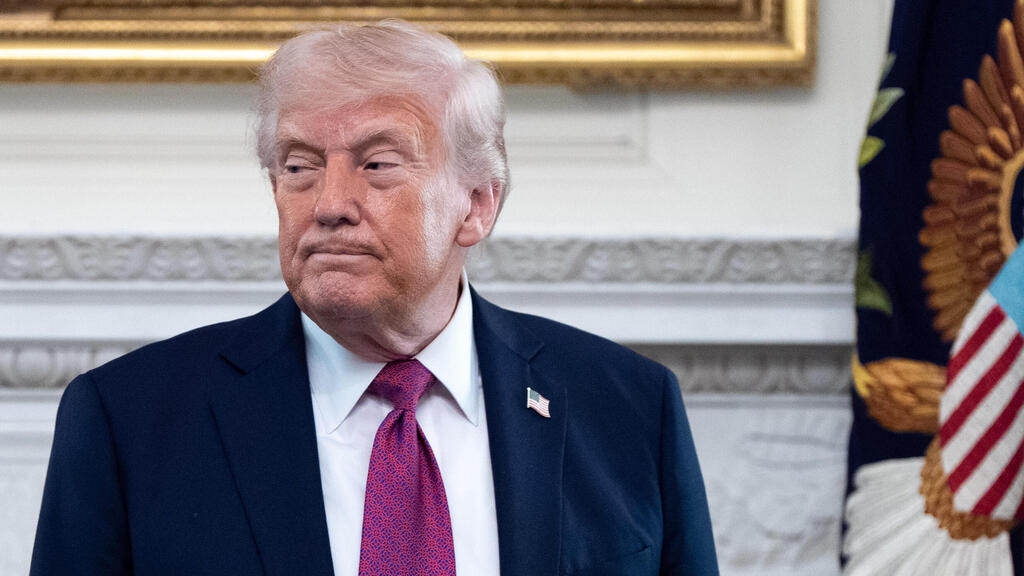
Trump, however, has sounded somewhat skeptical about returning to airstrikes, a move he postponed when he extended the ceasefire last week. The U.S. president had threatened to bomb all power plants and bridges in Iran, and at the height of the war even warned of “the erasure of an entire civilization.” Since then, however, he has sounded less and less supportive of renewed fighting.
U.S. officials told The New York Times that some in the administration believe continuing the naval blockade for another two months could cause long-term damage to Iran’s energy industry. They said oil wells cannot simply be “turned on and off,” and that a forced shutdown of the wells would exact a heavy price from Iran, which would want to reach an agreement to avoid long-term harm.
However, according to the report, some officials in the administration argue that this assessment is flawed, pointing as evidence to Iran’s hardening positions in the negotiations, as it has repeatedly rejected U.S. proposals to halt its nuclear program and hand over its stockpile of enriched uranium. Officials briefed on Trump’s discussions said the Iranian proposal sparked a heated debate within the administration over which side has more leverage in the talks and which country is better positioned to withstand the economic consequences.
Rubio on Hormuz: We will not let Iran normalize control over the strait
(Video: From Fox News’ X page)


The U.S. military, for its part, continues to enforce the blockade on Iran and in the past day released a photo from Sunday showing the destroyer USS Rafael Peralta preventing a tanker from reaching an Iranian port. The tanker, the M/T Stream, is carrying oil and, according to tracking websites, has not transmitted for 14 days. New satellite images from Soar were also published in the U.S., showing destruction at a missile base near the city of Karaj, close to Tehran.
Secretary of State Marco Rubio said Monday in an interview with Fox News that when Iran speaks of “opening” the Strait of Hormuz, it means doing so under the sovereignty it has claimed over the international shipping lane since the start of the war, including demands for payment from ships.
Rubio said Iran’s idea of “opening the strait” means allowing passage only with Tehran’s coordination and permission, while threatening ships that do not comply and demanding payment. He said that does not amount to opening the strait, which is an international shipping lane, and that the U.S. cannot accept Iran’s attempt to normalize control over who uses it and how much they pay.
Despite the disputes, Rubio said Iran is serious about wanting to reach an agreement. He said Tehran is trying to get out of its current predicament, noting that its prewar problems remain and have mostly worsened, including inflation, drought, difficulty paying salaries, a frozen economy and crippling global sanctions.
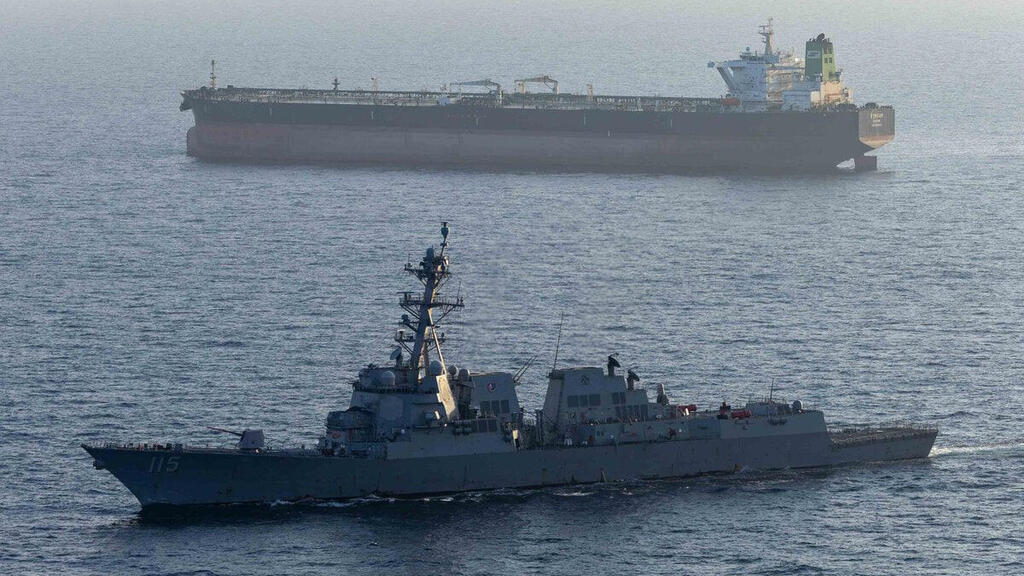
The USS Rafael Peralta facing the Iranian oil tanker; the blockade continues
(Photo: CENTCOM)
Rubio said those problems remain and many have worsened, while Iran now has fewer missiles, no factories and no navy or air force. He said Iran is weaker and trying to buy time, warning that any deal must fully prevent a nuclear breakout. Asked what comes next if no deal is reached, Rubio said it depends on the president.
Iranian opposition: Tehran fears possible ‘unrest’ soon
The news site Iran International, which is affiliated with the Iranian opposition and operates from London, reported Monday on growing concern among the leadership of the Islamic Republic over a renewed wave of protests in the country. The report was based on “sources familiar with the discussions,” who said the Supreme National Security Council convened following internal assessments and intelligence reports warning of “unrest in the coming days.”
According to the report, Iranian officials believe the economic strain caused by rising prices, unemployment and damage to key industries as a result of the war with the U.S. and Israel could serve as the main trigger for renewed protests. During the meeting, assessments were presented indicating that Iran’s economy would not be able to withstand six to eight weeks of a naval blockade. The U.S. blockade, it should be noted, began more than two weeks ago, on April 13.
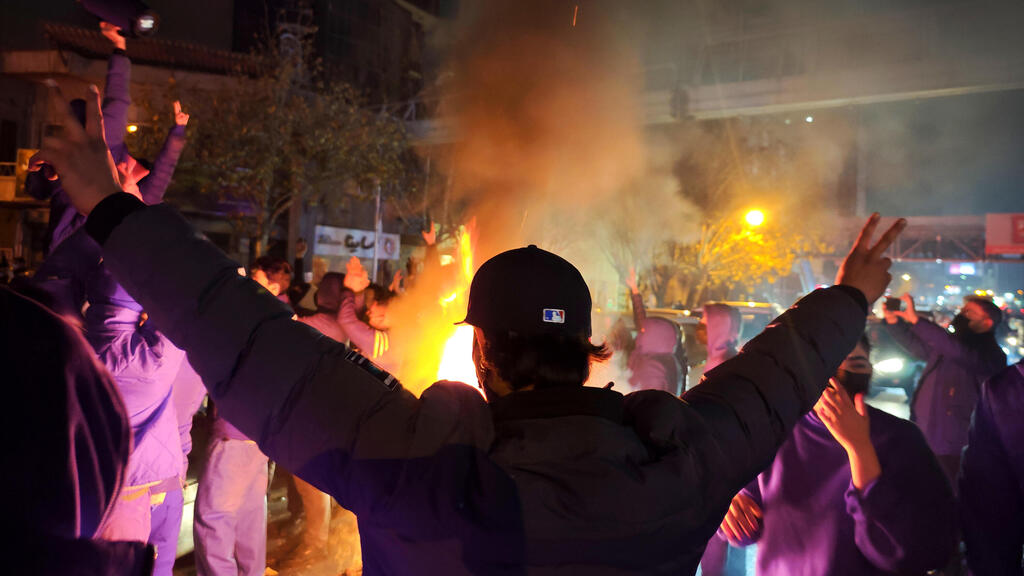
Fear that the economic burden will ignite protests; a previous wave of protests in Iran
(Photo: Anonymous/Getty Images)
In Iran’s leading economic newspaper, Donya-e Eqtesad, a grim forecast was published in recent days predicting that inflation would jump by 49% even in the “most optimistic scenario” of reaching an agreement with the U.S. According to the newspaper, a state of “neither war nor peace” — meaning a continued blockade without an agreement — could send inflation in the Islamic Republic soaring by nearly 70% in the coming months. A return to war would make the situation far worse, with hyperinflation of more than 120%.
Another concern raised, according to the Iran International report, is the complete shutdown of production centers, including oil, petrochemicals and steel. Security officials told the opposition website that the digital blackout being enforced in Iran is also having an economic impact, since about 20% of the workforce depends on online activity. The same officials warned that an additional 2 million workers could lose their jobs.
During the same meeting of the Supreme National Security Council, representatives of security bodies reportedly expressed specific concern that exiled Crown Prince Reza Pahlavi would call for renewed protests. According to the sources, security bodies said public protests were inevitable and that the only remaining question was timing. Those present at the meeting were said to be particularly concerned about May 1, International Workers’ Day.
According to the sources, Iranian officials believe protests taking place while negotiations with the United States are ongoing could pose a real risk to the Islamic Republic.