


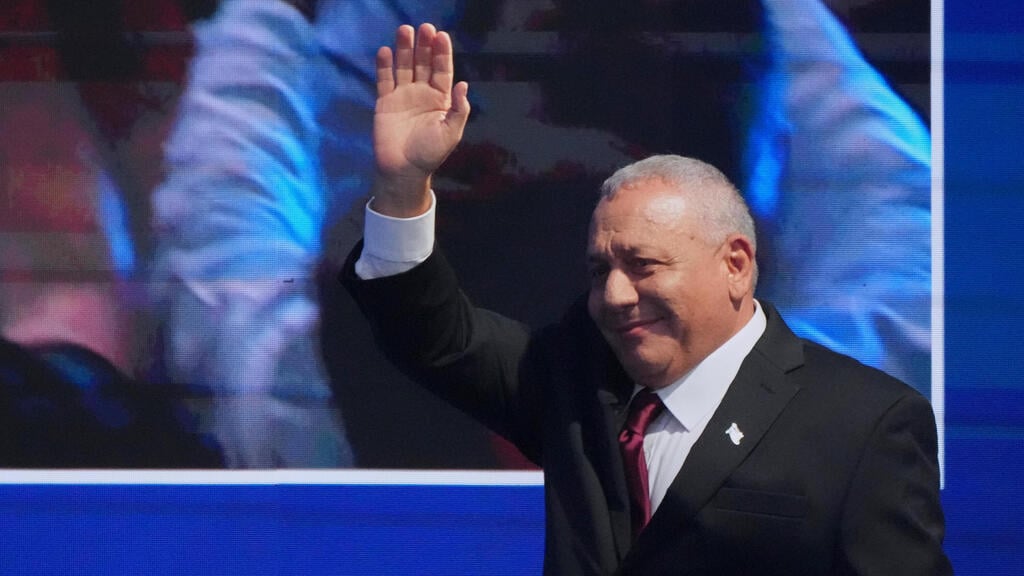
Gadi Eisenkot, leader of the Yashar! party, has authorized an examination of a plan to form Israel's next government with outside backing from the Arab Ra'am party and the ultra-Orthodox United Torah Judaism party, sources told ynet. Under the proposal, the parties would help Eisenkot replace Prime Minister Benjamin Netanyahu by abstaining from a crucial parliamentary vote, allowing his government to take office without formally joining the coalition.
The unusual arrangement would depend on cooperation between parties with sharply different political positions. The ultra-Orthodox United Torah Judaism party and Arab lawmakers would effectively allow Eisenkot to establish a government by choosing not to vote against him. One lawmaker from the Arab Ra'am party, Yoav Segalovitz, would vote in favor, while the remaining Ra'am lawmakers and the Joint List would refrain from opposing the government in the initial vote. Unlike Ra'am and United Torah Judaism, however, the Joint List would not be part of the proposed arrangement to keep the government in power afterward.
The plan hinges on a feature of Israel's parliamentary system: a new government does not necessarily need the support of 61 lawmakers, an absolute majority in the 120-seat Knesset, to take office. It needs more votes in favor than against. If enough lawmakers abstain, they can allow a government to be formed without joining it or formally endorsing its policies.
Under the proposed scenario, Eisenkot's bloc of 48 lawmakers would gain Segalovitz's vote, giving it 49 supporters against 46 lawmakers from Netanyahu's bloc. The remaining 25 lawmakers would abstain, including United Torah Judaism's seven representatives, the other seven Ra'am lawmakers and the Joint List's 11. The result would be a minority government dependent on continued outside support from Ra'am and United Torah Judaism, rather than the Joint List.
The Joint List's abstention would be necessary for that initial vote, but its continuing support would not be required under the proposed arrangement. Instead, Eisenkot's associates are examining whether Ra'am and United Torah Judaism could provide an ongoing parliamentary safety net, allowing the government to remain in office without formally joining the coalition.
Joint List lawmaker Ahmad Tibi has already indicated that his party would not oppose the formation of an alternative government, saying its priority is removing Netanyahu from power. That position could help Eisenkot clear the first parliamentary hurdle without having to secure a formal agreement with the Joint List. The plan to sustain the government, however, rests on cooperation with Ra'am and United Torah Judaism.
Liberman and the ultra-Orthodox draft dispute
The plan faces significant obstacles, beginning with Avigdor Liberman, chairman of the secular nationalist Yisrael Beiteinu party and a key member of Eisenkot's political bloc. Following the election, Liberman declared that he would not agree to establish a government dependent on Arab or ultra-Orthodox parties, "either directly or indirectly." His opposition poses a major challenge because the proposal would require precisely the kind of outside parliamentary cooperation he has ruled out.

United Torah Judaism leader Yaakov Asher
(Photo: Tal Shahar)
Another major obstacle involves United Torah Judaism and the issue of compulsory military service for ultra-Orthodox yeshiva students. Eisenkot's associates want to examine whether the party would agree to allow a new government to take office without opposing it, providing temporary outside support until legislation regulating military exemptions is passed. United Torah Judaism could then potentially join the government at a later stage.
However, the possibility of such an agreement remains uncertain. Military conscription is among the ultra-Orthodox party's most pressing demands, and its leaders want legislation providing broad exemptions for religious students. Eisenkot, meanwhile, is unwilling to accept a lenient law that would allow widespread avoidance of military service, making compromise difficult.
The Arab parties would also have demands of their own. Ra'am chairman Mansour Abbas wants his party represented in the coalition, even if Segalovitz is the only Ra'am lawmaker to join the government. Reaching an agreement with Ra'am would therefore involve more than securing abstentions during the initial vote.
The Joint List has also sought concrete achievements for Israel's Arab community, as Tibi has stated. However, the proposed arrangement does not depend on negotiating continuing parliamentary support from the Joint List, a significant distinction given the reluctance among parties in Eisenkot's bloc to enter direct negotiations with its representatives.
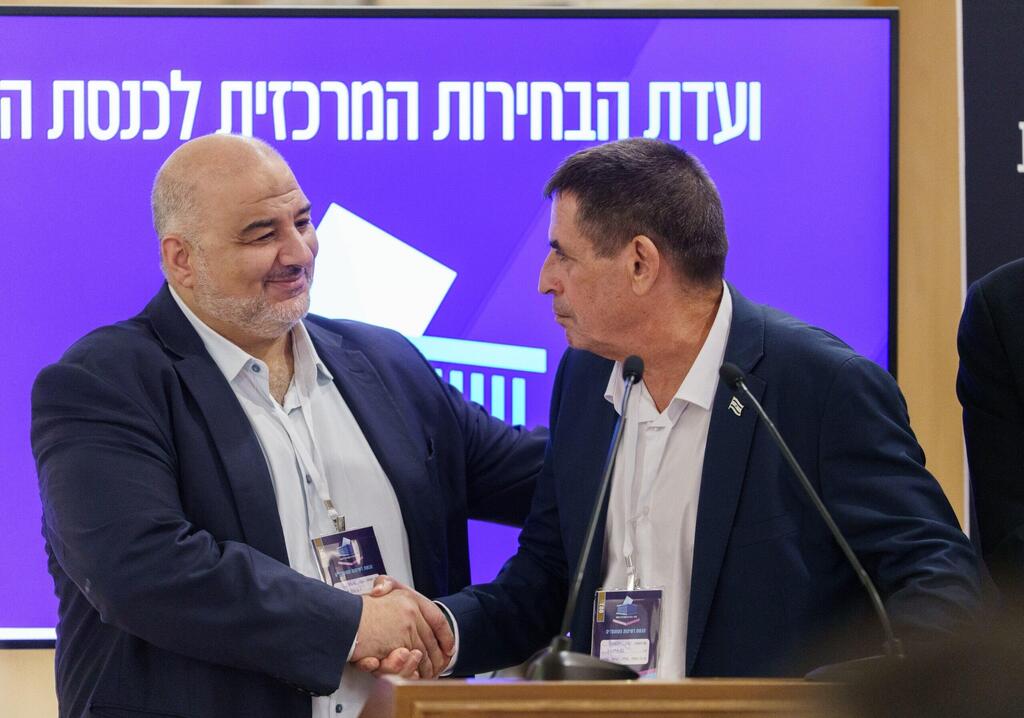
Ra'am leader Mansour Abbas and Yoav Segalovitz
(צילום: שלו שלום)
The proposal is only one of several options being examined by Eisenkot and his allies as they search for a way to replace Netanyahu following the inconclusive election. It could also serve as leverage in negotiations with the prime minister over a possible national unity government, although that option faces considerable opposition within the bloc seeking to oust him.
Meanwhile, Eisenkot's political allies have yet to agree on a candidate to replace Amir Ohana as Knesset speaker, the official who presides over parliament. Eisenkot insists that the position should go to a member of his Yashar! faction, while Liberman wants the job for Yisrael Beiteinu lawmaker Oded Forer.
In response to the report, Yashar! said: "We are working with tremendous commitment to fulfill the voters' desire to replace the government responsible for the failures. At this stage, we will not comment on what takes place behind closed doors. The various reports were not issued with our approval and do not necessarily reflect the reality as it stands."
For now, the arrangement remains one possibility rather than an agreed coalition plan. While the Joint List's abstention would be needed to get the government sworn in, the longer-term proposal depends on securing cooperation from Ra'am and United Torah Judaism, while overcoming Liberman's opposition and fundamental disagreements over military conscription.