

Mor Shamli, 35, the widow of Alon Shamli, who was murdered before her eyes in Egypt on October 8, 2023, became the fifth victim of the shooting attack Friday, after dying following more than three years of psychological anguish.
The shooting took place in Alexandria one day after the Hamas massacre of October 7, as Israelis were still struggling to comprehend the scale of the atrocities and eliminate the remaining terrorists in communities near the Gaza Strip. An Egyptian police officer opened fire with his weapon at a group of Israeli tourists near Pompey's Pillar, a Roman triumphal column considered one of the best-known tourist attractions in Alexandria, Egypt's second-largest city.
Gallery
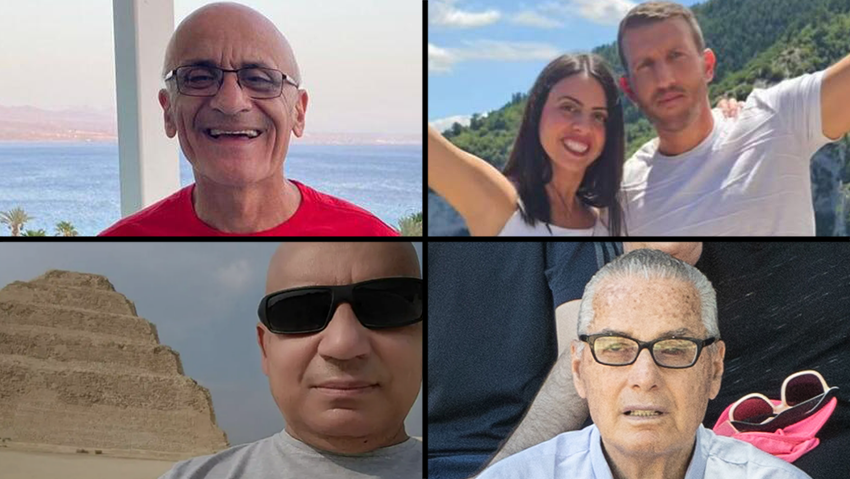
(The killer has not stood trial. Clockwise from top right: Alon and Mor Shamli, Amnon Bezalel, Hagai Efrat and Sayed Kamel al-Khawalqa )
Alon Shamli and Amnon Bezalel were pronounced dead at the scene, while Hagai Efrat died of his wounds about 10 days later. Egyptian tour guide Sayed Kamel al-Khawalqa was also killed in the attack. Alon's widow later said: "My life ended there in Egypt on October 8, 2023, when they murdered us. The bullet that struck Alon's heart struck mine too."
Alon Shamli, who was 34 when he was killed, coached a youth team at Hapoel Tel Aviv soccer club. He also worked as a physical education teacher at Rishonim School in Bat Yam. Following his death, Hapoel Tel Aviv said Alon "was highly regarded in the youth department. His players said he always devoted himself to them and pushed them to improve."
Amnon Bezalel, 64, of Bat Yam, served in the Israel Police for about 40 years. He was known as a diligent and respected officer and spent much of his career with the Holon police. His final position was technology coordinator in the Ayalon police region.
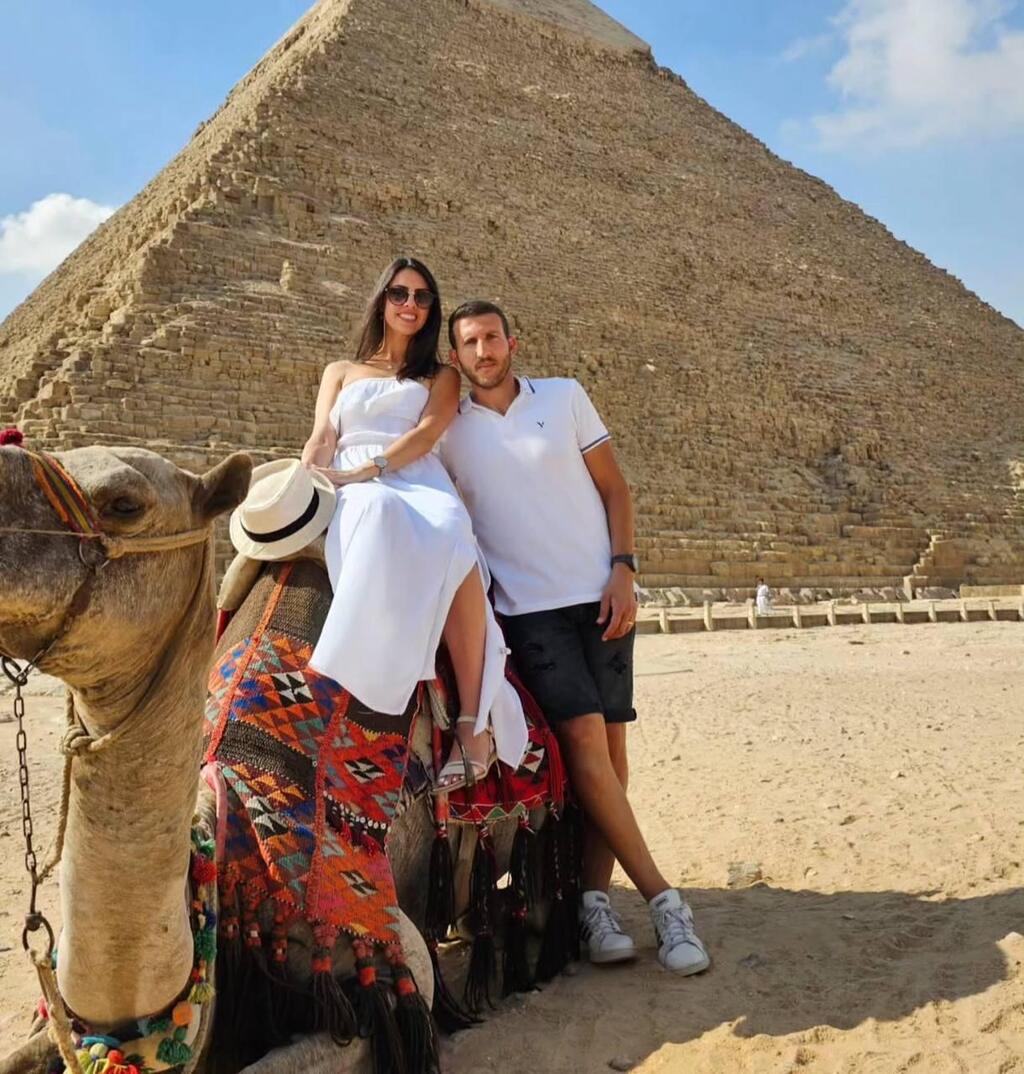
Mor and Alon Shamli during their trip to Egypt
(Photo: Instagram)
Hagai Efrat, 83, of Rishon LeZion, whose death was confirmed about 10 days after the attack, played soccer for Hapoel Haifa in his youth and managed Hapoel Jerusalem's soccer club during the 1970s and 1980s.
Friends of Egyptian tour guide Sayed Kamel al-Khawalqa said he was highly educated and possessed extensive knowledge, which helped him in his work as a tour guide. According to Egyptian media reports, he was also accompanying another group of tourists on the day of the attack and was caught in the gunman's line of fire.
But the attack, which received relatively little attention because it occurred so soon after the October 7 massacre, had another victim: Mor Shamli, who never recovered from what happened. In January, she announced to her Instagram followers that she intended to end her life through medically assisted suicide in Switzerland.
The announcement sparked a wave of false rumors that the procedure had already taken place and that she had died. In Instagram Stories posted that month, she explained the painful decision she had made and the feelings that had accompanied her since the attack, which occurred just one day after the massacre in Israeli communities near the Gaza Strip.

The scene of the terror attack in Alexandria, Egypt
"The pain is unbearable. You wouldn't believe how many tears the heart and eyes can produce," she wrote in January. "I am not alive, but not entirely dead either. I exist as though I am floating above life. Here, but not here. I am sorry that I am hurting everyone, that the suffering is being passed on to you. There are no words that can express how sorry I am. I hope you can understand and forgive me. I wish that every day of your lives could be like the life Alon and I shared together, full of love and happiness. Please try to remember me as I was before that terrible day. And do not hold anger in your hearts. Now I am no longer suffering. Now I am happy and at peace."
Mor's parents, Ilan and Shoshi Cohen, said Friday evening in grief: "Mor was murdered along with Alon in Egypt. She continued living, but she could not bear the pain and the loss of her husband, Alon. She had no desire to live. She was simply living but dead, until today, when she is no longer with us."
Three years without justice
The shooter's name has never been officially released, although several Arabic-language reports identified him as Mohammed Abdel-Magid. Since the October 7 massacre and the war that followed, diplomatic relations with Egypt have deteriorated significantly. Israel has no ambassador stationed in the country, and Israeli diplomats travel to Cairo from time to time for several days but are not permanently based there.
Egyptian President Abdel Fattah el-Sisi refuses to meet with Prime Minister Benjamin Netanyahu. Recently, reports emerged that three Israelis, Ahmed al-Dougi, Bilal Salem Abu Aish and Bilal Masoudin, were taken into Egyptian intelligence vehicles in Sharm el-Sheikh and disappeared. Their whereabouts remain unknown.
Against the backdrop of the current diplomatic climate with Egypt, which has hardly distinguished itself by holding accountable terrorists who leave its territory to carry out attacks in Israel, justice has still not been served for those murdered, even three years after the attack. Reports about the gunman are almost impossible to find, and he has yet to stand trial for his actions.
In an interview this past July with Kan's Reshet Bet radio station, Mor Shamli said: "So much time has passed, and every time they give me different answers. The bottom line is that there are no answers. The killer who was caught that day still hasn't been punished. At first, I was told he was awaiting sentencing. Now I've been told his trial will only take place in another three months. It really feels like they're making a mockery of us."
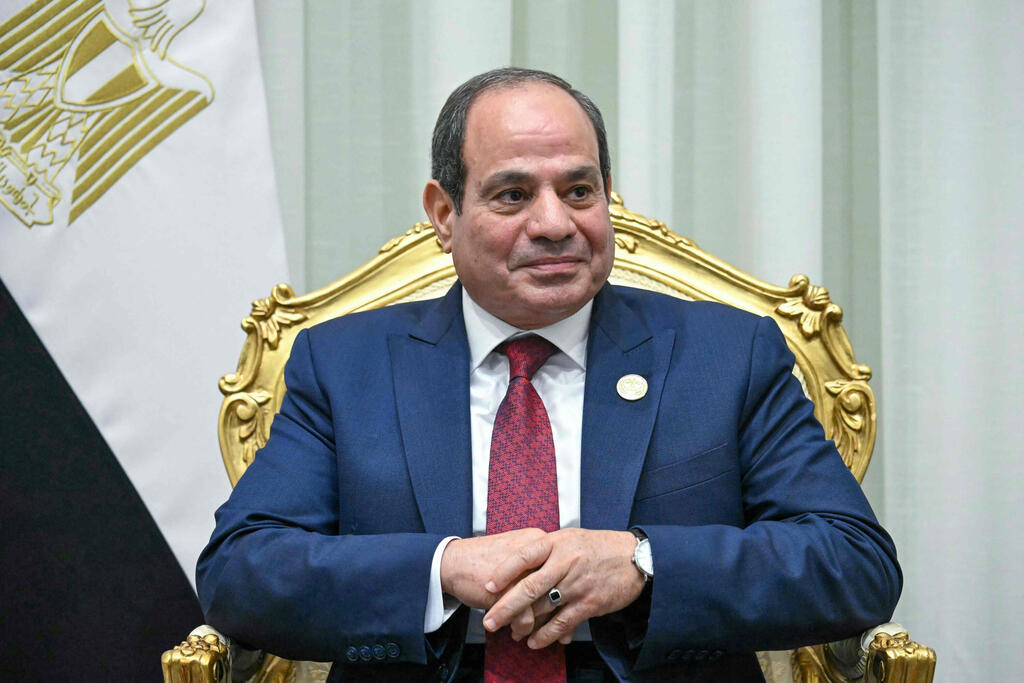
Refuses to meet Netanyahu. Egyptian President Abdel Fattah el-Sisi
(Photo: SAUL LOEB / AFP)
Mor also described her struggle to retrieve Alon's clothes from Egypt. "I kept asking, and at first the Foreign Ministry told me: 'Listen, this takes time.' Then they told me: 'Too much time has passed. They no longer have them. They've already thrown them away.' The Foreign Ministry is basically telling me: 'We're just passing along the Egyptians' answers.' As if they're merely a go-between for me and the Egyptians."
Doubts that the attacker will ever face justice are further heightened by Arabic-language reports published after the shooting that avoided describing it as a terror attack. Al Jazeera, for example, claimed a day after the killings that the shooting had been preceded by "provocations" by the Israeli tourists, who supposedly "insisted on taking photographs with an Israeli flag."
According to the unsupported account, the police officer asked the Israelis to stop, an argument developed and he eventually opened fire. Israelis who were present at the scene categorically denied the allegations, saying they had actually tried to avoid drawing attention to their Israeli nationality, particularly in light of the October 7 massacre the previous day.
Several months before the Alexandria attack, another deadly attack occurred along the Israel-Egypt border, also carried out by an Egyptian police officer. On June 3, 2023, Egyptian security officer Mohammed Salah infiltrated Israel and killed Staff Sgt. Ori Yitzhak Ilouz and Sgt. Lia Ben-Nun, both serving in the Bardelas Battalion, at a guard post. Later, during searches and an exchange of fire inside Israeli territory, a third soldier, Staff Sgt. Ohad Dahan of the Caracal Battalion, was killed. The terrorist was subsequently shot dead.