


Israel is facing two significant foreign policy setbacks following election results in Brazil and Serbia, where political figures regarded as close allies of Jerusalem suffered defeats over the weekend. While the outcome in Brazil has dashed hopes of ending a prolonged diplomatic crisis, the political upheaval in Serbia raises more immediate questions about Israel's defense cooperation with one of its most important European military partners.
In Brazil, President Luiz Inácio Lula da Silva secured another term after defeating Senator Flávio Bolsonaro, the son of former President Jair Bolsonaro. In Serbia, former President Aleksandar Vučić conceded defeat in parliamentary elections to a student-led movement that emerged from nearly two years of anti-government protests.
Lula celebrates his reelection with supporters in Brazil


For Jerusalem, the results have created the impression of a diplomatic gamble that failed. Both politicians had cultivated close relationships with Israel, but their defeats carry different consequences. Brazil represents a missed opportunity to restore diplomatic relations, while Serbia poses a potential challenge to an established strategic partnership involving weapons supplies, defense technology and military cooperation.
Neither election result automatically means that existing agreements will be canceled or diplomatic relations will deteriorate further. However, both demonstrate how quickly Israel's international relationships can become uncertain when they depend heavily on individual leaders.
Brazil: Hopes of moving the embassy to Jerusalem collapse
In Brazil, the disappointment is primarily about the diplomatic opportunity Israel has lost rather than fears of a dramatic new deterioration in relations.
Flávio Bolsonaro had promised to reverse the policies of the Lula administration, deepen Brazil's military and diplomatic cooperation with Israel and move the Brazilian Embassy from Tel Aviv to Jerusalem.
He had also pledged to receive the credentials of a new Israeli ambassador on his first day in office, signaling his intention to restore diplomatic representation between the countries.
His defeat means those promises will not be implemented under his proposed administration, leaving Israel facing another presidential term under Lula, whose relationship with Prime Minister Benjamin Netanyahu has been openly hostile.
Gallery
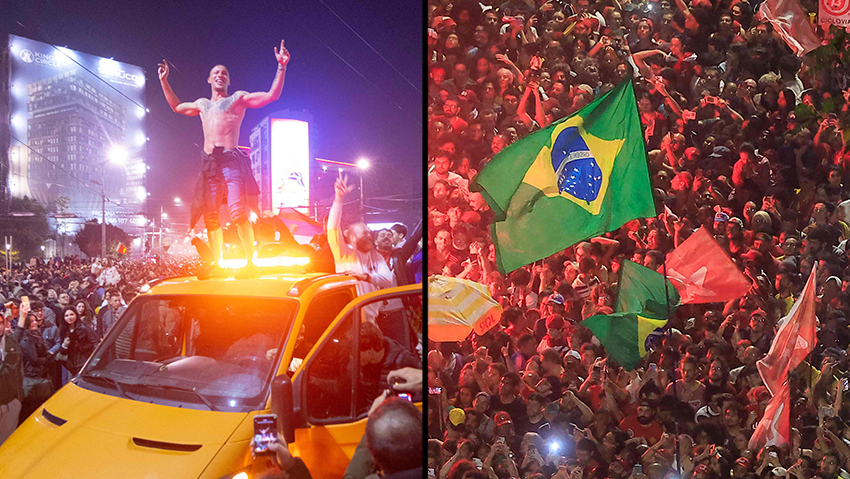
Celebrations in Serbia and Brazil following the electoral defeats of Flávio Bolsonaro and Aleksandar Vučić
(Photo: Milos Milanovic/AFP; Miguel Schincariol/AFP)
Relations between Israel and Brazil are already at a historic low. Israel declared Lula persona non grata following his remarks comparing the war in Gaza to the Holocaust and likening the conduct of Israeli soldiers to that of the Nazis.
Neither country currently has an ambassador serving in the other's capital, reflecting the depth of the diplomatic breakdown.
Netanyahu had openly supported the possibility of a change in Brazil's leadership. Following the first round of voting, he congratulated Bolsonaro on his electoral performance and wished him success in the runoff.
The prime minister is not expected to telephone Lula to congratulate him on his victory. The two leaders remain completely estranged, and Netanyahu's public support for Bolsonaro has only deepened the divide.
Bolsonaro's defeat therefore closes off, at least for now, the possibility of a rapid diplomatic reset involving restored ambassadors, closer defense cooperation and a Brazilian Embassy in Jerusalem.
For Israel, the immediate consequence is not the loss of an existing close partnership, but the disappearance of an opportunity to rebuild one.
Serbia: The more serious challenge to Israel's defense interests
The consequences of the Serbian election could be more substantial because the relationship between Jerusalem and Belgrade has already developed into a strategic partnership.
Under Vučić, Serbia became an important defense partner for Israel, particularly during the war against Hamas and Hezbollah.
As several countries imposed restrictions or embargoes on weapons exports to Israel, Serbia continued supplying military equipment and munitions.
Serbian deliveries increased dramatically during the fighting, with an extensive airlift helping Israel replenish stocks depleted by the IDF's heavy consumption of explosives, artillery shells, missiles, bombs and interceptors.
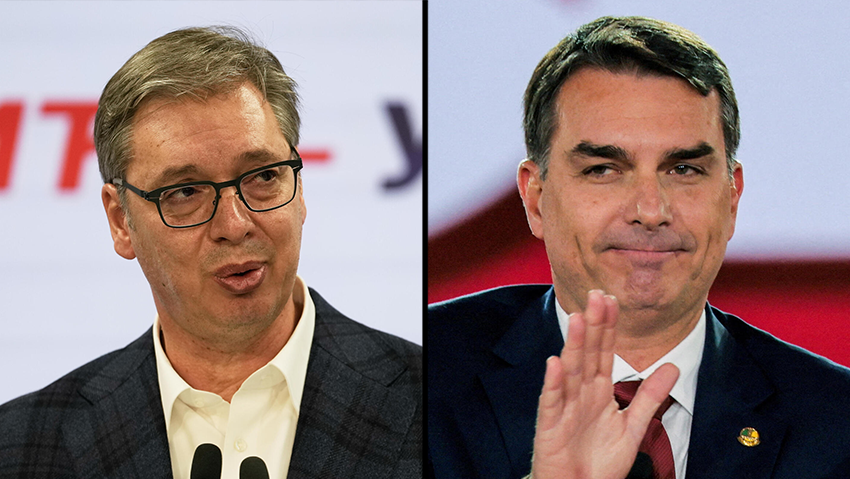
Former Serbian President Aleksandar Vučić and Brazilian presidential candidate Flávio Bolsonaro both defeated in weekend elections
(Photo: Reuters/Daniel Cole/File Photo; AP/Darko Vojinovic)
This cooperation took on additional significance in September, when Serbia inaugurated a factory to assemble Israeli-made drones in partnership with Israeli defense company Elbit Systems.
The facility marked a further expansion of military-industrial ties between the countries, moving their relationship beyond weapons purchases and shipments toward joint defense production.
Vučić had cultivated a close relationship with Israel, making Serbia an important partner at a time when other European countries were increasingly critical of Israeli military operations.
His electoral defeat now raises questions about whether the new Serbian leadership will maintain that same level of cooperation.
The incoming student-backed political movement has not yet established a clear position toward Israel. Existing defense contracts are not automatically canceled because of a change in government, and there is no indication that the new leadership has decided to terminate them.
Nevertheless, Israel will have to assess whether the political relationship that supported those agreements can survive without Vučić.
Another consideration is Serbia's relationship with the European Union. European Commission President Ursula von der Leyen has already welcomed the student movement's electoral victory and expressed the EU's willingness to support democratic reforms and Serbia's accession process.
Closer integration with European institutions could potentially bring Belgrade under greater pressure to align itself with European positions on the Israeli-Palestinian conflict.
Such a shift is not inevitable, particularly given the uncertainty surrounding the incoming government's foreign policy. But it creates a potential challenge for a bilateral relationship that has been unusually close.
For Jerusalem, the central concern is therefore not simply the departure of a friendly politician, but whether Serbia will continue serving as a dependable source of military equipment and a partner in Israeli defense manufacturing.
A wider problem for Netanyahu's foreign policy
Taken together, the election results highlight a vulnerability in the way Netanyahu has built many of Israel's international relationships.
His foreign policy has frequently relied on personal and ideological connections with individual leaders rather than broader, institutional relationships between states.
As long as those leaders remain in power, the ties can appear exceptionally strong. But when they lose elections, some of the political foundations supporting those relationships can weaken along with them.
The same challenge extends beyond Brazil and Serbia. It has implications for Israel's relationships with European countries and the United States, where changes of government can alter policies even when strategic interests remain unchanged.
The electoral defeats do not necessarily establish a broader international trend against Israel.
In Latin America, Lula's victory runs counter to the gains made by several right-wing politicians associated with U.S. President Donald Trump, including in Colombia.
The reasons for the results also appear overwhelmingly domestic.
In Serbia, the election followed nearly two years of protests against Vučić's rule. In Brazil, the presidential contest was decided by voters divided between two political camps of roughly comparable size.
Israel was not a central issue in either campaign, and the outcomes should not be interpreted as evidence of changing public attitudes toward Israel in those countries.
Nevertheless, the results underscore the strategic importance of building institutional alliances that can withstand changes in political leadership.
Lapid attacks Netanyahu, Saar responds: ‘Turning your back on friends of Israel’
The developments have also become part of Israel's domestic political debate, with Tuesday's Knesset election just hours away.
Opposition leader Yair Lapid used the defeats of Bolsonaro and Vučić to criticize Netanyahu's relationships with foreign leaders.
"Another two people close to Netanyahu lost elections last night because of high voter turnout and national pride among people who refused to accept dictates from abroad," Lapid wrote Monday morning.
"Tomorrow, the people of Israel will begin the process of putting things right, returning Israel to a path of hope and success."
Lapid subsequently clarified that he did not welcome Lula's victory.
"And let me be clear: I am very unhappy about Lula's victory. I always support the pro-Israel candidate. That is the most important criterion," he wrote.
"But today, being close to Netanyahu is a political liability everywhere in the world. In Israel too."
Foreign Minister Gideon Saar responded with a sharp attack on Lapid, accusing him of belittling politicians who have supported Israel.
"For the good-for-nothing Lapid, two great friends of Israel, such as Serbian President Vučić and Brazilian presidential candidate Flávio Bolsonaro, are simply 'two Netanyahu associates,'" Saar wrote.
"Turning your back on Israel's friends and currying favor with those who act against it is contemptible and a moral low, even before considering the level of foreign policy thinking on display."
He concluded with a warning directed at voters: "Anyone with any sense should stay away from the clowns' ballot paper at the polling station."
The exchange reflects competing interpretations of the election results. Netanyahu's opponents may point to the defeats as evidence of weaknesses in his foreign policy, while his supporters can argue that the outcomes demonstrate the risks posed by the rise of governments more critical of Israel.
However, the foreign election results are unlikely to become a decisive issue for Israeli voters, who face a wide range of more immediate domestic and security concerns.
Can Israel rebuild its alliances elsewhere?
Despite the setbacks in Brazil and Serbia, Israel may still see opportunities to develop closer relationships with other governments in the coming years.
In France, Marine Le Pen has been leading in several polls ahead of the next presidential election, while in Spain, recent surveys have placed right-wing opposition parties ahead of Prime Minister Pedro Sánchez's governing party.
Both political environments could offer potential openings for Israel if future governments adopt more favorable diplomatic positions, although election outcomes and subsequent policies remain uncertain.
But the immediate lesson from Brazil and Serbia is not about which political camp may prevail in the next election.
In Brazil, Israel has lost the prospect of a rapid normalization of diplomatic relations and a symbolic embassy move to Jerusalem. In Serbia, a proven defense relationship now faces a period of political uncertainty.
The two setbacks differ in scale and practical consequences, but they point to the same strategic challenge: Friendly leaders can help build important partnerships, yet the durability of those partnerships ultimately depends on whether they can survive the leaders themselves.