

Andy Burnham formally became Britain’s new prime minister on Monday, replacing Keir Starmer after a Labour Party revolt and entering Downing Street with promises of sweeping economic change and a tougher approach toward Israel.
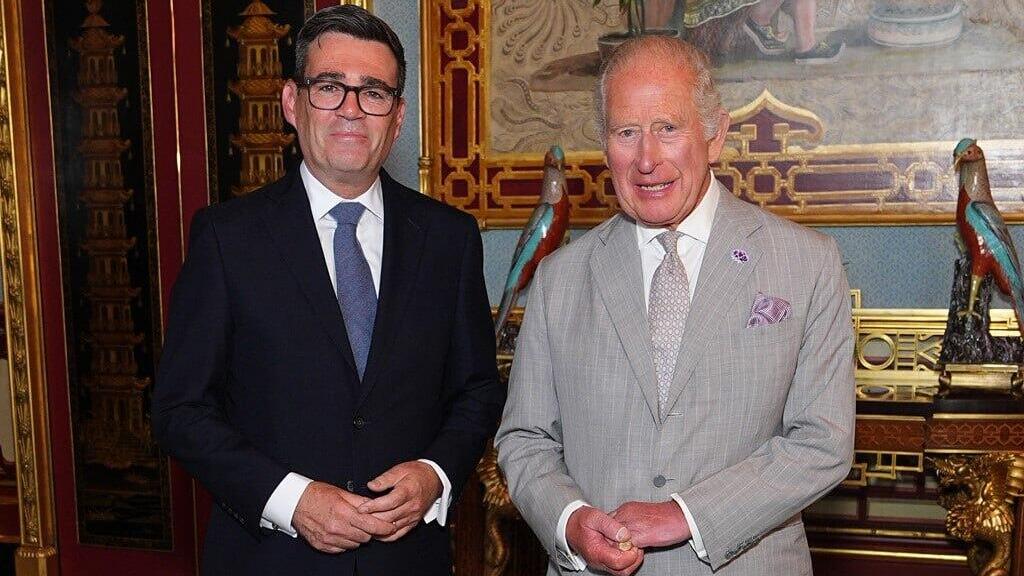
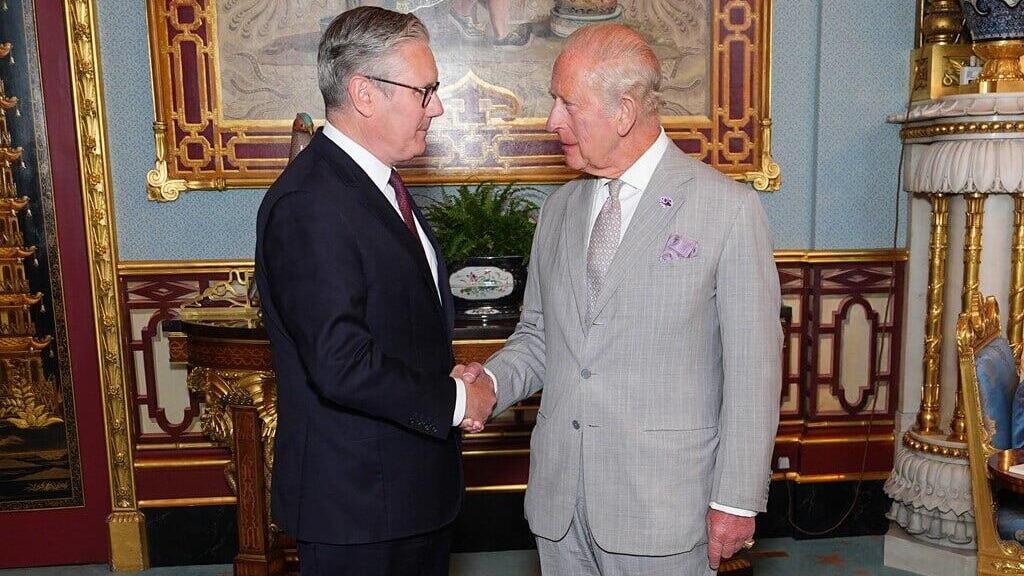
The 56-year-old former mayor of Greater Manchester, widely known as the “King of the North,” received his appointment from King Charles III at Buckingham Palace before traveling to 10 Downing Street, where he delivered his first address to the country.
Andy Burnham's first speech as PM
(Video: Reuters)


Burnham is Britain’s seventh prime minister in a decade, another sign of the political instability that has gripped the country since the Brexit referendum. He acknowledged the public’s frustration with the rapid turnover of leaders and pledged to rebuild confidence in the government.
“I know people at home are fed up with politics,” Burnham said, speaking without notes and forgoing the lectern traditionally used by incoming prime ministers. “I hear you, and I want to be honest with you: We have not been good enough and we need to be better. We will be.”
He promised to make his arrival a “circuit-breaker for Britain” and said his government would introduce the country’s most significant political and economic changes in four decades.
Burnham said he would present immediate measures aimed at easing the cost-of-living crisis, followed later this year by a 10-year national plan. His domestic agenda includes greater public control over water, electricity and transportation services, increased public investment, expanded housing and mental health services and an effort to revive British industry.
But his rise is also expected to produce a shift in British foreign policy, particularly toward Israel.
Burnham said shortly before taking office that Britain should increase pressure on Prime Minister Benjamin Netanyahu’s government and consider additional sanctions over the war in Gaza, violence in the West Bank and the continued expansion of settlements.
In an interview with The Guardian last week, he apologized for Labour’s initial response to the Gaza war, saying the party had been wrong in the early months of the conflict, when Starmer resisted demands for an immediate cease-fire.
Burnham described the suffering of Gaza’s residents as “a scar on our collective conscience” and said the British government had not done enough to pressure Israel.
He stopped short of accusing Israel of genocide, despite demands from parts of Labour’s left wing and pro-Palestinian campaign groups. Burnham said there was “growing evidence” that war crimes had been committed, but argued that any formal determination should be left to international courts.
Burnham said Britain should examine further sanctions against those allegedly involved in violence in Gaza, as well as measures targeting trade with Israeli settlements in the West Bank.
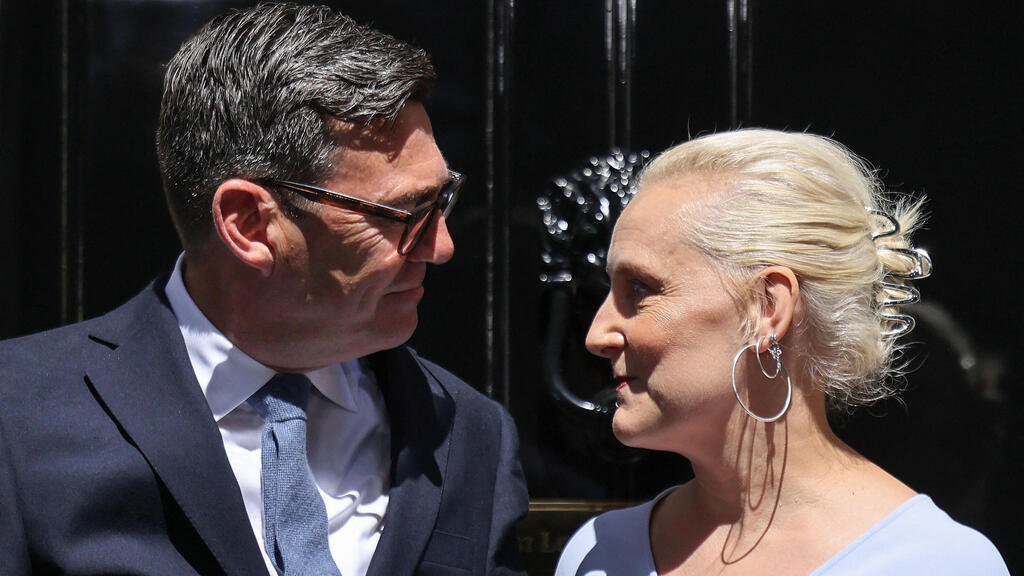
Andy Burnham and his wife, Marie-France van Heel, at 10 Downing Street
(Photo: JUSTIN TALLIS / AFP)
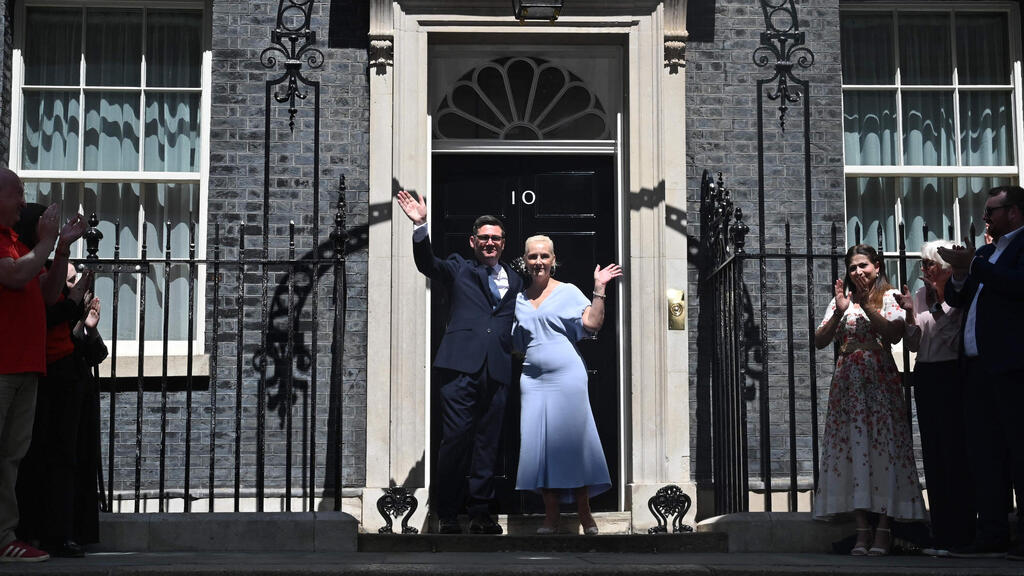
(Photo: JUSTIN TALLIS / AFP)
“That is why we need to do more, which includes looking at further sanctions, both on those involved in violence in Gaza, but also looking at steps to ban trade in goods with illegal settlements,” he said.
British Foreign Office officials are already examining possible ways to block goods and services originating in settlements from entering Britain without disrupting what officials describe as legitimate trade with Israel, according to The Guardian.
The new prime minister also criticized the sharp rise in settler violence in the West Bank and East Jerusalem and accused Netanyahu’s government of seeking to make a two-state solution impossible.
His government is expected to face pressure from Labour lawmakers and pro-Palestinian activists to suspend all arms exports to Israel, including British-made components used in the international F-35 fighter jet program.
Britain previously restricted some arms export licenses to Israel under Starmer, but continued permitting the transfer of F-35 components on the grounds that excluding Israel from the multinational supply chain could jeopardize the wider aircraft program.
Burnham may also be pushed to reconsider the previous government’s decision to outlaw Palestine Action as a terrorist organization. Starmer’s government banned the anti-Israel group after a series of break-ins, vandalism incidents and attacks on defense-related facilities.
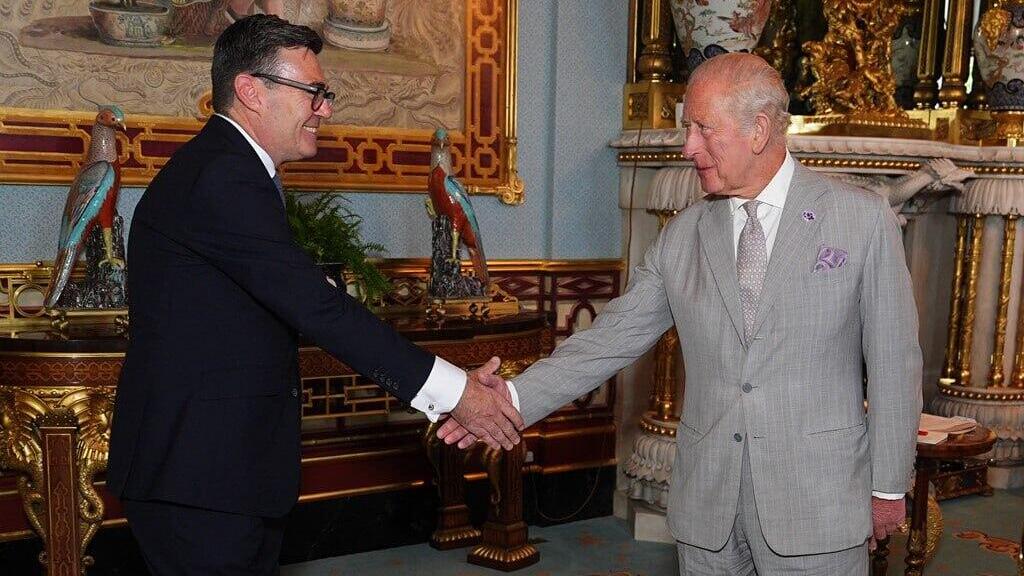
Burnham meets King Charles and formally receives his appointment as prime minister
(Photo: Buckingham Palace)
(Photo: Buckingham Palace)
Burnham did not mention Israel in his first Downing Street speech. He said his first calls to foreign leaders would be to U.S. President Donald Trump and Ukrainian President Volodymyr Zelensky, and promised there would be no change in Britain’s support for Ukraine.
The omission reflected his immediate focus on domestic affairs, but his earlier remarks indicate that Israel will quickly become one of the most politically contentious issues facing his government.
Anti-Israel demonstrators gathered in London over the weekend demanding that Burnham impose sanctions and take a more confrontational position toward Jerusalem. Signs urged him to “end the genocide” and called for an immediate halt to British military cooperation with Israel.
Burnham’s position places him to the left of Starmer, though he remains more moderate than Labour’s former leader Jeremy Corbyn and others on the party’s hard left.
He is generally associated with Labour’s “soft left,” supporting greater public ownership and higher government investment while avoiding some of the more radical positions identified with Corbyn’s leadership.
Burnham rose to power after Starmer was forced to step down in the face of a rebellion by Labour lawmakers alarmed by the party’s collapse in opinion polls and the growing popularity of Nigel Farage’s Reform UK.
Starmer, who led Labour to a landslide general election victory in July 2024, delivered a farewell address outside Downing Street before formally submitting his resignation to the king.
“My work is done,” Starmer said, describing his time as prime minister as “the privilege of my life.”
“I leave in good spirits, I leave with a smile and I leave proud of everything we have achieved,” he added, offering Burnham his full support.
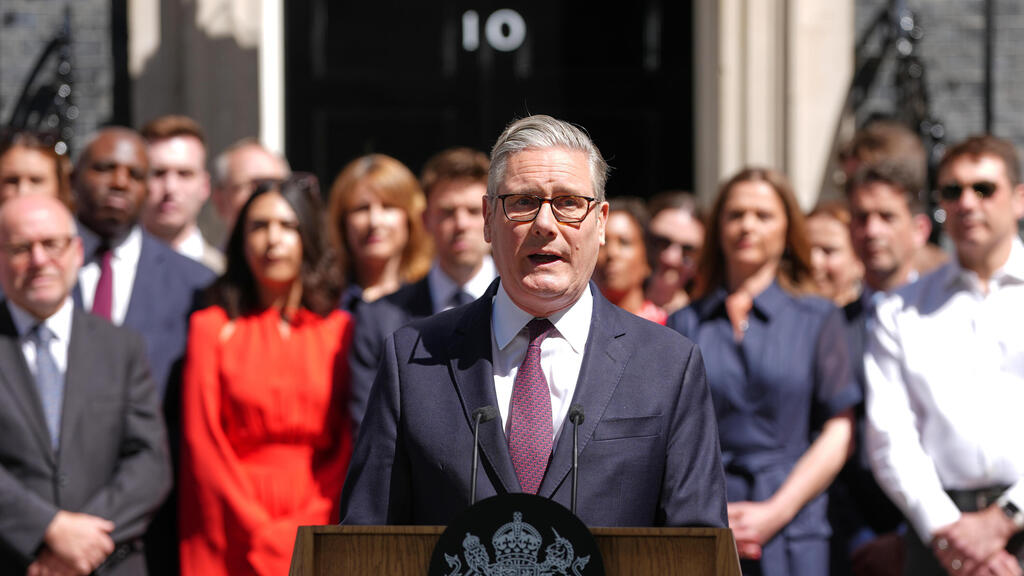
Starmer delivers his farewell speech
(Photo: AP Photo/Kirsty Wigglesworth)
Burnham returned to Parliament last month by winning a special election in a seat vacated by an ally. He was then selected as Labour leader without a contested leadership election after no rival entered the race.
Of Labour’s 403 lawmakers, 379 supported his candidacy. Since Labour holds a majority in the 650-seat House of Commons, his election as party leader automatically made him prime minister without a general election.
Opposition parties have argued that Burnham lacks a public mandate for the far-reaching reforms he is proposing. Britain’s next general election must be held by 2029, and Burnham has resisted calls to hold an earlier vote.
His supporters believe his relative popularity, informal style and political profile in northern England give Labour a better chance of stopping Reform UK from winning the next election.
(Photo: Buckingham Palace)
A June YouGov poll found that 34% of Britons had a positive view of Burnham and 38% viewed him negatively, giving him a net rating of minus four points. While still negative, it was far stronger than Starmer’s rating of minus 45 and Farage’s minus 40.
Burnham built much of his reputation during nine years as mayor of Greater Manchester, where he repeatedly challenged the central government in London and advocated greater authority for northern regions.
As prime minister, he has promised to decentralize power and establish a second working base in Manchester, which he has called “10 Downing Street North.”
His economic program represents another break with the Starmer era. Burnham has blamed decades of privatization and what he describes as neoliberal economic policy for rising costs, declining services and the concentration of political power in London.
He wants stronger public control of rail, bus, water and energy services, though it remains unclear whether this would involve full nationalization in every sector or tighter government regulation of privately operated companies.
He said the initial measures would provide Britons with “breathing space” as the government addresses housing costs, welfare spending, unemployment and stagnant living standards.
Burnham is also expected to adopt a more pragmatic position on oil and natural gas drilling in the North Sea, drawing praise from Trump.
Trump claimed in a post on Truth Social that residents of Aberdeen were “dancing in the streets” because Burnham planned to open Britain’s offshore oil resources.
“They are dancing in the streets!” Trump wrote, arguing that increased drilling could transform Britain from an economically struggling country into one of the richest in the world.
It remains unclear how many new drilling projects Burnham will approve. The BBC reported that he is expected to remain formally committed to Labour’s 2024 election manifesto, which opposed new exploration licenses, while allowing development in areas where permits have already been granted.
Burnham must also appoint his Cabinet, including a finance minister who will be responsible for translating his promises into a credible spending and taxation program. Home Secretary Shabana Mahmood is considered a leading candidate for the Treasury post.
Conservative opposition leader Kemi Badenoch warned Burnham against raising taxes and accused him of entering office without a clear plan.
“You must not repeat the mistakes of Keir Starmer’s premiership,” she wrote in an open letter, urging him to resist pressure from Labour’s left wing for higher welfare spending.
Burnham’s first months in office will therefore be dominated by the cost of living, public services and Labour’s struggle against Reform UK. But his comments before taking power also suggest that Britain’s relationship with Israel could soon face another period of strain.
Any decision to expand sanctions, restrict settlement trade, halt arms exports or reverse the ban on Palestine Action would deepen tensions with Jerusalem and mark a clear departure from Starmer’s more cautious approach.
For now, Burnham has promised immediate domestic action and a long-term transformation of Britain. On Israel, however, the direction is already becoming apparent: more pressure, closer scrutiny and the possibility of additional punitive measures.